

A well-chosen quote can shift your entire perspective in seconds. At Global Positive News Network, we’ve seen how quotes on being positive in life become anchors during difficult moments, grounding people when everything feels uncertain.
The right words at the right time build mental resilience and reshape how you face challenges. This guide shows you exactly where to find authentic quotes and how to weave them into your daily life for lasting change.
Why Positive Quotes Transform Your Mental Health
Positive quotes interrupt negative thought patterns in real time. When you read a quote that resonates, your brain shifts focus from what’s wrong to what’s possible. Research shows that people who engage with motivational content experience measurable improvements in emotional regulation. Marcus Aurelius wrote that all we are is the result of what we have thought, and neuroscience backs this up: positive thought patterns reshape neural pathways. A single powerful quote acts as a circuit breaker when anxiety or self-doubt takes over. The key lies in choosing quotes that speak to your specific situation, not generic platitudes that feel hollow. If you struggle with confidence, a quote about overcoming failure hits differently than a generic statement about happiness. This specificity matters because your brain dismisses what doesn’t apply to your life right now.
Resilience Builds Through Repeated Practice
Resilience isn’t something you’re born with; you practice it daily. Quotes about perseverance, like John Wooden’s assertion that mistakes are a natural part of progress, give you permission to fail without spiraling. When you face setbacks, these internalized messages help you bounce back faster instead of staying stuck in shame. Abraham Maslow emphasized that growth must be chosen again and again and fear must be overcome again and again, which captures the reality that resilience requires repetitive practice. The people who build genuine confidence aren’t those who avoid challenges; they’re the ones who reframe challenges as necessary steps. Quotes help you adopt this reframe automatically over time. Carrie Fisher’s advice to stay afraid but do it anyway gives you language to separate fear from failure, which forms the actual foundation of confidence.
How Your Brain Responds to Repeated Exposure
Short-term mood boosts from quotes fade unless you build them into your routine. Daniel Kahneman, a Nobel Prize-winning psychologist, noted that optimism keeps you healthy and resilient. However, optimism doesn’t stick from reading one quote once. You need regular exposure to reinforce the neural patterns that support a positive mindset. People who maintain high life satisfaction don’t do so by accident; they actively choose positivity through daily practices. This is why journaling with quotes, setting them as phone reminders, or reviewing them weekly creates lasting change. The quotes from figures like Albert Einstein, Nelson Mandela, and Oprah Winfrey carry weight because they come from people who actually achieved difficult things. Your brain trusts them more than generic motivation. Over months and years, this consistent practice rewires how you respond to stress, setbacks, and uncertainty, shifting your baseline from defensive to forward-moving.
Now that you understand how quotes reshape your thinking, the next step is knowing where to find the ones that actually matter to you.
Where to Find Quotes That Actually Resonate
Quality matters far more than quantity when you hunt for positive quotes. A generic database with thousands of poorly sourced quotes wastes your time, while a curated collection of fifty authentic quotes from verified sources transforms your practice immediately. BrainyQuote and Goodreads host quotes, but they also host misattributions and fabricated statements. By following credible methods and checking multiple sources, you can distinguish authentic interpretations from misquotes and translation errors before you add them to your personal collection.
Sources That Deliver Real Depth
Books on personal development from authors like Maya Angelou, Oprah Winfrey, and Nelson Mandela contain quotes embedded in real context, showing you not just what they said but why it mattered. This context deepens your understanding and makes the quote stick. Audiobooks work particularly well if you commute or exercise regularly; hearing quotes in the author’s voice or a skilled narrator’s delivery creates stronger emotional resonance than reading text alone.
Social media platforms dedicated to positivity, particularly Instagram accounts with strong followings and verified credentials, curate quotes daily, though you’ll need to filter through volume to find what truly applies to your life. The critical filter is this: does the quote address something you’re actually struggling with right now, or is it just pleasant background noise? A quote about overcoming failure means nothing if you’re struggling with loneliness. A quote about connection transforms everything if isolation is your current battle.
Start With One Source, Not Ten
Start with a single source that aligns with your values rather than you try to consume everything at once. If education and growth drive you, focus on quotes from Malcolm X, Helen Keller, Benjamin Franklin, and Malala Yousafzai rather than you spread yourself across ten different platforms. If resilience against setbacks matters most, collect quotes from John Wooden, Abraham Maslow, and Carrie Fisher specifically.
Organize What You Find Into a System
Use a simple system to organize what you find: a Google Doc, a note-taking app, or a physical notebook grouped by theme works better than random scrolling through apps. Structured collections of positive quotes demonstrate that you commit to daily quote exposure and produce measurable results in mood and perspective shift. You don’t need fancy tools; a basic spreadsheet with columns for the quote, the source, the theme, and when you discovered it gives you a searchable personal database.
Identify Your True Anchors
Revisit your collection monthly and notice which quotes you return to repeatedly; those are your true anchors, the ones your brain actually needs. Quotes from figures like Albert Einstein, Marcus Aurelius, and Buddha appear across every platform because they’ve survived centuries of scrutiny, but your personal collection should also include contemporary voices and lesser-known thinkers who speak directly to your specific challenges. The quotes that matter most are the ones you actually use-not the ones that sound impressive on a shelf.
Once you’ve built your personal collection, the real transformation happens when you weave these quotes into your daily life in ways that stick.
Making Quotes Part of Your Daily Reality
The moment you stop treating quotes as inspirational wallpaper and start treating them as working tools, everything changes. A quote sitting in your notes app that you never revisit does nothing. A quote you encounter during your morning coffee, return to when stress hits, and share with someone struggling-that quote rewires how you think.
Anchor Quotes to Specific Times
Start with one quote tied to a specific time in your day. Most people find that reading a quote immediately after waking works best because your mind is still forming the day’s narrative. Set a phone reminder for 6:45 a.m. with a single quote from your collection, then spend two minutes with it before checking email or social media. Don’t just read it; ask yourself how it applies to what you’re facing today. If the quote is about overcoming fear from Carrie Fisher and you have a difficult conversation scheduled, connect those two things explicitly. This specificity matters far more than reading five generic quotes without intention. Within two weeks, this becomes automatic-your brain starts scanning your day for situations where that quote applies, which means the quote is actually shaping your decisions, not just your mood.
Share Quotes to Reinforce Them
Sharing quotes with friends and family isn’t about being motivational; it’s about reinforcing the quote in your own mind. When you send someone a quote about persistence because they’re struggling with a project, you’re actually reminding yourself of that message too. Text or email one quote to a person you know is facing a specific challenge, matching the quote to their actual situation. This takes thirty seconds and creates a real human moment instead of generic cheerleading. You could also start a weekly quote exchange with a friend-each person sends one quote they’ve found meaningful that week, then you both spend five minutes discussing why it mattered. Research on accountability shows that sharing goals or insights with someone else increases follow-through by up to 65 percent.
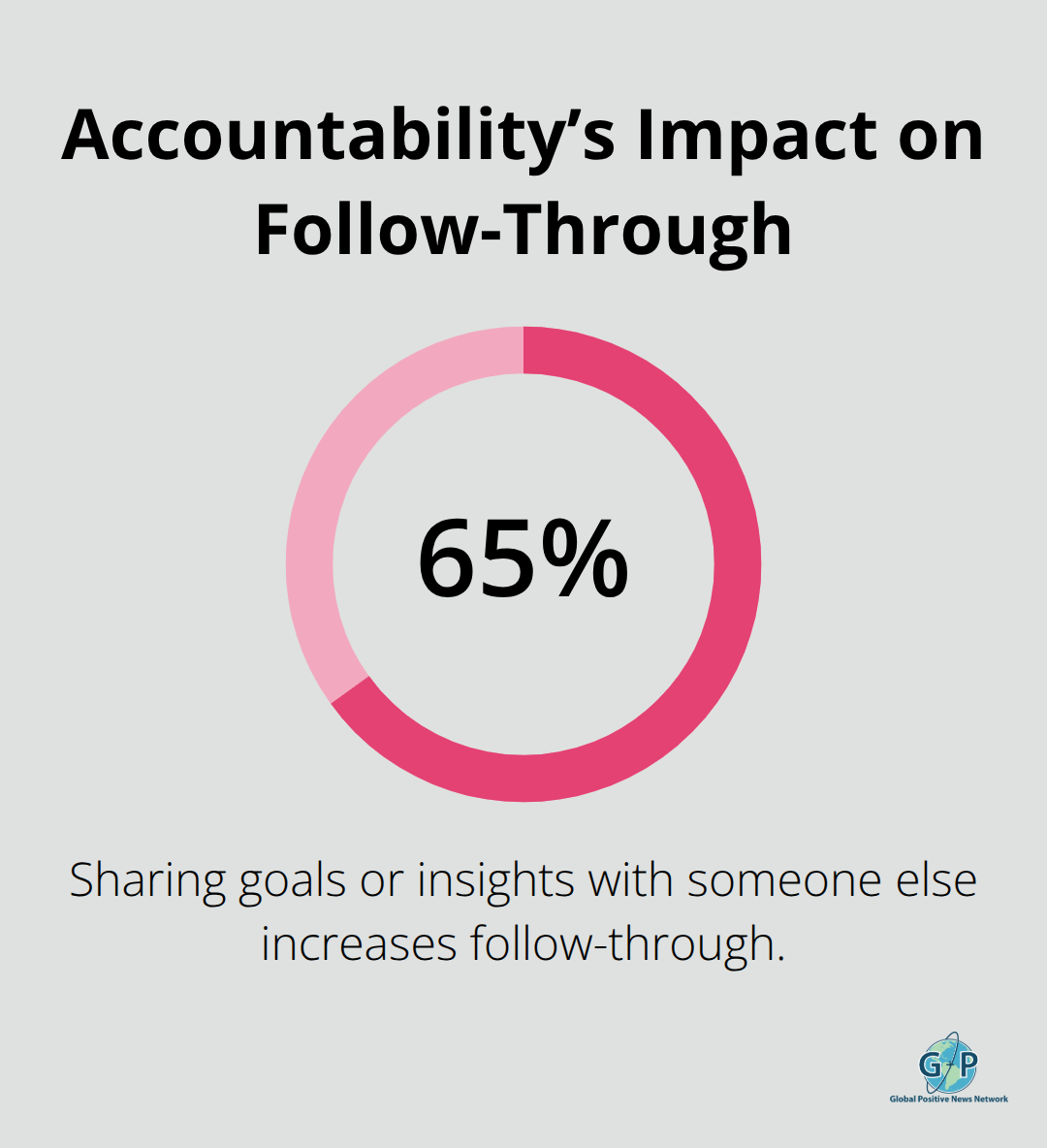
Quotes work the same way. The moment you articulate why a quote matters to someone else, it becomes more real in your own thinking.
Create Visual Anchors That Interrupt Negative Patterns
Write a single quote by hand in a notebook at least three times per week. Handwriting forces your brain to slow down and process the words more deeply than reading does. Keep a dedicated composition notebook for this practice-nothing fancy required, just consistency. The physical act of writing creates muscle memory that makes the quote more retrievable when you actually need it. You can also create one visual reminder per month using tools like Canva or Adobe Express, which offer free templates for quote graphics. Set that image as your phone wallpaper for one month, then rotate to a new quote. This keeps quotes fresh and prevents them from becoming invisible background noise. If you have a desk or workspace, print one quote on cardstock and place it where your eyes naturally land. The goal isn’t decoration; it’s strategic placement so the quote interrupts your thought patterns at moments when you’re most vulnerable to negative thinking. These visual reminders work because they operate outside your rational mind-you absorb them peripherally, which means they influence your mood before you consciously notice them.
Final Thoughts
You now have a clear path forward. The resources exist-from curated databases to personal development books to social media communities-and the methods work when you actually use them. A personal collection of quotes on being positive in life isn’t about accumulating hundreds of statements; it’s about finding the specific words that interrupt your negative patterns and redirect your thinking toward what’s possible.
Start this week with one source and one quote tied to a specific moment in your day. Write it by hand, share it with someone facing a similar struggle, and set it as your phone reminder. These small actions compound over months into a fundamentally different way of responding to stress, setbacks, and uncertainty. The people who experience lasting mindset shifts aren’t those who read quotes passively; they’re the ones who treat quotes as working tools, not decorations.
Your baseline thinking patterns didn’t form overnight, and they won’t shift overnight either. Consistent exposure to words that challenge your default negativity rewires how your brain processes difficulty. At Global Positive News Network, we believe that small daily practices create profound life changes.
Explore more positive news:
Enjoying stories like this?
Global Positive News Network is reader-supported. If you’d like to support the mission, you can visit the Official GPNN store.