

Technology is reshaping how communities connect, support each other, and solve local problems. From mobile apps linking volunteers to smart city systems improving public services, hopeful technology innovations are creating real pathways for growth.
At Global Positive News Network, we’ve seen firsthand how the right tools empower neighborhoods to thrive. This post explores concrete examples and actionable steps your community can take today.
Tech Tools That Actually Work for Communities
Apps and Platforms Connecting People to Action
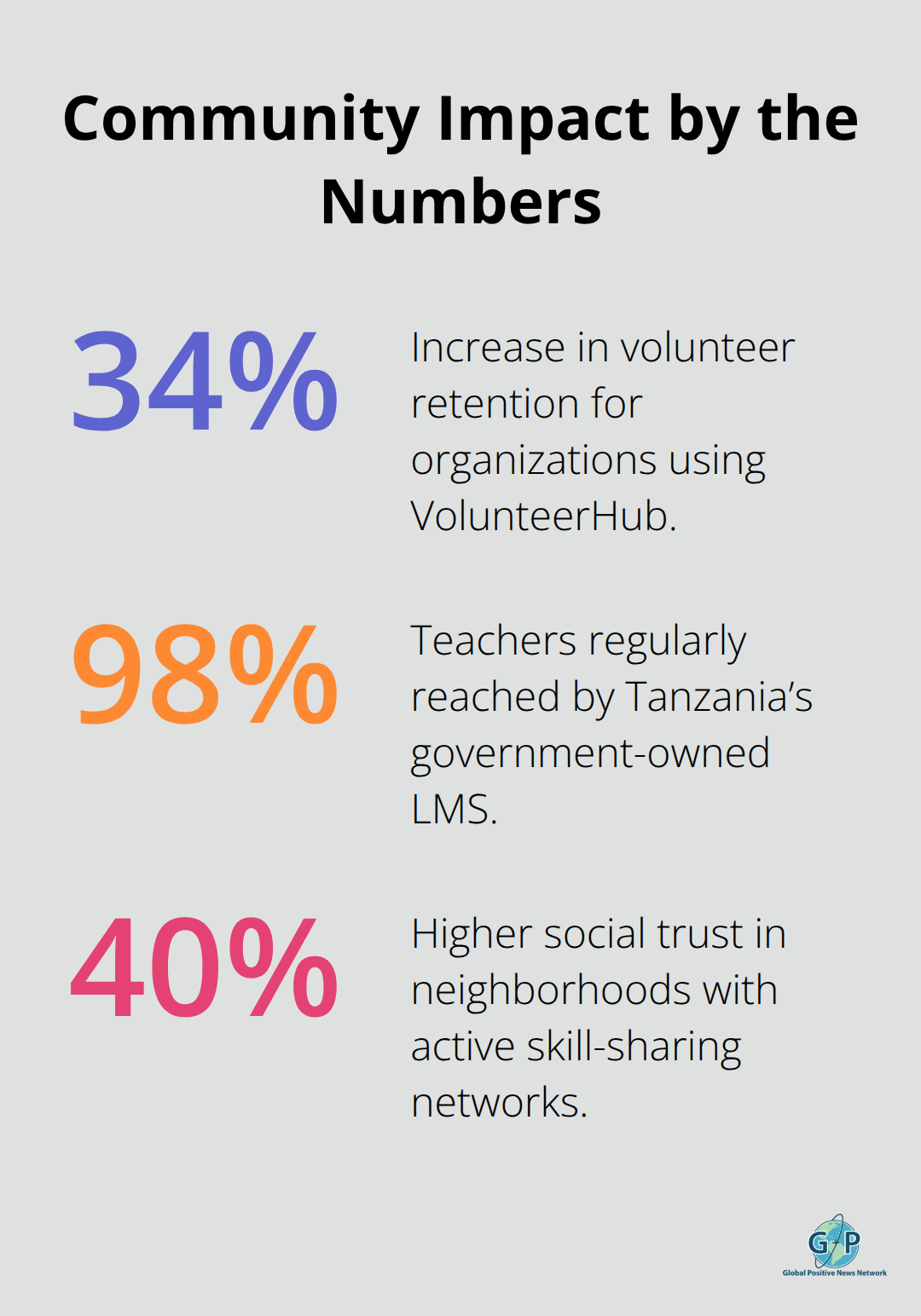
Mobile apps and digital platforms have moved beyond theoretical promise into measurable community impact. VolunteerHub, used by over 12,000 nonprofits across North America, connects volunteers with local needs in real time, reducing the average time to fill urgent positions from weeks to hours. Organizations using their system experienced a 34% increase in volunteer retention because residents could see exactly where their skills matched community gaps. Nextdoor’s neighborhood networks now operate in over 300,000 communities globally, with users reporting they solved local problems-from finding lost pets to organizing neighborhood safety patrols-faster than traditional channels.
What makes these platforms succeed is specificity: they show concrete tasks with clear timelines and measurable outcomes rather than asking people to volunteer generally.
Health and Education Systems Built on Local Infrastructure
Ghana’s rollout of connected primary health care networks demonstrates how digital tools scale impact. These networks link clinics, pharmacies, and community health workers through shared digital infrastructure so patients move seamlessly between providers. Tanzania’s government-owned learning management platform, led by the University of Dar es Salaam, now reaches 98% of teachers regularly, proving that locally owned tech systems outperform external solutions when designers build them around actual workflows rather than impose them from outside.
Smart Infrastructure That Solves Real Friction
Smart city infrastructure works only when it solves friction points communities already feel. Cities that deployed AI-driven traffic management systems saw congestion drop by 15–25% within the first year, freeing time residents spent in traffic for work, family, or civic participation. Sensor networks monitoring water quality and air pollution give neighborhoods real data to advocate for environmental improvements rather than relying on abstract reports. The critical difference between projects that fail and those that succeed is community input from day one-not surveys conducted after systems launch, but residents helping design what gets measured and how results get shared.
Technology as a Resource Multiplier
Technology acts as a resource multiplier when it removes barriers. Digital payment systems in communities with limited banking access increase small business revenue by enabling customers without cash or cards to purchase locally. Open APIs and interoperable systems matter enormously because they prevent vendor lock-in and let communities adapt tools as needs shift (the strongest communities treat technology as infrastructure, like roads or electricity, that should serve public benefit rather than extract data or attention). These design choices determine whether technology strengthens or weakens community autonomy, making the next step-identifying which gaps your community faces-essential before selecting any tool.
How Communities Fund and Share Local Solutions
Hyperlocal Networks Accelerate Problem-Solving
Local news platforms and crowdfunding sites have become the infrastructure communities depend on to amplify what matters most. Nextdoor operates in over 300,000 neighborhoods globally, and residents use the platform to flag infrastructure issues that city departments respond to within hours rather than weeks. This accountability mechanism works because solutions are visible to everyone, not buried in municipal databases. The visibility is public and immediate, which forces faster action than traditional channels ever could.
Crowdfunding Platforms Turn Ideas Into Reality
Crowdfunding platforms like Patronicity and Neighborly have funded over 5,000 community projects, from playground renovations to neighborhood safety improvements. Projects that show exact costs, timelines, and measurable outcomes raise funds 3 times faster than vague appeals. A playground renovation in Detroit that clearly stated it would serve 800 children and cost $47,000 raised full funding in 6 weeks. The same neighborhood’s earlier campaign without specific numbers stalled at 12% after 4 months. Specificity transforms abstract community needs into concrete targets that donors understand and support.
Skill-Sharing Networks Build Trust Through Exchange
Skill-sharing networks operate differently than crowdfunding because they trade time and expertise instead of money. Platforms like Peerspace and local TimeBank networks let residents teach neighbors everything from basic home repair to language skills, which strengthens social bonds while solving practical needs. A study from the American Socialization of Mutual Aid found that neighborhoods with active skill-sharing networks report 40% higher social trust and 35% lower reported isolation. These networks work best when communities tie them to specific, recurring needs rather than random skill exchanges.
Participation Thrives When Needs Are Concrete
A neighborhood that organized weekly cooking classes for parents learning to prepare affordable, nutritious meals saw participation jump from 8 to 47 people because the need was concrete and the benefit immediate. The technology itself matters far less than how communities structure participation around real friction points residents experience daily. Communities that succeed treat their platforms as tools for addressing actual problems, not as ends in themselves. This foundation of real need prepares communities to take the next critical step: identifying which technology gaps exist in their own neighborhoods and which tools will actually serve their residents.
Practical Steps Communities Can Take Today
Map What Your Community Already Uses
The most effective communities skip lengthy planning and start by mapping what already exists. Walk through your neighborhood and document which tools residents already use: Do people coordinate through Facebook groups, Nextdoor, or text chains? Where do local leaders share information? Which organizations have staff or volunteers who could champion a new system? A community in Portland completed this work in two weeks by interviewing 12 local leaders and discovered residents were already using four separate platforms to coordinate, creating confusion and missed opportunities. Once they consolidated around two platforms with clear purposes, participation doubled within a month.
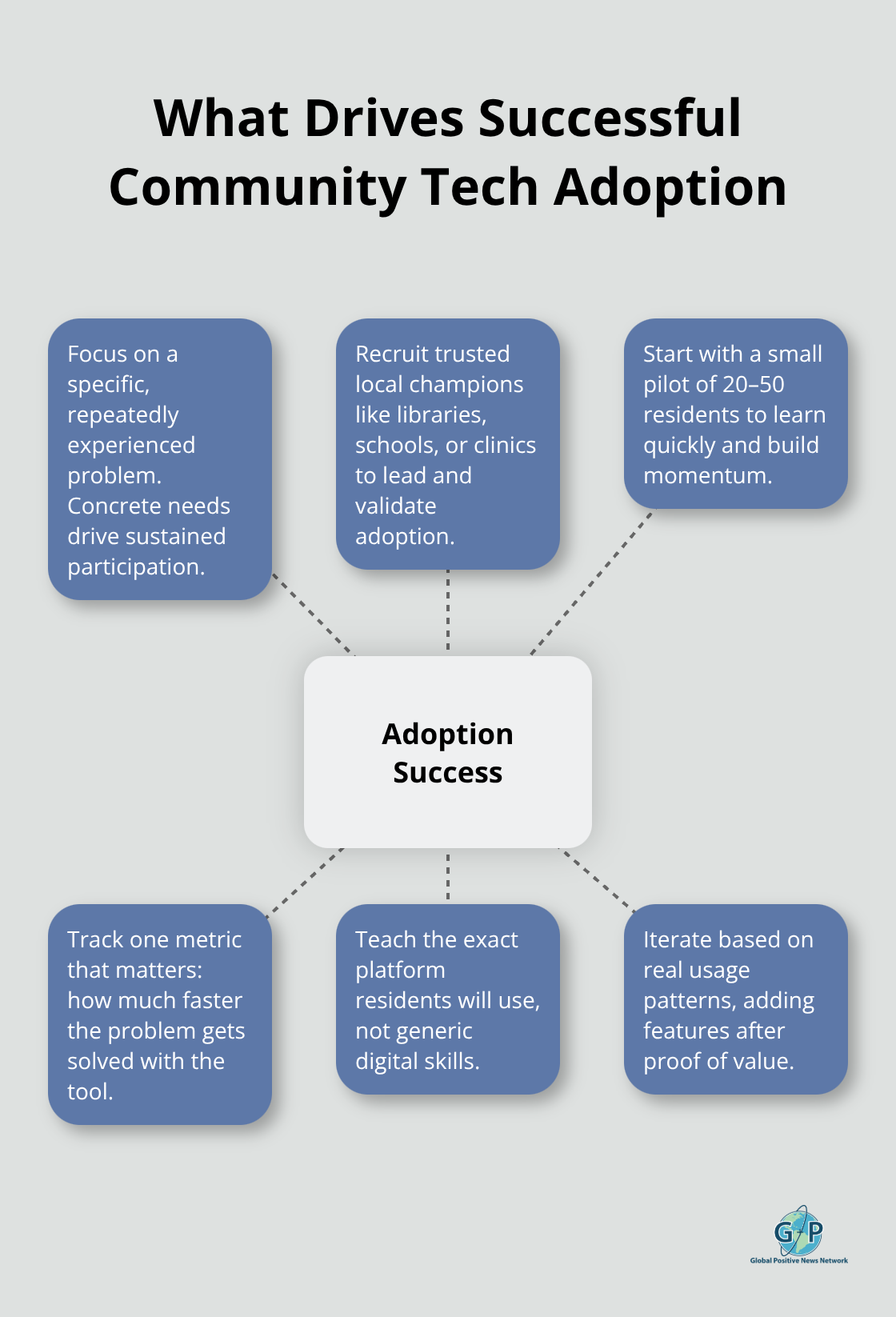
Start by observing how your community currently solves problems, then identify the specific friction points that technology could reduce. A food bank struggling to match donor supply with actual household needs found that a simple spreadsheet shared across their network cut waste by 38% and freed staff time for direct service. The tool mattered less than solving the actual bottleneck. Communities that succeed resist the urge to adopt trendy platforms and instead ask: What specific problem do we experience repeatedly? How much time or money does it cost us? What tool would eliminate this exact friction? These questions anchor technology decisions to real impact rather than features.
Recruit Trusted Local Organizations as Champions
Successful technology adoption happens fastest when established organizations champion it rather than external consultants introducing systems from outside. Reach out to schools, libraries, health clinics, or faith communities that already have deep trust and ask if they would test a tool with you. Libraries particularly excel at this role because they serve diverse populations and staff often have digital literacy training. A library in Columbus partnered with a local nonprofit to host free workshops teaching residents how to use a neighborhood coordination app, and attendance tripled when the library hosted sessions rather than the nonprofit doing it alone. Organizations like the American Library Association offer resources specifically designed to help libraries support community technology adoption.
Start small with a pilot group of 20–50 people rather than attempting a town-wide launch. Track one specific metric: How long does it take to solve the problem your tool addresses? If a task took 3 weeks before and now takes 3 days, that concrete result builds momentum for broader adoption. Communities that fail often try to launch with perfect features for everyone; communities that succeed launch with 60% of the features residents need and add more based on actual usage patterns.
Once you have early adopters showing results, the next phase involves building the skills residents need to use these tools independently.
Teach Residents the Specific Tool, Not General Skills
Digital literacy training fails when it teaches general computer skills instead of the specific tool your community selected. If your community adopts a crowdfunding platform to fund local projects, teach residents exactly how to write a project description that raises funds, not generic computer skills. A neighborhood in New Orleans that wanted to use a skill-sharing platform discovered that when they shifted to teaching the specific platform with real examples from their neighborhood, participation increased.
Host training sessions where residents complete an actual task using the tool-posting a volunteer need, funding a project, or scheduling a skill exchange-rather than watching demonstrations. Partner with trusted community members to lead these sessions because peer instruction builds confidence faster than external instructors. Offer training at times when residents actually have availability: early mornings before work, lunch hours, or evenings, not arbitrary daytime slots. A community center in Minneapolis found that evening sessions with childcare available increased attendance from 12% to 58% among parents working irregular schedules.
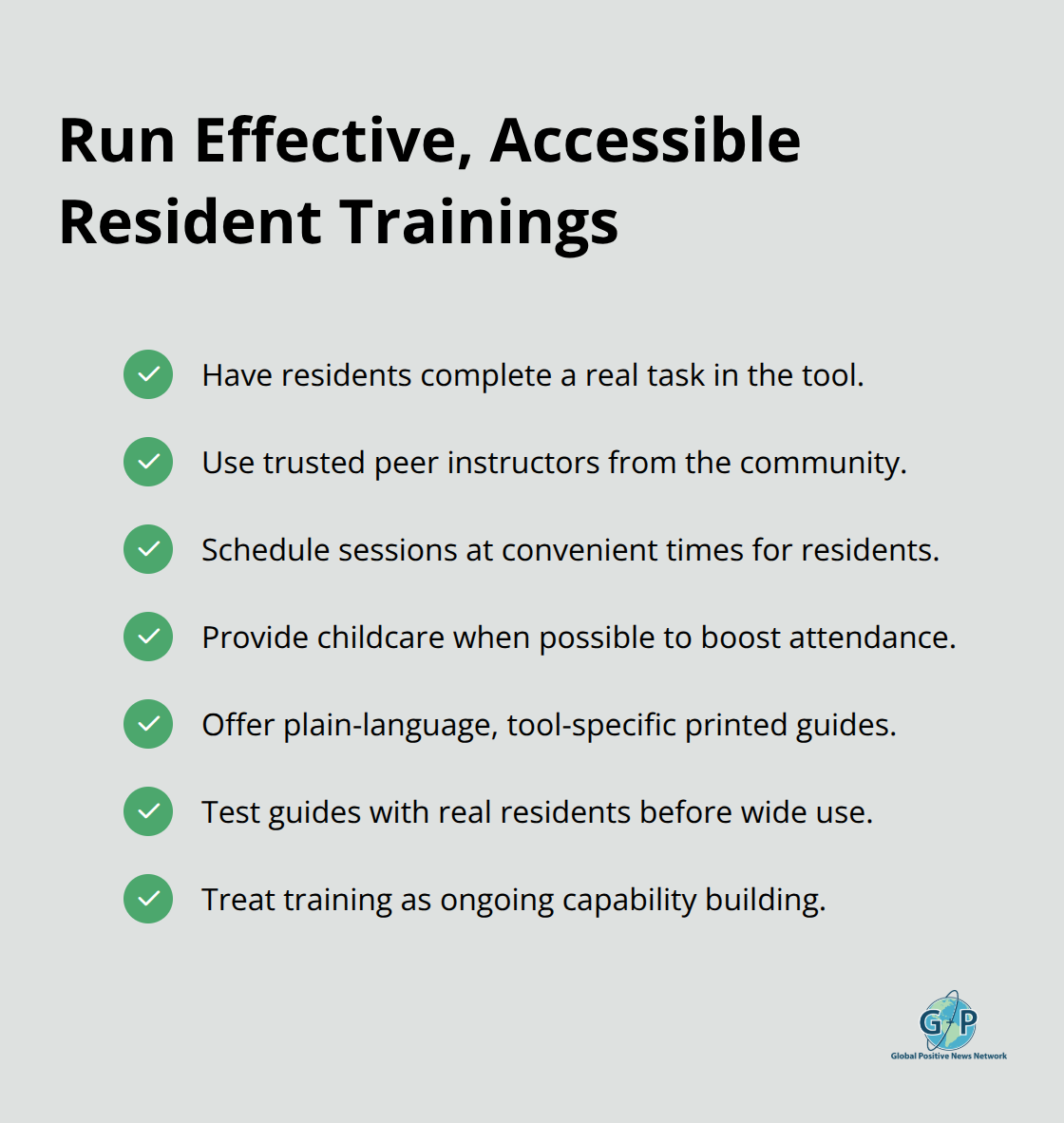
Provide printed guides specific to your platform in plain language, not the dense manuals companies provide. Test these guides with actual residents before distributing them widely. Communities that sustain technology adoption long-term treat it as an ongoing capability-building effort, not a one-time training event.
Final Thoughts
Technology becomes powerful when communities control it rather than letting it control them. The hopeful technology innovations we’ve explored throughout this post work because residents shaped them around actual problems, not because the tools themselves were sophisticated. A volunteer app means nothing without neighbors willing to show up, and a crowdfunding platform sits empty without communities identifying projects that matter. Your community’s resilience depends on whether technology strengthens the connections between people or replaces them.
The strongest communities treat digital tools as infrastructure that serves public benefit, not as replacements for face-to-face relationships. When a neighborhood uses an app to coordinate a cleanup day but then gathers afterward to share a meal, technology amplified human connection rather than substituting for it. Communities that map their existing tools and consolidate around two or three platforms see participation increase within weeks. Organizations that champion adoption from within their neighborhoods build trust faster than external consultants ever could.
Your next step is immediate: identify one specific problem your community experiences repeatedly and ask ten trusted local leaders how they currently solve it. Find or build a tool that eliminates that exact friction, start with 20 to 50 early adopters, and track whether the problem gets solved faster. We at Global Positive News Network believe communities thrive when residents see themselves as problem-solvers, not passive consumers, and your neighborhood has the expertise and relationships needed to build something meaningful.
Explore more positive news:
Enjoying stories like this?
Global Positive News Network is reader-supported. If you’d like to support the mission, you can visit the Official GPNN store.