

Most people think positivity requires massive life changes. At Global Positive News Network, we believe the opposite is true.
Everyday positivity tips don’t demand perfection or dramatic shifts. They’re about weaving small moments of joy into your regular routine, starting today.
How to Start Your Day with Real Intention
The first hour after waking sets the tone for everything that follows. Research shows that about 50 percent of each person’s happiness is determined from birth, meaning your morning routine isn’t a luxury-it’s the foundation for sustainable positivity.
Anchor Your Morning with Gratitude
Start by anchoring your morning with gratitude before checking your phone. Write down three specific things you’re grateful for, ranging from the mundane to the meaningful. This takes five minutes and activates your brain’s ability to notice positive details throughout the day. According to research by Sonja Lyubomirsky, gratitude journaling once per week boosts happiness most effectively, but daily practice works too if you vary the format to keep it fresh. The key is specificity: instead of writing gratitude vaguely, note exactly what happened and why it mattered to you. If someone helped you yesterday, write their name and the concrete action they took.
Set Goals That Actually Fit Your Life
After gratitude, identify one to three realistic goals for the day. Not ten. Not five. Most people fail at morning intentions because they’re unrealistic. A study on goal-setting shows that people who set one to three daily goals complete them 65% more often than those who set five or more. Your goals should take no more than two minutes to write. Make them specific and tied to how you want to feel: instead of saying finish a project, say I’ll work on the first section for 45 minutes without interruption. This removes the vagueness that kills motivation. The Greater Good Science Center’s Big JOY program found that participants who committed to one small positive action per day-like doing something kind or expressing gratitude-saw emotional well-being rise by 26% within a week. Apply this principle to your morning goals: include at least one action that involves connecting with someone or helping them, even briefly. This dual focus on personal achievement and social connection strengthens both your sense of control and your relationships.
Create a Morning Sequence That Sticks
Create a non-negotiable morning sequence that takes 20 to 30 minutes total. The order matters because it primes your brain for positivity. Start with five minutes of movement-a walk, stretching, or light exercise-because physical activity shifts your neurochemistry toward optimism. Then spend five minutes on gratitude journaling.
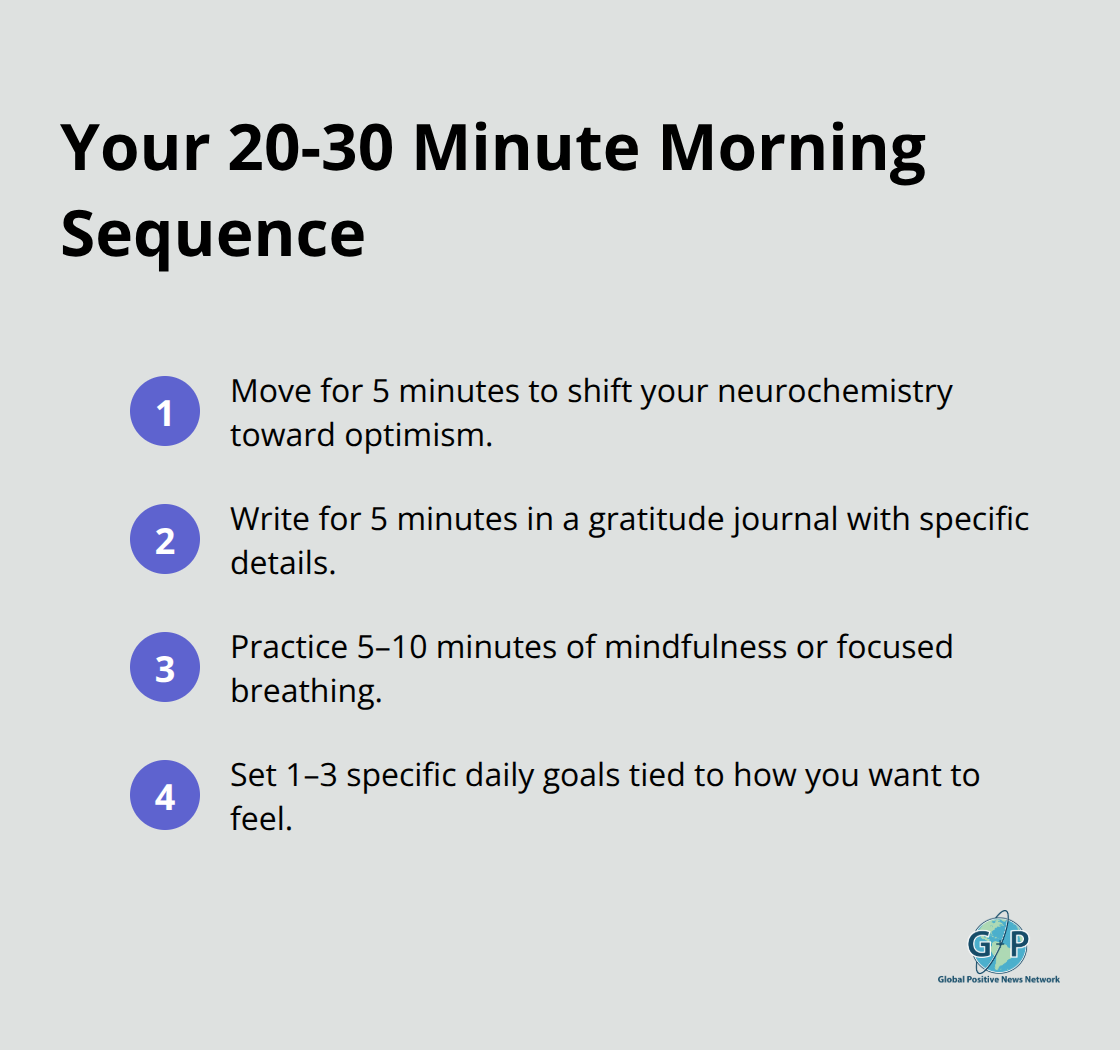
Follow with five to ten minutes of mindfulness or breathing work. Mindfulness-based practices show promise as an intervention for treating anxiety and mood problems, and even three minutes of focused breathing improves mental clarity for hours. Finally, set your daily goals. This sequence works because it moves from physical activation to emotional grounding to mental clarity. Don’t overthink it or add complexity. The goal is consistency, not perfection. People who maintain the same morning routine for three weeks report it becomes automatic, requiring less willpower each day. This frees up mental energy for positivity throughout your day instead of wasting it on decision-making.
Once you establish this foundation, you’re ready to weave positivity into the rest of your day through intentional habits and meaningful connections.
How Mindfulness and Connection Turn Daily Moments into Joy
Interrupt Autopilot with Simple Practices
The morning routine creates momentum, but the real work happens throughout your day when you face emails, frustrations, and unexpected changes. This is where most people abandon positivity efforts. The solution isn’t willpower-it’s embedding mindfulness and connection into moments you already experience. Meta-analyses show that mindfulness-based practices reduce anxiety and depression with effect sizes comparable to cognitive behavioral therapy, and the benefits compound when you practice consistently rather than sporadically.
Most of your day runs on automatic pilot, meaning you miss the good parts entirely. The 3-Minute Breathing Space works during lunch breaks or between meetings: pause, focus on your breath for one minute, then expand your awareness to include your body and surroundings for two minutes. This single practice, done three times daily, trains your brain to notice positive details instead of defaulting to stress. You can also use the Five Senses grounding exercise when anxiety spikes-name five things you see, four you feel, three you hear, two you smell, and one you taste. This reconnects you to the immediate environment and stops rumination cold.
Build Agency Through Small Positive Actions
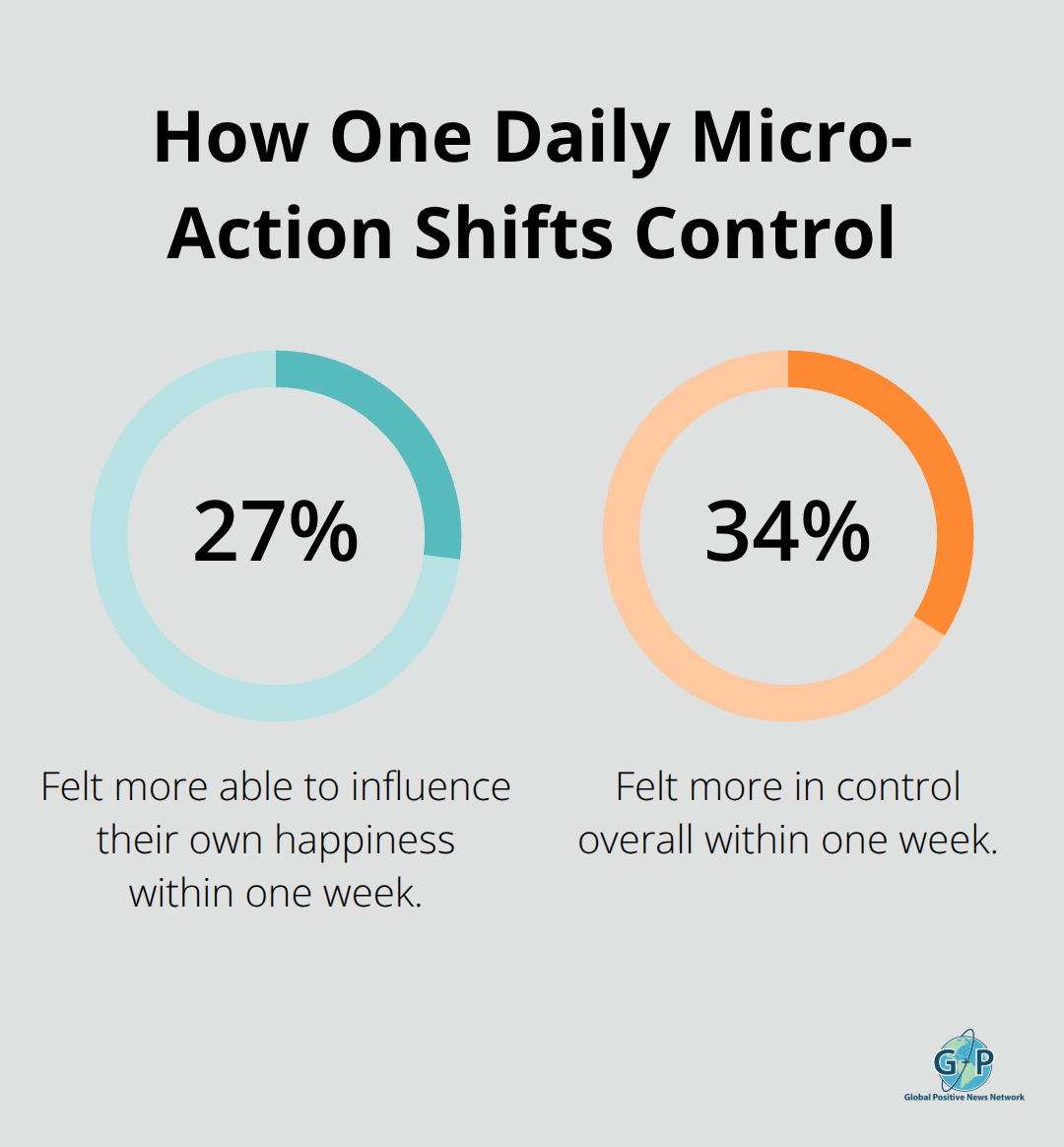
The Greater Good Science Center’s Big JOY program found that participants who committed to one small positive action daily, like mindfulness or a kind gesture, felt 27% more able to influence their own happiness and 34% more in control overall within a week. This matters because control and agency directly fuel positivity. Without them, you feel passive and reactive.
Research from meta-analyses confirms that mindfulness interrupts the stress cycle effectively. When you pause and breathe, you shift from reaction to response. This single shift changes how you handle the rest of your day. The practice takes minimal time but yields outsized returns on your emotional stability.
Amplify Joy Through Genuine Connection
Connection amplifies this effect dramatically. Research shows that social snacking boosts happiness through brief positive interactions with others. This means your three-minute chat with a colleague isn’t a break from productivity; it’s essential infrastructure for your mood. The specific action matters less than genuine presence. Instead of scrolling while someone talks, make eye contact and ask one follow-up question.
When you celebrate someone else’s win, your brain registers the joy as real and lasting, not fleeting. Sonja Lyubomirsky’s research on the How of Happiness confirms that people who perform three to five small acts of kindness per week see sustained happiness increases. Apply this concretely: send one encouraging message to a colleague, compliment something specific about a friend’s work, or help someone solve a problem for ten minutes.
Recognize Progress Before Moving Forward
Track these moments-not obsessively, but enough to notice the pattern. When you complete a task or meet a goal, pause for 30 seconds and acknowledge it before moving to the next thing. This isn’t arrogance; it’s rewiring your brain to register progress. People who celebrate small wins report better mood stability and greater resilience on difficult days because they’ve trained themselves to see evidence of their capability.
The combination of mindfulness keeping you present and connection keeping you engaged creates a compounding effect throughout your day. Yet challenges still arise-setbacks that test your commitment to positivity. The next section shows how to face these obstacles head-on and emerge stronger.
When Setbacks Hit, Here’s How to Move Forward
Setbacks aren’t failures-they’re data points that most people ignore. When something goes wrong, your brain defaults to negative self-talk within seconds.
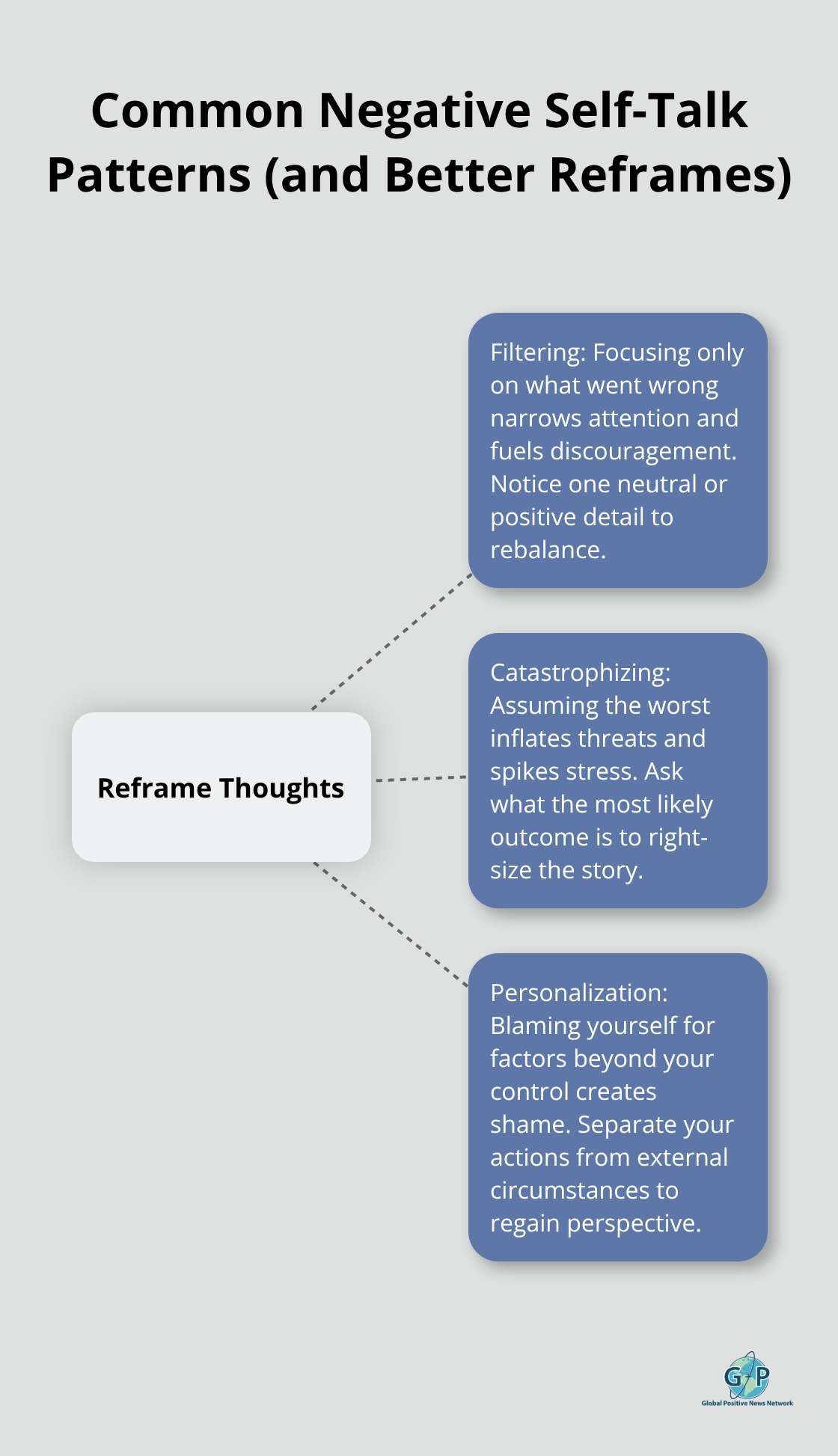
Negative self-talk includes filtering (focusing only on what went wrong), catastrophizing (assuming the worst outcome), and personalization (blaming yourself for circumstances beyond your control). The fight isn’t against the setback itself; it’s against the automatic thought patterns that follow.
Interrupt Your Negative Thought Patterns
Start with identifying which negative self-talk pattern you fall into most often. Write down what you told yourself the last time something frustrated you. Was it “I can’t do this” or “I always mess up” or “This is impossible”? Once you see the pattern, you can interrupt it. Replace “I can’t do this” with “I’ll tackle this from a different angle” or “I can learn and improve with time.” This rewording sounds simple because it is-and that’s why it works. Your brain doesn’t distinguish between a real obstacle and a thought pattern; both feel equally true until you challenge them deliberately.
The Greater Good Science Center’s Big JOY program tracked participants who reframed daily challenges as learning opportunities and found they felt 27% more able to influence their own happiness within one week. This isn’t positive thinking in the toxic sense where you ignore problems. It’s productive thinking where you acknowledge the problem and focus on what you can control in response.
Transform Difficulty Into Strength
Challenges become learning opportunities only when you extract something from them. After a setback, spend five minutes writing what happened and one thing you’d do differently next time. Skip the self-blame; focus on the specific action or decision. If you missed a deadline, don’t write “I’m disorganized.” Write “I’ll break projects into smaller milestones and flag them three days before the deadline.” This shifts your brain from shame to strategy.
Research by Sonja Lyubomirsky shows that people who believe they can influence their happiness through deliberate action experience greater happiness gains over time than those who see happiness as fixed. Your support network accelerates this shift dramatically. One study found that sharing challenges with a trusted person and hearing their perspective reduces rumination by up to 40 percent because your brain stops cycling through the same negative loop.
Build Your Support Network Now
Identify two or three people you can text when you’re stuck in negativity-people who listen without judgment and ask what you need instead of offering unsolicited advice. Text them now and establish this before crisis hits. When difficulty arrives, reach out within the first hour rather than waiting until you’ve spiraled.
Small wins matter here too. If you’re recovering from a setback, celebrate the fact that you’re working through it, not just the final resolution. Did you have one difficult conversation instead of avoiding it? That’s progress. Did you try one new approach? That’s progress. These micro-celebrations train your resilience because they show you’re moving forward even when the outcome isn’t perfect yet.
Final Thoughts
The research confirms what you already sense: small daily actions compound into lasting joy. About 50 percent of your happiness baseline comes from genetics, but the remaining portion sits squarely in your control through deliberate choices. The Big JOY program demonstrated this perfectly-participants who committed to one micro-action daily saw emotional well-being jump 26 percent within seven days, sleep improve by 12 percent, and contentment with relationships rise 30 percent. These weren’t dramatic overhauls; they were everyday positivity tips applied consistently.
You now possess a framework that works. Morning gratitude anchors your day. Mindfulness interrupts autopilot and keeps you present. Connection amplifies every positive moment. Reframing challenges transforms setbacks into growth. None of these require hours or special equipment-a five-minute gratitude journal, three minutes of breathing space between meetings, one kind message to a colleague, one honest conversation with someone you trust when difficulty hits. Your brain rewires itself to notice positive details instead of defaulting to threat detection when you practice these techniques daily.
Start with one everyday positivity tip this week-not all of them. Pick the one that resonates most and do it for three weeks until it becomes automatic, then add another. Join our community at Global Positive News Network and surround yourself with people committed to the same path, because small steps sustained over time create the life you want.
Explore more positive news:
Enjoying stories like this?
Global Positive News Network is reader-supported. If you’d like to support the mission, you can visit the Official GPNN store.