

Your morning sets everything in motion. The first hour you’re awake determines whether you’ll approach the day with intention or drift through it on autopilot.
At Global Positive News Network, we’ve found that daily positivity prompts are one of the simplest ways to reshape how you think and feel before the day gets busy. This guide shows you exactly which prompts work, how to use them, and how to make them stick.
Why Your Morning Determines Everything
Your First Hour Shapes Your Entire Day
How you spend your first hour shapes what happens next. Research from the University of Toronto found that small daily happiness habits boost creativity by reducing mood blocks and improving problem-solving ability. Your brain doesn’t start fresh each morning-it carries forward whatever mental state you establish in those first moments. If you wake up and immediately check your phone, scroll through negative news, or jump into work emails, your nervous system stays reactive all day. If you instead spend 15 minutes on intentional prompts and reflection, you activate a different neural pathway.
The Science of Morning Positivity
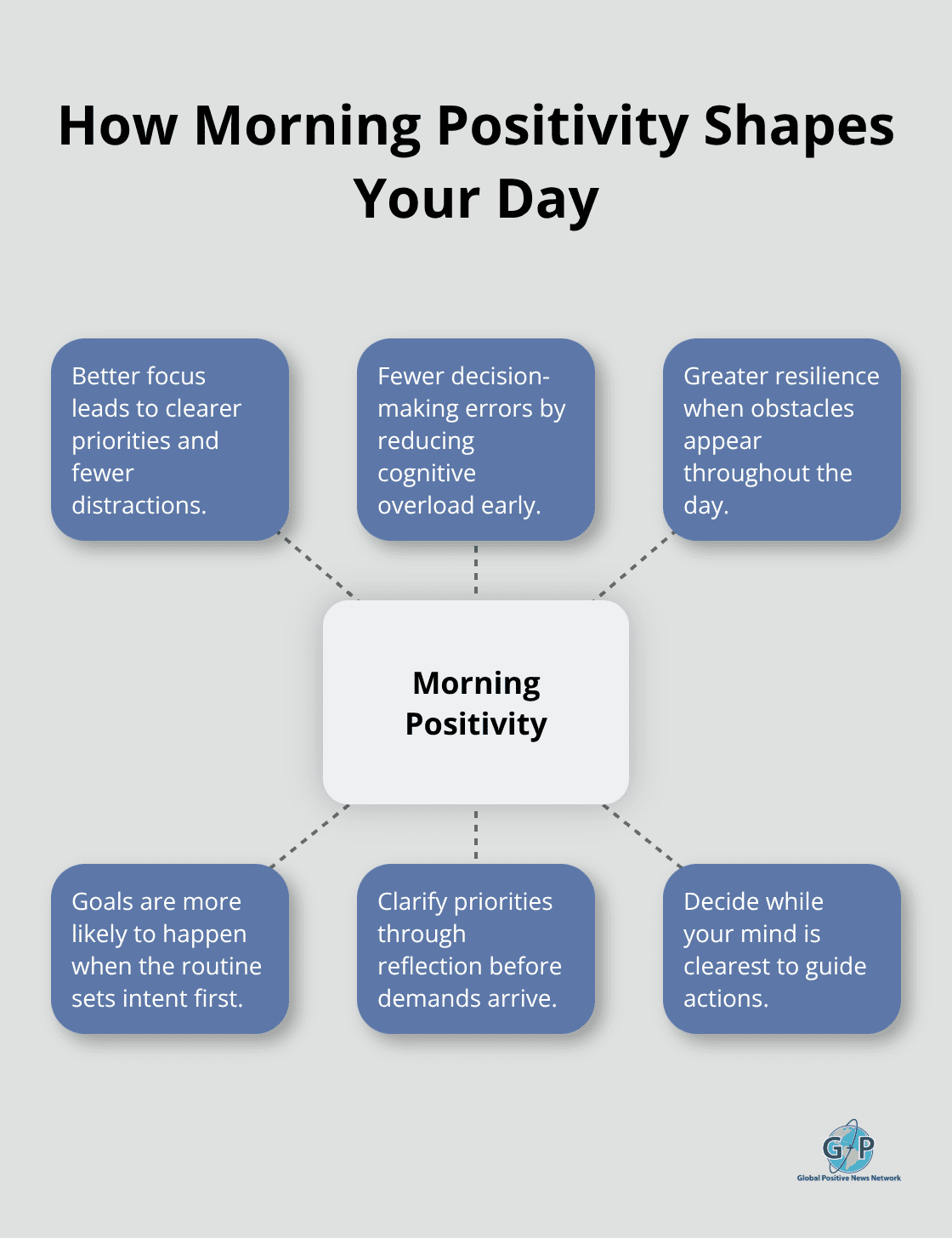
Studies on self-affirmations show they reduce stress and improve health behaviors. The difference isn’t subtle. People who start with positivity prompts report better focus, fewer decision-making errors, and more resilience when obstacles appear. Your morning routine also determines whether your goals actually happen. When you clarify priorities early through reflection questions, you’re not guessing what matters-you’re deciding it while your mind is clearest.
How Successful People Use Their Mornings
A study cited in Bloomberg Businessweek found that highly successful people like Howard Schultz wake at 4:30 am and use their morning for intentional activities rather than reacting to demands. Tim Ferriss emphasizes that a simple ritual like journaling creates a sense of control that carries throughout the day. The practical truth is this: people who use morning positivity prompts complete more of their actual goals because they’ve already aligned their actions with their values before the world starts pulling them in different directions (without this clarity, your day gets hijacked by urgency instead of importance).
The Foundation for Long-Term Wellbeing
Long-term wellbeing depends on this daily reset because you essentially choose your mental and emotional baseline before anything external can influence it. Your morning positivity practice becomes the anchor that keeps you grounded when life gets chaotic. This foundation matters more than any single tactic or tool you might adopt later. With this understanding of why mornings matter, the next step is learning which specific prompts actually work and how to use them effectively.
Daily Positivity Prompts That Actually Work
Start With Specific Gratitude
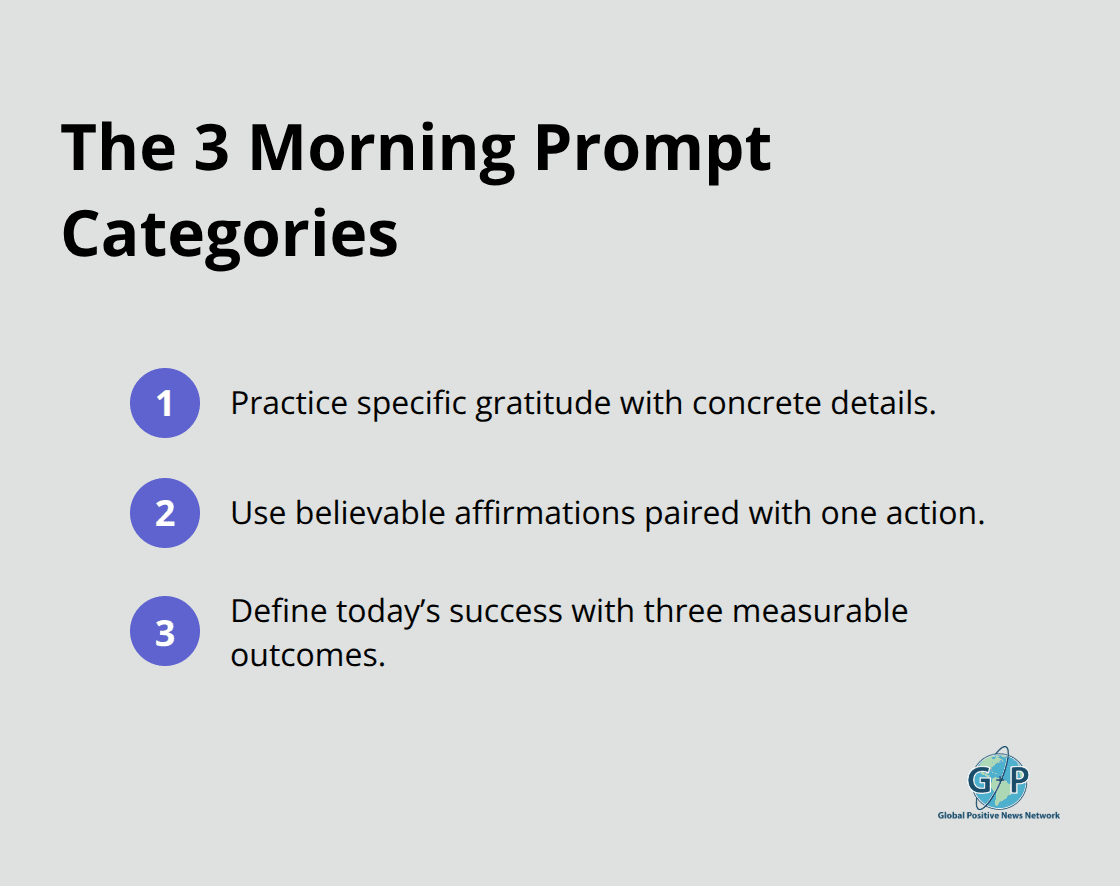
Gratitude shifts your mental state faster than any other prompt, and research supports this approach. Write three specific things you’re grateful for today, but don’t just list them-explain why each one matters to you. This distinction matters because vague gratitude doesn’t rewire your brain the same way specific gratitude does. Instead of writing coffee, write that your coffee gave you five quiet minutes before the chaos started. Instead of family, write that your partner made breakfast so you could sleep an extra fifteen minutes. Research on affirmations shows that concrete details activate your brain’s reward system more effectively than generic statements. Spend three to five minutes on this prompt alone.
Build Affirmations You Actually Believe
Move directly into affirmations that feel believable to you, which is where most people fail. A study by Sherman and colleagues found that affirmations that feel too distant from your current reality actually trigger resistance instead of acceptance. If you tell yourself “I am a confident public speaker” but you’re terrified of presentations, your brain rejects the statement and you end up feeling worse. Instead, use incremental affirmations like “I am building my confidence with each small conversation” or “I can take one small step toward speaking up today.” Rate each affirmation on a scale of one to ten for believability. If it scores below six, adjust it to something more plausible. This approach prevents the cognitive backlash that kills morning routines.
Write one action you’ll take today that supports your affirmation-maybe that’s speaking up once in a meeting or preparing for a presentation through ten minutes of practice. The affirmation becomes real only when paired with actual behavior.
Clarify What Success Looks Like Today
Reflection questions cut through the noise and clarify what actually matters today. Ask yourself what three things would make today successful, then define what success looks like for each one. Success isn’t vague-it’s measurable. Instead of “I want to be productive,” write “I will complete the client proposal and respond to five emails and take a thirty-minute walk.” These specifics prevent decision fatigue because you’ve already decided what matters before your day starts.
Ask yourself what might derail you and how your best self would handle it. This prompt, inspired by the High-Performance Planner framework, forces you to anticipate obstacles rather than get blindsided by them. If you know that afternoon slump hits at three o’clock and you typically scroll your phone, plan what you’ll do instead-a five-minute walk, water, or a stretch break. These three prompt categories-gratitude with specifics, believable affirmations paired with action, and reflection questions with measurable daily success metrics-take twelve to fifteen minutes total and create the mental clarity that determines whether your day happens intentionally or accidentally.
The real challenge isn’t knowing which prompts work. The real challenge is making them a consistent habit that actually sticks, which requires a different approach entirely.
Making Your Morning Routine Non-Negotiable
Test Prompts Before You Commit
The prompts work only if you actually use them, and most people abandon their morning routine within two weeks because they chose prompts that felt like obligations instead of moments they genuinely wanted. Test different prompts for three days each before committing to any routine. Write the gratitude prompt one morning, try the affirmation-plus-action approach the next day, then test the reflection questions on day three. Pay attention to which one makes you feel different-not which one sounds best in theory. Some people feel energized by specificity and measurable goals, so the reflection questions that demand defining success metrics become their anchor. Others feel trapped by too much structure and need the open-ended space that gratitude prompts provide. Your brain will tell you which prompts actually work for you if you listen instead of forcing yourself into someone else’s routine.
Choose a Time and Location You Can Protect
Once you identify the prompts that resonate, set a non-negotiable time and location. Research from behavioral psychology shows that habit formation requires consistency in both timing and environment-your brain needs the same trigger to activate the same response. Choose a time when you have genuine control over your schedule, not the earliest possible wake-up time. If you wake at six but your kids interrupt you at six-fifteen, your routine fails every single day. Instead, pick a time you can protect, whether that’s five-thirty before anyone wakes or seven-thirty after breakfast when things settle. Set your location too. Some people journal at the kitchen table with coffee, others in a specific chair by a window, others in their car before work. The location matters because your brain associates that space with the prompt-over time, sitting in that spot naturally triggers the mental state you need. One study found that people who designated a specific location completed their routine more consistently than those who journaled in random places throughout their home.
Track Progress and Adjust What Doesn’t Work
Track what actually happens, not what you think should happen. Most people fail because they expect perfection and quit after missing two days. Instead, use a simple tracking method-a calendar where you mark an X for each day you complete your prompts, a note in your phone, or a spreadsheet if you like data. Track only whether you did the prompts, not how you felt or whether they worked perfectly. After two weeks, review what’s working and what’s not. If you chose fifteen-minute prompts but realistically only have ten minutes, compress them. If you picked a six-thirty wake-up but consistently sleep through it, move to seven.
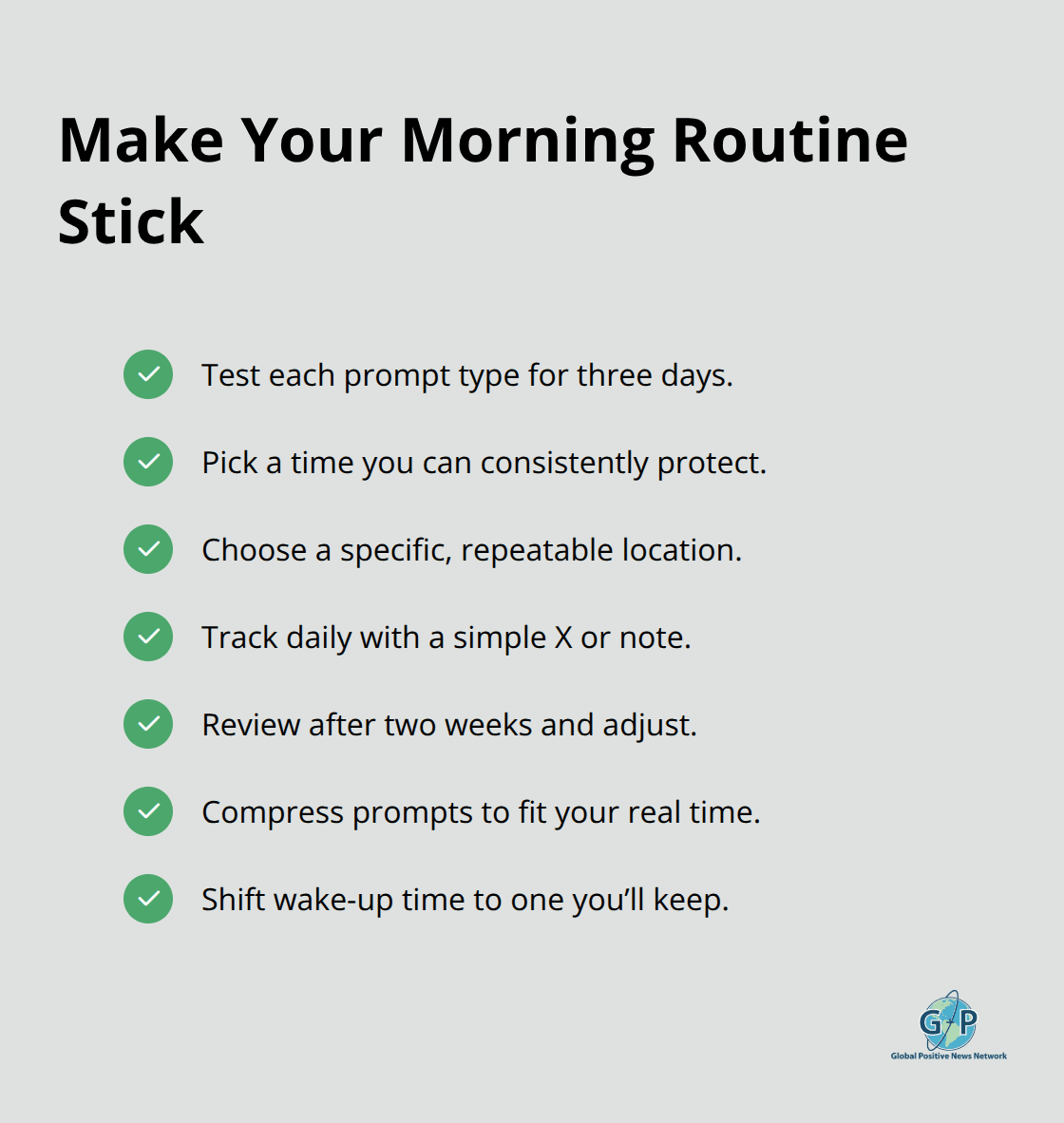
The routine that works is the one you’ll actually maintain, not the one that looks impressive on paper.
Final Thoughts
Your morning positivity practice doesn’t require perfection or pre-dawn wake-ups. You claim fifteen minutes to decide how you want to show up before the day decides for you, and daily positivity prompts work because they’re simple, specific, and grounded in how your brain actually functions. Gratitude with concrete details rewires your reward system, believable affirmations paired with real actions build confidence without triggering resistance, and reflection questions that define measurable success prevent decision fatigue and keep you focused on what matters.
The transformation happens quietly over time. After two weeks of consistent practice, you’ll notice you make fewer reactive decisions, and after a month, obstacles feel less overwhelming because you’ve already anticipated them (your baseline mental state shifts after three months, though you won’t suddenly become a different person-you’ll operate from intention instead of autopilot). Start with one prompt category that resonates with you, test it for three days, pick a time and location you can actually protect, and track your progress without judgment.
The routine that works is the one you’ll maintain, not the one that looks impressive in theory. Choose your first prompt today, set your time tomorrow, and commit to one week-one week is enough to feel the difference. At Global Positive News Network, we believe that small daily practices create lasting change.