

Most people end their day scrolling through their phones or replaying stressful moments. At Global Positive News Network, we believe there’s a better way to close out your evening.
Daily positive reflection prompts offer a simple yet powerful practice to shift your mindset before bed. Just a few minutes of intentional reflection can reduce anxiety, strengthen your sense of gratitude, and help you understand yourself better.
Why Reflection Before Bed Actually Changes Your Brain
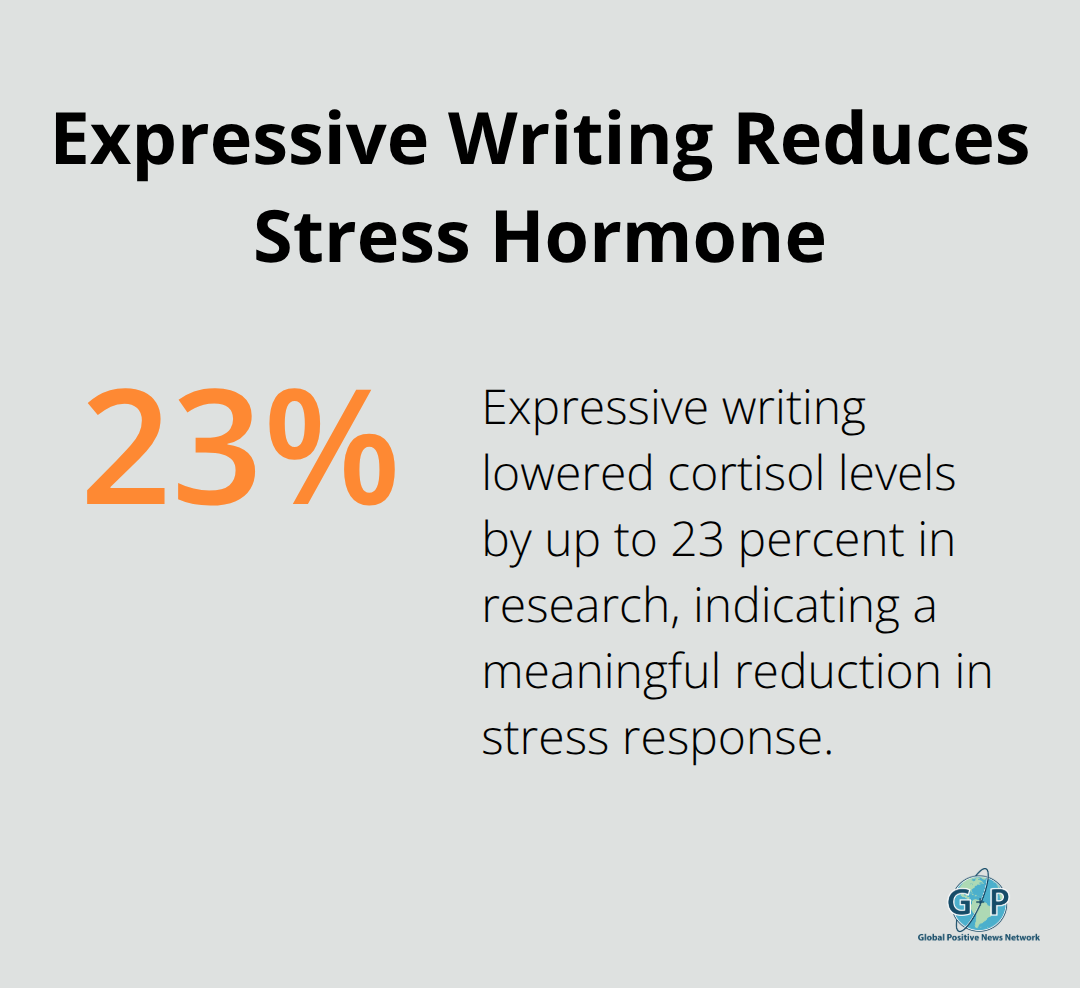
Reflection before sleep isn’t just a feel-good practice-neuroscience confirms its power. Research shows that journaling rewires neural pathways in the prefrontal cortex, the area responsible for emotional regulation and decision-making. When you spend 10 to 15 minutes reflecting on your day, you train your brain to process emotions more effectively. Most people keep their nervous system in a heightened state right up until they try to sleep, which explains why so many struggle with insomnia and anxiety. Research has shown that expressive writing lowers cortisol levels by up to 23 percent, the hormone directly tied to stress. That’s not marginal-that’s a significant drop in your body’s stress response, which happens when you actually write or speak about what occurred during your day rather than ruminate silently.
The Immediate Anxiety Relief You’ll Notice Tonight
Evening reflection on your day with specific prompts interrupts the rumination cycle that keeps your mind spinning. Instead of replaying embarrassing moments or worrying about tomorrow, you direct your thoughts toward what went well, what you learned, and what you’re grateful for. A 2004 study by Burton and King in the Journal of Research in Personality demonstrated that people who wrote about positive experiences showed measurable improvements in mood compared to those who didn’t. Specificity matters-vague reflection doesn’t work. Writing or saying something like “I’m grateful I had coffee this morning” actually engages your brain differently than thinking “I had a good day.” Your emotional vocabulary becomes more granular, which means you can identify and name subtle emotions instead of lumping everything under “stressed” or “tired.” This precision in naming emotions literally deactivates the amygdala, your brain’s alarm center, according to affect labeling research.
Building Self-Awareness That Shapes Tomorrow’s Choices
Daily reflection creates a feedback loop between your actions and their outcomes. After 30 days of consistent evening reflection, research by Pennebaker and Smyth in Writing to Heal shows that people report clearer values, stronger resilience, and more stable moods. You start noticing patterns-which situations drain you, which relationships energize you, which habits actually serve you. This isn’t theoretical; it’s practical self-knowledge that directly influences how you respond to similar situations the next day. When you identify that a particular conversation left you feeling anxious, you can plan differently next time. When you notice that you felt most peaceful after a walk, you can prioritize that activity. Reflection also strengthens your sense of agency-the feeling that you have some control over your life rather than being swept along by circumstances. This sense of agency stands as one of the strongest predictors of resilience and mental health according to decades of psychological research.
How Reflection Prepares You for Better Decisions Tomorrow
The patterns you uncover through evening reflection directly shape the choices you make the following day. You don’t just feel better; you act differently. This shift happens because reflection moves information from your emotional brain into your rational brain, where you can actually use it. When you notice that certain people drain your energy or that specific times of day trigger anxiety, you gain the power to adjust. You might schedule difficult conversations earlier in the day when you’re fresher, or you might set boundaries with people who consistently leave you depleted. These aren’t small changes-they compound over weeks and months into a fundamentally different relationship with your own life.
Setting Up Your Evening Reflection Practice
Choose Your Timing Strategically
Timing matters more than most people realize. The optimal window for evening reflection is 30 to 60 minutes before bed, not right at bedtime when your brain is already winding down, and not immediately after dinner when your nervous system is still processing food. Research on sleep hygiene and evening reflection timing shows that ending your day with a calming activity significantly improves sleep quality, but only if you give your brain time to transition from reflection to rest. If you choose 8:30 pm for reflection and your bedtime is 9:30 pm, you’ve created a natural buffer. Consistency matters more than the exact time. Your brain thrives on predictability, so selecting the same 15-minute window each evening trains your body to expect this practice and prepares your nervous system accordingly. Many people fail at evening reflection because they treat it as something to squeeze in whenever they remember, which means it never happens. Instead, anchor your reflection to an existing habit. If you always brew tea at 8 pm, that’s your signal to sit down with your journal or voice recorder. If you finish dinner at 7 pm, reflection at 7:15 pm becomes automatic. This removes decision fatigue and makes the practice stick.
Design a Space That Invites Reflection
Your physical space directly influences the quality of your reflection. You need a location where interruptions won’t happen and distractions are minimal. This doesn’t mean a fancy setup; it means your phone is in another room, notifications are silenced, and household members know you’re unavailable for 15 minutes. A comfortable chair, a desk, or even your bed works fine if you’re not using it for sleep. Some people keep a dedicated journal on their nightstand; others use their phone’s voice memo app. The format matters far less than the barrier to starting. If your journal is buried in a drawer, you won’t use it. If your reflection prompt app requires three taps to open, you’ll skip it. Place whatever tool you choose in plain sight. Temperature and lighting affect your nervous system too.
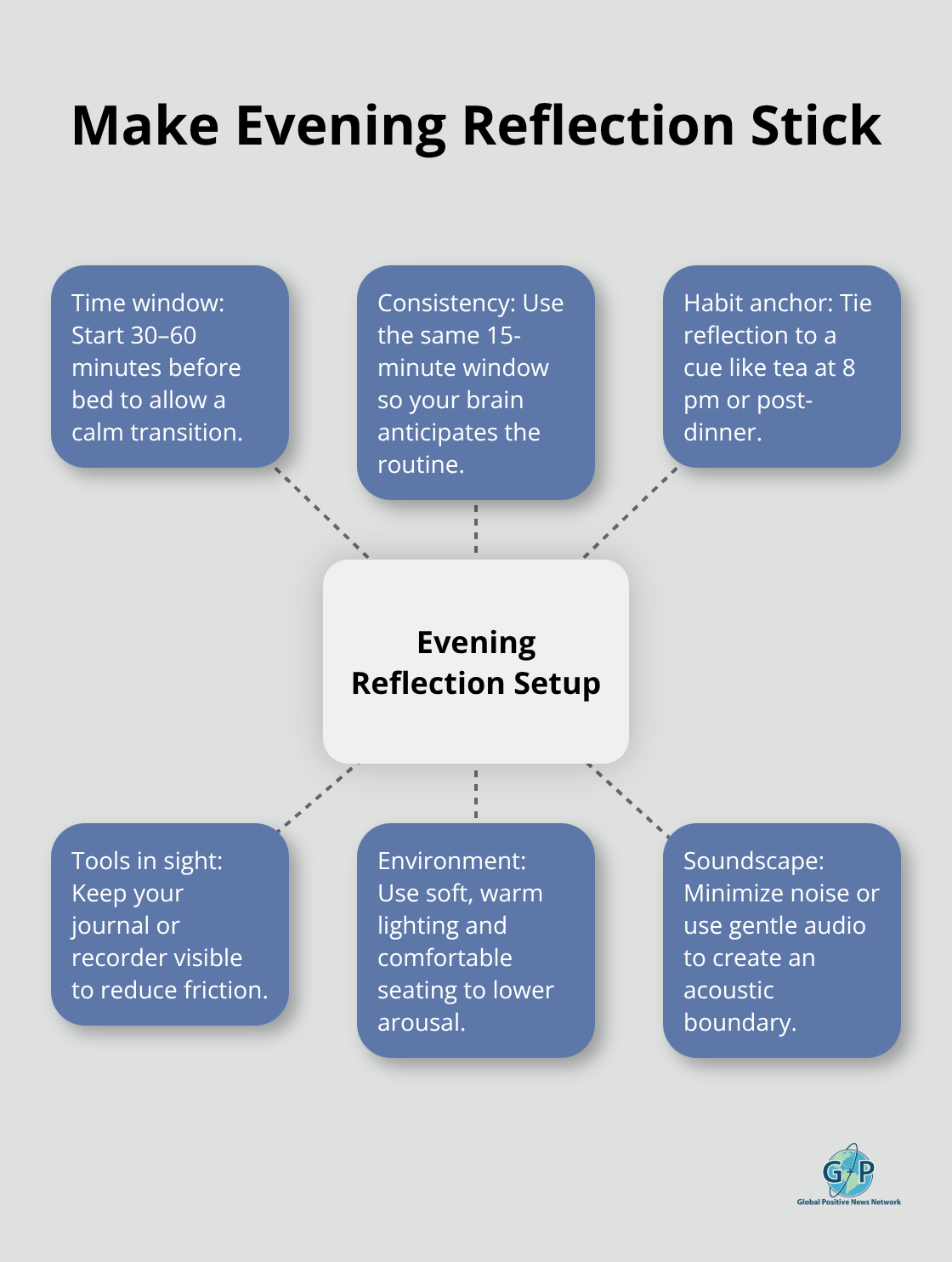
A room that’s too warm makes you drowsy before you’ve finished reflecting; a room that’s too cold creates tension. Soft, warm lighting signals your brain that the day is ending without the harsh stimulation of overhead lights. Some people light a candle during reflection, which adds a tactile ritual that signals this time is separate from the rest of the day. The space doesn’t need to be silent, but it should be quiet enough that your own thoughts are audible. If that’s your situation, noise-canceling headphones or earpods playing gentle ambient sound can create an acoustic boundary. The goal is simple: make your reflection space so easy to access and so physically comfortable that starting requires almost no willpower.
Select Your Method: Writing or Speaking
Writing versus speaking is a practical choice with real consequences. Expressive writing for stress reduction produces benefits, but speaking into a voice recorder works nearly as well. If you have children who interrupt, speaking might actually be easier because you can keep your eyes open and ears alert. If you live with a partner who finds journaling strange, writing privately in a notebook avoids awkward conversations. The neurological difference is small; the behavioral difference is enormous. You’ll maintain a daily reflection practice only if the method fits your life. Some people write three sentences; others write half a page. Neither is better. What matters is that you externalize your thoughts rather than keep them trapped in your head. When you write or speak, you engage different brain regions than silent thought. You’re forced to find words, which means you translate vague feelings into language, and that translation is where the neurological benefit happens.
Abandon Perfectionism Entirely
Self-judgment kills this practice instantly. The moment you start thinking about grammar, handwriting, or whether your reflection sounds intelligent, you’ve shifted from processing emotions to performing for an imaginary audience. Your reflection is for your eyes and ears only. Write like no one will ever read it. Misspell words. Write fragments. Contradict yourself. This raw honesty is what allows your brain to actually process the day instead of polishing a narrative. If perfectionism is your default mode, give yourself explicit permission to write badly. Some people find it helpful to write their first line as deliberately sloppy to break the perfectionism habit. Others set a timer for 15 minutes and commit to writing the entire time without rereading what they’ve written. The goal is speed and honesty, not eloquence. Your brain will resist any practice that requires friction, so eliminate it entirely-including the friction of self-judgment. What you’re about to discover in the next section are 30 specific prompts designed to guide your reflection without demanding perfection.
30 Prompts That Actually Work
The prompts that follow aren’t generic questions designed to make you feel better. They’re built on research about what actually shifts your emotional state and creates lasting self-awareness. The most effective prompts fall into three categories, each addressing a different aspect of your evening reflection. Gratitude prompts work because they interrupt the brain’s negativity bias, the tendency to fixate on what went wrong instead of what went right. A study from the Greater Good Science Center found that people who wrote three specific good things that happened daily showed measurable improvements in mood within two weeks. The key word is specific.
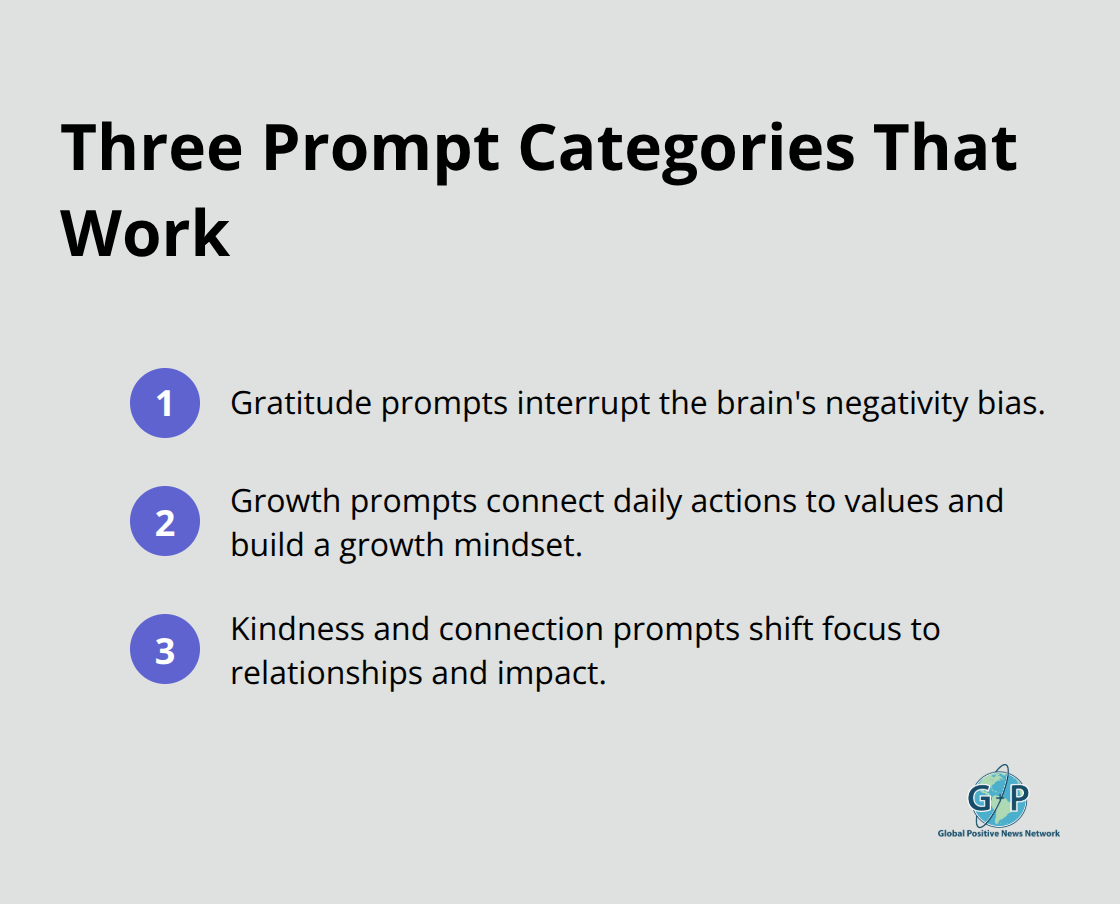
Instead of writing “I had a good day,” write “My coworker complimented my presentation, and it reminded me I can handle pressure.” That specificity activates different neural pathways than vague reflection. Personal growth prompts work because they connect your daily actions to your larger values and goals. When you identify what you learned or how you handled a challenge, you build what psychologists call a growth mindset. Research by Pennebaker and Smyth shows that people who tracked their progress and small wins reported stronger motivation and resilience after 30 days of consistent practice. Kindness and connection prompts work because they shift your focus from internal stress to external relationships and impact. Writing about someone you appreciated or an act of kindness you witnessed activates your parasympathetic nervous system, the branch responsible for calming your body. These three categories together create a complete evening reflection practice that addresses stress relief, self-understanding, and emotional connection.
Gratitude That Goes Beyond Surface Level
The most common mistake with gratitude prompts is staying too abstract. What went well today? Everything, nothing, somewhere in between. That question doesn’t work because it forces your brain to generalize. Instead, ask yourself what small moment made you feel calm, what person said something that landed with you, or what task felt easier than expected. Write the moment in sensory detail: what you saw, heard, or felt physically. Did the coffee taste better than usual? Did someone’s laugh actually make you smile instead of just hearing it? Did a task take less time than you anticipated? These concrete details matter because your brain stores memories through sensory information, not through abstract concepts. A second powerful approach is gratitude for things you normally take for granted. What did your body do today without you asking? You woke up. You could see, hear, and move. You breathed without thinking about it. This isn’t spiritual bypassing of real problems; it’s neurological grounding. When you acknowledge these baseline functions, you activate the part of your brain that recognizes abundance instead of the part that scans for threats. A third prompt that works is appreciation for one person in your life and exactly why they matter. Not a generic thank you, but specific: What did they do or say? How did it change your day? This practice strengthens your social connections, which research confirms is one of the strongest predictors of long-term well-being.
Growth Questions That Build Real Self-Knowledge
Growth prompts work best when you pair them with honest assessment, not self-criticism. Instead of asking what you did wrong today, ask what was hard and what you learned from it. These are different questions. The first activates shame; the second activates learning. A powerful prompt is: What situation challenged you today, and how did you respond? Then write what you’d do differently next time if you faced the same situation. This creates a feedback loop where you actively build your decision-making skills. Another effective approach is tracking small wins, not just major accomplishments. Did you send an email you’d been avoiding? That counts. Did you have a difficult conversation earlier in the day when you were fresher instead of waiting until evening? That’s progress. Did you choose to take a walk instead of scrolling? Write it down. These small wins compound. After 30 days, you’ll have documented dozens of moments where you chose differently, and that evidence rewires how you see yourself. A third prompt that yields results is asking what you need tomorrow. Not what you should do, but what you actually need. Do you need more sleep? Less time in meetings? A conversation with a specific person? A break from something? Writing this down before bed means you’re more likely to actually prioritize it the next day instead of drifting into default patterns.
Connection Prompts That Combat Isolation
Kindness and connection prompts prevent the isolation trap that modern life creates. One powerful prompt is simply: Who did I interact with today, and did that interaction feel good? If it didn’t, why not? This isn’t about blaming the other person; it’s about noticing patterns. Do certain relationships consistently leave you depleted? Do some conversations energize you? Writing this down helps you make intentional choices about where you direct your energy. A second approach is reflecting on acts of kindness you witnessed or performed. Did someone help you without being asked? Did you help someone? Did you notice someone struggling and offer support, or did you stay silent? There’s no judgment here; the point is awareness. Over time, these prompts help you see yourself as someone who contributes to the world around you, which directly impacts your sense of purpose and connection. A third prompt that works is writing a brief note of appreciation to one person, even if you never send it. What do you value about them? How have they shown up for you? This practice strengthens your ability to notice and appreciate the people in your life, which deepens your relationships and your own sense of belonging.
Final Thoughts
Thirty days of consistent evening reflection produces measurable shifts in mood, resilience, and decision-making. People who maintain this practice report greater emotional stability, clearer understanding of their values, and stronger ability to handle stress. These improvements compound over time, and after a month of daily positive reflection prompts, you’ll notice you respond differently to challenges, choose relationships more intentionally, and feel less trapped by anxiety.
Starting tonight requires nothing except 15 minutes and one prompt. You don’t need a fancy journal or the perfect space-just externalize one thought about your day, one thing you’re grateful for, and one thing you learned. The first week feels awkward, but the practice becomes automatic within two weeks, and you’ll notice better sleep and more clarity about what actually matters.
We at Global Positive News Network invite you to explore more ways to build positivity into your daily life and discover how daily positive reflection prompts can transform your evenings and reshape your relationship with yourself.