

Optimism isn’t a luxury-it’s a tool that rewires how your brain handles stress and shapes your outcomes. At Global Positive News Network, we’ve seen how daily optimism reminders, even small ones, shift people’s mental health in measurable ways.
This post shows you exactly how to build this habit, from five-minute morning practices to the apps and communities that support it. The science is clear, and the path forward is practical.
Why Optimism Actually Changes Your Brain
Your brain’s response to optimism is measurable and immediate. Research from neuroscience shows that positive thinking activates your prefrontal cortex-the area responsible for decision-making and emotional regulation-while reducing activity in your amygdala, which triggers fear and stress responses. This isn’t metaphorical. Dispositional optimism correlates with substantially lower cardiovascular death rates. People with an optimistic outlook live longer and experience fewer stress-related illnesses.
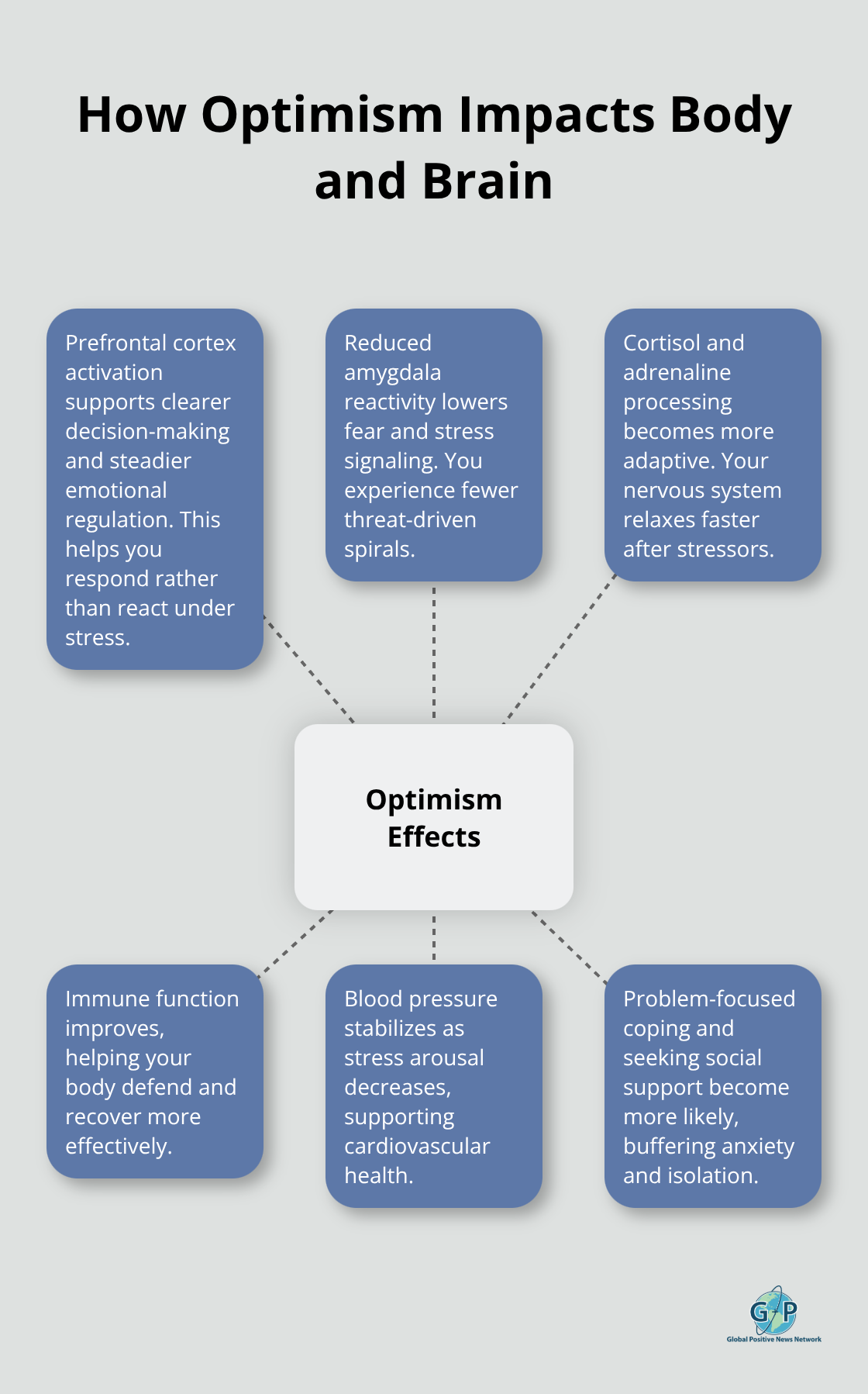
The mechanism is straightforward: optimism shifts how your body processes cortisol and adrenaline. When you expect positive outcomes, your nervous system relaxes. Your immune function improves. Your blood pressure stabilizes. Daily optimism reminders aren’t feel-good fluff-they’re a direct intervention in your physiology. Optimists use problem-focused coping strategies rather than avoidance, which means they tackle challenges head-on instead of spiraling into anxiety. They also seek social support more readily, creating stronger networks that buffer against depression and isolation.
How Optimism Transforms Your Decisions
Optimism doesn’t just improve your mood; it transforms your decisions and outcomes. People with hopeful mindsets make healthier lifestyle choices. Research by Steptoe and colleagues found that optimists engage in regular physical activity, avoid smoking, and drink moderately-not because they’re forced to, but because they genuinely believe their actions matter. That belief matters more than willpower.
Medical Recovery and Real-World Outcomes
In medical settings, optimism predicts faster recovery. Patients undergoing cardiac bypass surgery who scored high on optimism measures returned to normal daily activities weeks earlier than pessimistic patients. Cancer patients with optimistic dispositions show better quality of life during treatment and, in some cancers like head and neck cancer, better survival outcomes.
The Balance Between Realism and Hope
Optimism paired with active coping means you acknowledge difficulties while maintaining forward momentum. The hopelessness you feel during hard times is real and valid-but it doesn’t have to be permanent. Small daily reminders redirect your attention toward achievable goals and past wins, rewiring your expectations over time.
Consistent practice builds what researchers call adaptive self-regulation: the ability to disengage from impossible goals and pivot toward attainable ones. That flexibility protects your mental health far more than rigid positivity ever could. This foundation of understanding how optimism works at the neurological and behavioral level sets the stage for the practical strategies that actually build this habit into your daily life.
How to Actually Build Optimism Into Your Daily Routine
The gap between understanding optimism and practicing it is where most people fail. You can read about cortisol reduction all day, but without a concrete system, nothing changes. The key is frequency over intensity. A five-minute morning practice beats a 20-minute weekend session because your brain responds to consistent, repeated signals. Research on habit formation shows that small daily actions compound faster than occasional bursts of effort.
Start Your Morning With a Specific Anchor
Try one anchor point in your day-ideally morning, when your mind is least cluttered. Place a sticky note on your bathroom mirror with a specific statement tied to something you actually care about, not generic affirmations. Instead of “I am capable,” write “I handled that difficult conversation yesterday, and I can do it again today.” This grounds optimism in your real life. The mirror is critical because you see it without choosing to, removing friction. Change the note every two weeks to prevent habituation; your brain stops processing messages it sees too often. Pair this with one micro-action: while brushing your teeth, mentally list one thing you did well yesterday, no matter how small. This takes 30 seconds and trains your brain to search for evidence of competence rather than failure.
Interrupt Your Default Patterns Throughout the Day
Position reminders where they interrupt your default thinking patterns. If you work at a desk, set three phone alerts at 9 AM, 1 PM, and 4 PM with rotating prompts: “What’s one thing working right now?” or “What small win can I claim today?” The alerts are brief and specific, not motivational speeches. Even brief prompts shift stress levels when repeated consistently. During lunch or a work break, spend two minutes writing down one concrete win-closing an email thread, finishing a task, helping someone. This isn’t gratitude journaling; it’s evidence collection. Your brain defaults to threat-scanning, so you have to manually feed it proof that things are working.
Consolidate Your Day Before Sleep
Create a one-sentence reflection before bed: “Today I moved forward because…” and finish it with something you actually did, not something you intended. This primes your brain to consolidate the day’s small victories into your long-term memory, making optimism feel earned rather than imposed. The combination of morning anchoring, midday reminders, and evening consolidation creates a feedback loop that rewires your expectations over weeks, not months.
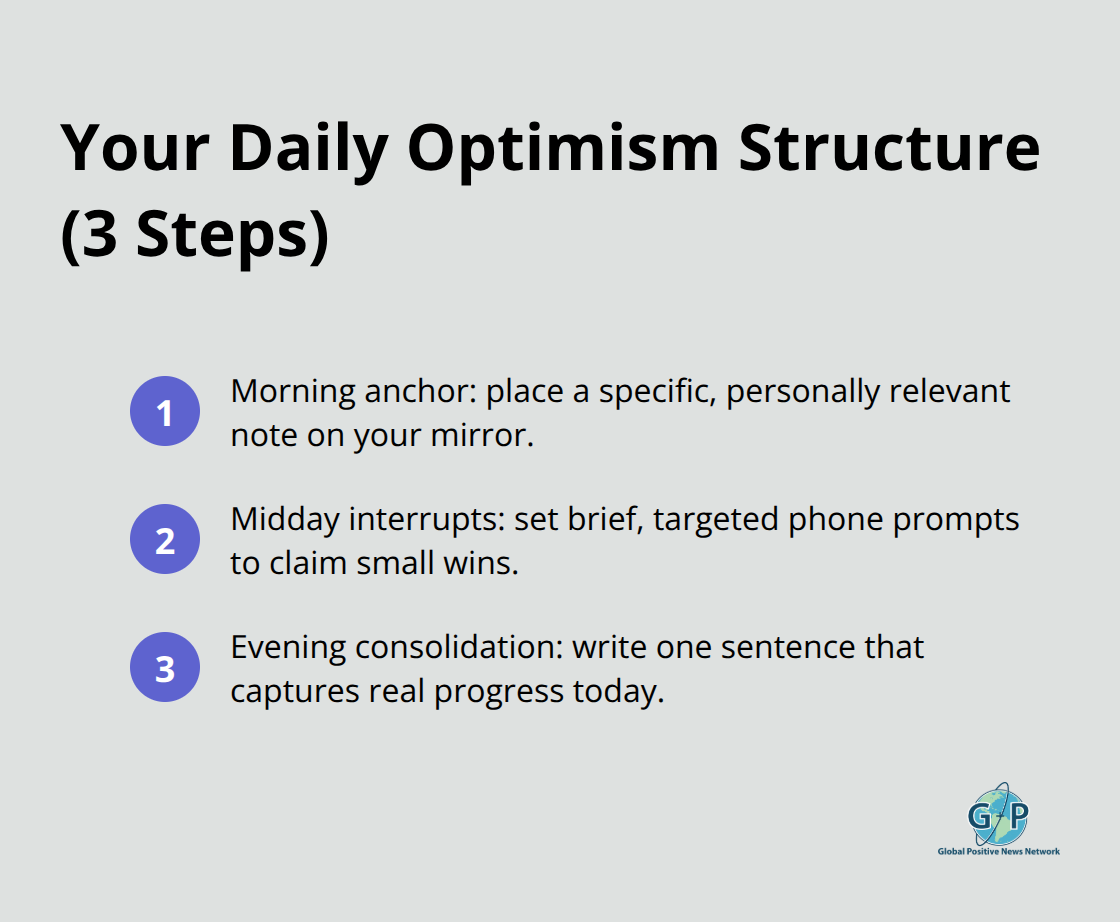
This daily structure works because it removes the burden of motivation. You don’t need to feel optimistic to start the practice-you simply follow the system. The optimism builds as evidence accumulates. Once you establish this foundation, the next step is identifying the specific tools and platforms that make these reminders effortless to maintain.
Tools and Resources to Support Your Optimism Journey
Apps That Remove Friction From Daily Practice
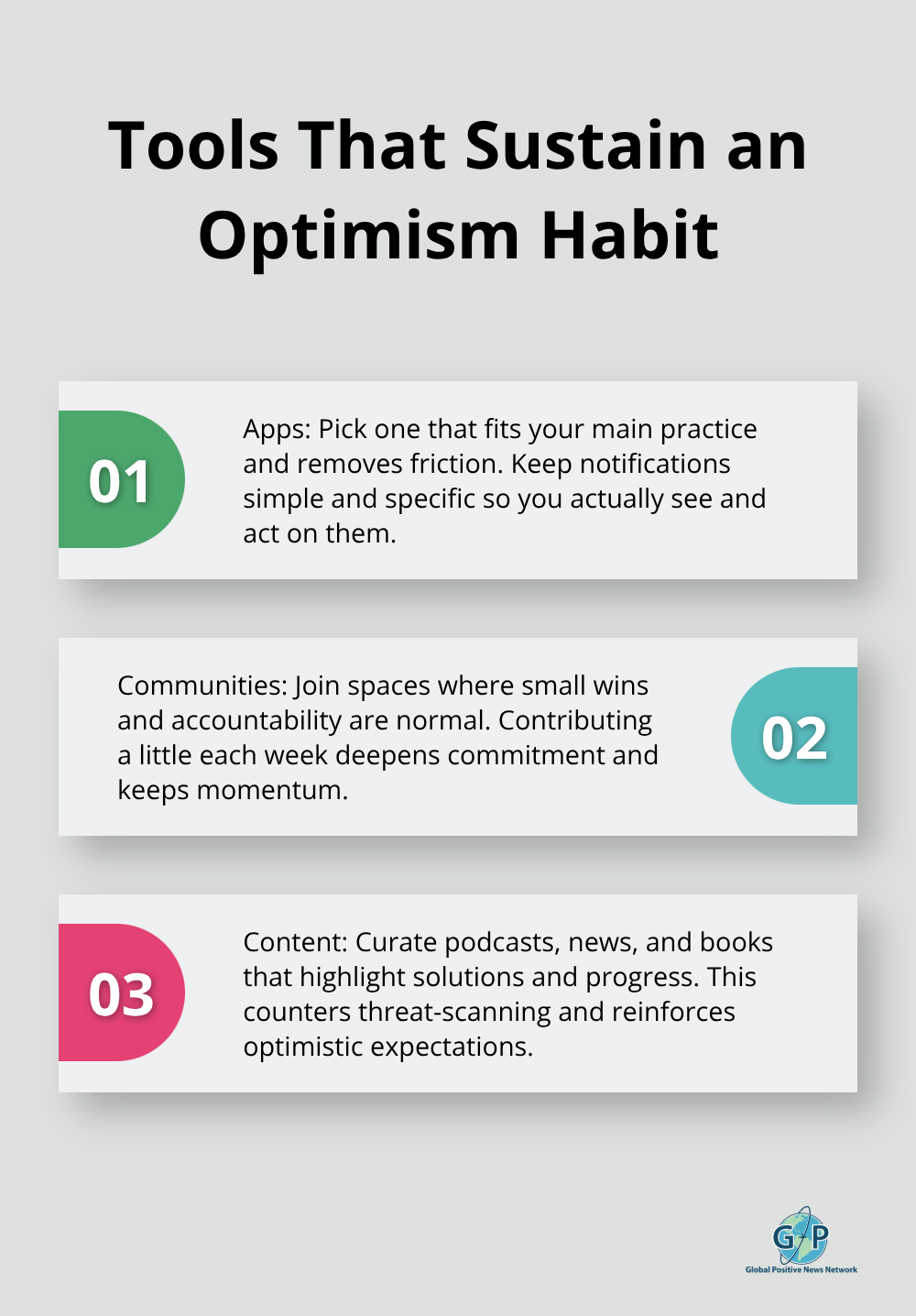
The apps flooding app stores promise daily optimism, but most fail because they lack specificity or demand too much friction. Streaks, a habit-tracking app with 4.65 stars, works because it removes guesswork-you define your exact habit (write one win, list one thing working, pause for three conscious breaths), set the time, and the app sends a single notification. No motivational speeches, no cluttered interface. The key is selecting apps that send reminders at moments you’ll actually see them, not at arbitrary times. Habitica transforms optimism tracking into a role-playing game where you level up a character, which appeals to people who respond to concrete progress markers rather than abstract positivity. Daylio, used by over 3 million people, lets you log your mood and track what activities boost it-this data reveals your personal optimism triggers.
If meditation anchors your practice, Insight Timer offers 700,000+ free guided meditations and includes a community feature where you see how many people meditated globally that day, creating a sense of shared effort. None of these apps work alone; they function as infrastructure for the daily structure you already built. The mistake people make is downloading five apps and abandoning all of them within two weeks. Try one app that matches your primary practice-either reminder-based (Streaks), mood-tracking (Daylio), or meditation-centered (Insight Timer)-and use it for 30 days before adding another layer.
Community Networks That Sustain Your Momentum
Community matters more than most people admit, especially when motivation dips. Reddit communities like r/DecidingToBeBetter have 800,000+ members sharing daily wins and accountability, which normalizes the struggle and prevents isolation. Facebook groups focused on gratitude or positive psychology attract people actively building these habits, creating reciprocal support where your small win inspires someone else’s momentum. Meetup.com hosts free or low-cost gratitude circles and optimism groups in most cities, offering in-person connection that digital reminders cannot replicate. Online support networks work best when you contribute, not just consume-share one small win weekly in a group, comment on someone else’s post, or offer a single line of encouragement. This transforms you from passive recipient to active participant, which deepens your commitment to the practice.
Content That Shapes Your Default Thinking
The content you consume shapes your default thinking, so you must curate your feeds deliberately. Podcasts like On Purpose with Jay Shetty focus on actionable wisdom rather than vague inspiration. News outlets like Good News Movement or Positive News publish verified stories of human progress and problem-solving, counteracting the constant stream of crisis coverage that trains your brain toward threat-scanning. Books like Atomic Habits by James Clear provide frameworks for habit stacking, showing exactly how to attach your optimism practice to existing routines like brushing teeth or morning coffee. The combination of tracking tools, community accountability, and curated content creates an environment where optimism becomes the default rather than the exception.
Final Thoughts
Daily optimism reminders work because they interrupt your brain’s threat-scanning default and train your attention toward what’s working. You don’t need perfection or motivation to start-you simply choose one anchor point (a mirror note, a phone alert, or a habit-tracking app) and commit to it for 30 days. The research shows that people who practice these reminders experience measurable improvements in stress levels, immune function, and decision-making within weeks, and the real power emerges after months when optimism stops feeling like effort.
Start small and let consistency compound your results. Pair your anchor with one micro-action that takes less than two minutes, then add community accountability once the foundation feels solid. This gradual approach prevents overwhelm and builds momentum that lasts, shifting you from occasional bursts of positivity to a sustained practice that rewires your expectations over time.
Visit Global Positive News Network to connect with stories and communities that reinforce your hopeful perspective. Your next step is choosing one practice from this post and tracking what shifts in your mood, energy, and outcomes over the coming month.
Explore more positive news:
Enjoying stories like this?
Global Positive News Network is reader-supported. If you’d like to support the mission, you can visit the Official GPNN store.