

Gratitude isn’t just a nice feeling-it’s a measurable force that reshapes how your brain processes emotions and stress. At Global Positive News Network, we’ve seen how daily gratitude reflections can transform mental health outcomes backed by real neuroscience.
This guide walks you through the science, practical techniques, and sustainable habits that make gratitude work in your actual life.
How Gratitude Rewires Your Brain for Better Mental Health
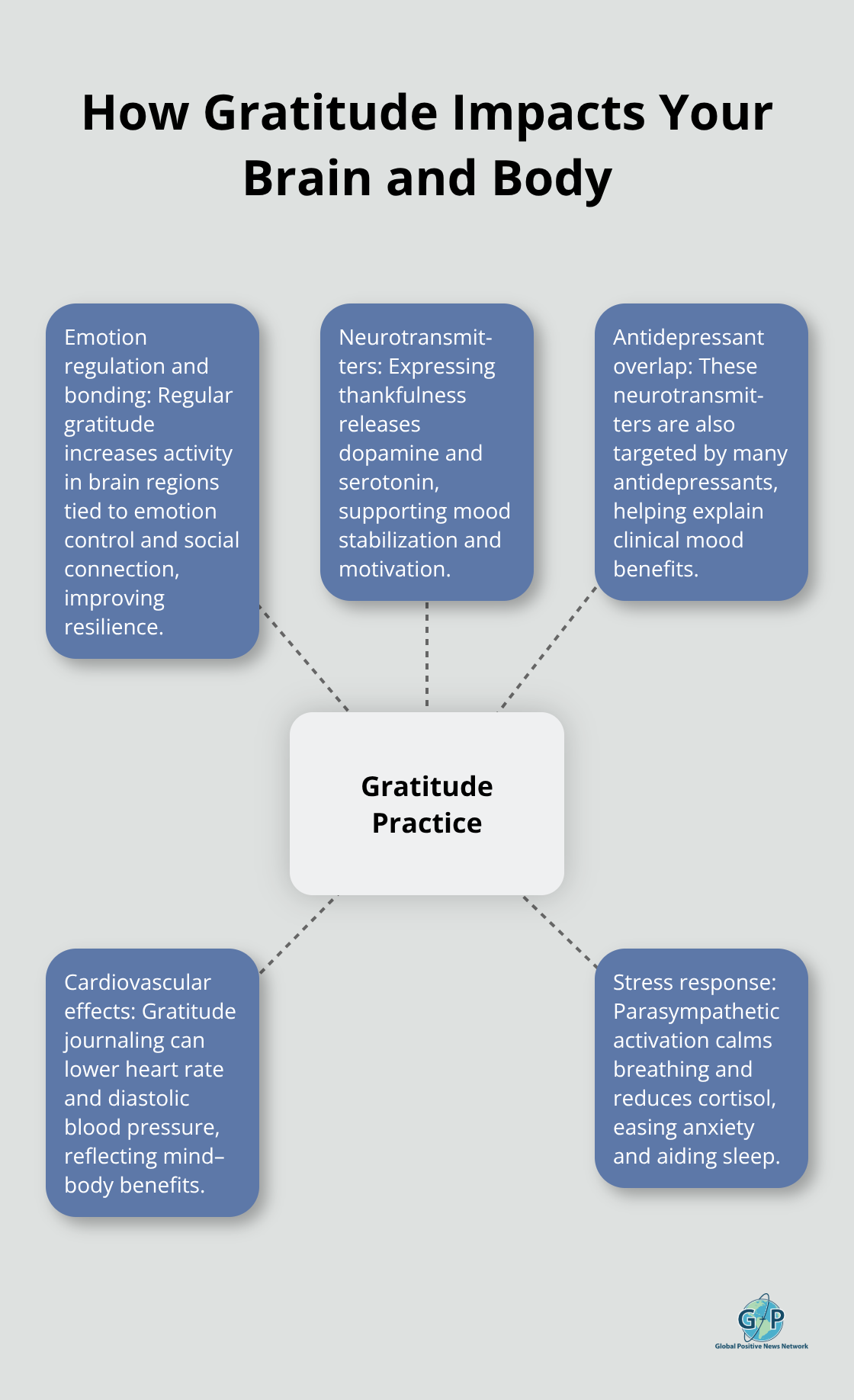
Gratitude doesn’t just feel good-it physically changes your brain in measurable ways. Research from UC Davis and UCLA shows that people who practice gratitude regularly experience stronger activity in brain regions responsible for emotion regulation and social bonding. When you express thankfulness, your brain releases dopamine and serotonin, the same neurotransmitters targeted by antidepressants. This means a consistent gratitude practice can be as powerful as medication for some people.
Physical Changes That Matter
Keeping a gratitude journal can decrease heart rate and diastolic blood pressure, demonstrating that mental shifts translate directly into cardiovascular benefits. Simply fostering grateful thoughts can slow and regulate your breathing in sync with your heartbeat, activating your parasympathetic nervous system-the part of your body that handles rest and recovery. This activation reduces cortisol, your primary stress hormone, which explains why gratitude practitioners report lower anxiety and better sleep quality.
The Sleep and Stress Connection
Sleep quality improves dramatically when gratitude becomes part of your evening routine. People who practice gratitude before bed experience fewer pre-sleep worries and rumination, falling asleep faster and sleeping more deeply. A grateful mindset keeps your attention anchored in the present rather than spiraling into anxiety about past failures or future uncertainties.
Gratitude also reduces stress by shifting your focus away from what’s missing and toward what’s working in your life. Research spanning over 70 studies with more than 26,000 participants links higher gratitude with lower depression symptoms and greater life satisfaction. The practical takeaway is simple: spend five minutes each evening naming three specific things you’re grateful for, including who helped you achieve them.
Why Specificity Transforms Your Brain
This specificity matters-generic gratitude statements don’t produce the same neurological benefits. UCLA Health researchers found that detailed, personalized gratitude activates stronger emotional responses than surface-level thankfulness. Start with concrete moments from your day rather than abstract ideas, and your brain will rewire itself toward noticing more positive events in the future. These brain changes (particularly in regions involved in emotion regulation and social bonding) create lasting resilience that compounds over weeks and months of consistent practice.
How to Start Your Gratitude Practice Today
The gap between understanding gratitude’s benefits and actually practicing it daily is where most people fail. You need concrete techniques that fit into your existing routine, not theoretical exercises that demand extra time you don’t have.
Morning Gratitude Journaling: Your Brain’s Best Start
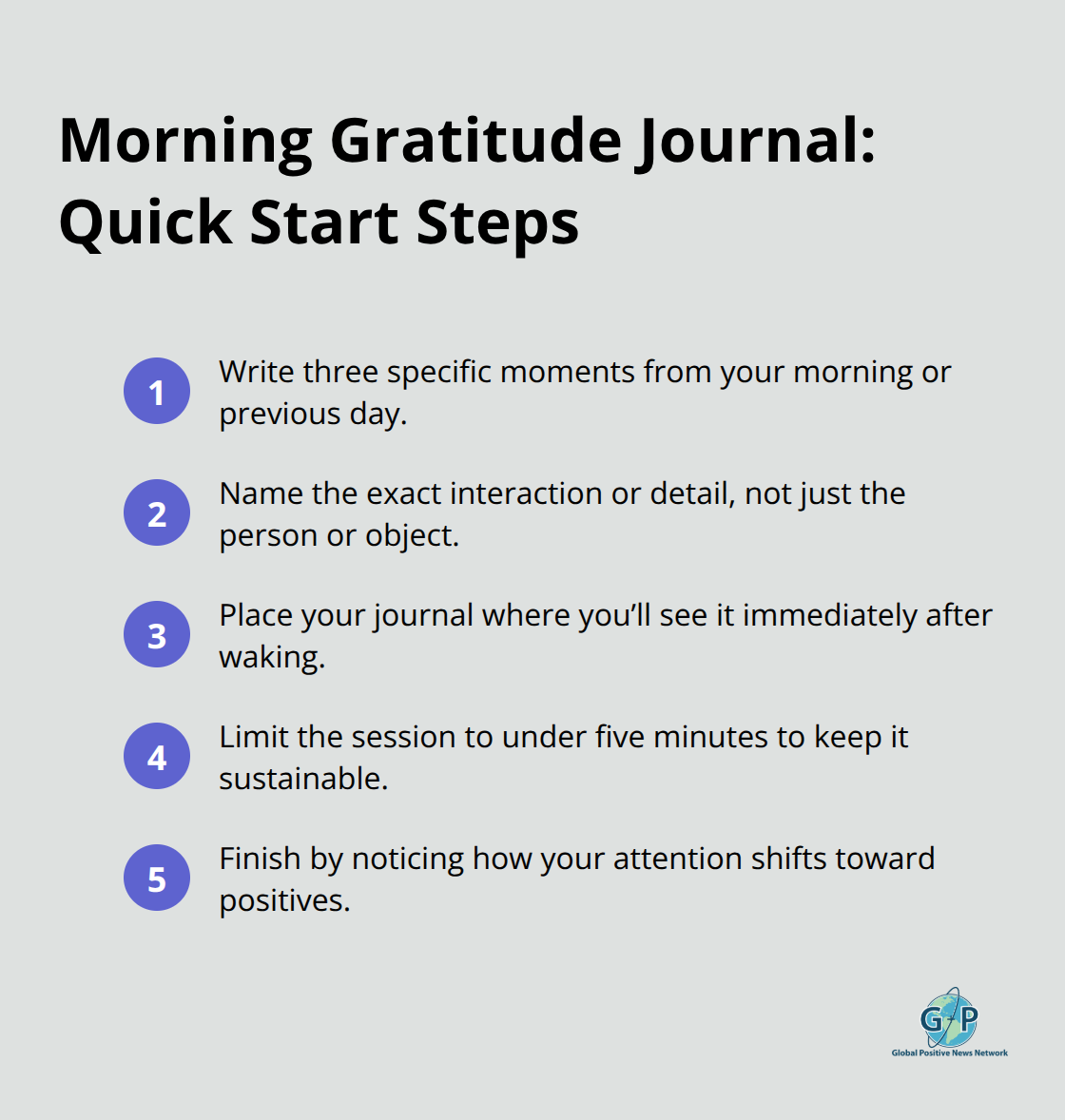
Write three specific things you’re grateful for within five minutes of waking up. Neuroscience research shows that practicing gratitude activates the medial prefrontal cortex, a brain region tied to emotion regulation and reward. Write the exact moment or interaction you’re grateful for, not just the person or object. Instead of writing “I’m grateful for my partner,” write “I’m grateful for the conversation my partner and I had about our weekend plans because it made me feel heard and connected.” This specificity activates the emotional centers in your brain far more effectively than generic statements.
Set your journal on your nightstand so it’s the first thing you see, or keep it next to your coffee maker. Most people complete this in under five minutes, and the practice immediately shifts your attention toward positive moments before the day even begins.
Gratitude During Everyday Activities
Integrate gratitude into activities you already do, eliminating the excuse that you lack time. During meals, pause for ten seconds before eating and mentally note one ingredient or person involved in preparing the food. This transforms eating from mindless consumption into mindful appreciation.
At work or home, identify one person’s specific action you appreciated that day, then send them a short message before bed. Research from the Greater Good Science Center shows that expressing appreciation to others strengthens social bonds and reduces loneliness, making this practice beneficial for both you and the recipient.
Evening Reflection: Your Gateway to Better Sleep
Spend three minutes before sleep asking yourself these questions: What happened today that I’m grateful for? Who helped me? How can I show appreciation tomorrow? Gratitude predicted greater subjective sleep quality and sleep duration, and less sleep latency and daytime dysfunction. This redirects your mind away from pre-sleep rumination and anxiety, directly improving sleep quality and depth.
Finding Your Optimal Frequency
Consistency matters more than perfection. Research spanning over 26,000 participants suggests practicing gratitude one to three times weekly produces stronger benefits than daily practice, which can lead to habituation. Try three days a week first, then expand once the habit feels automatic. This frequency prevents your brain from adapting to the practice while still building the neural pathways that support lasting emotional resilience.
As you establish these foundational techniques, the real challenge emerges: maintaining your practice when life gets chaotic. The next section explores how to build accountability systems and overcome the obstacles that derail most gratitude practitioners.
How to Maintain Your Gratitude Practice When Life Gets Messy
Build Accountability Through Community
Gratitude habits collapse when you treat them as solo projects. The moment stress spikes or routine changes, isolated practitioners quit. You need external accountability and systems that work regardless of your motivation level. Find a gratitude partner or small group of three to five people willing to share one specific thing they’re grateful for each week, either through a shared document, group chat, or email thread. Research shows that expressing appreciation to others strengthens social bonds, and when that expression happens within a structured accountability group, the habit sticks. Set a specific day and time-say, every Sunday at 6 PM-so the practice becomes as automatic as brushing your teeth.
Use Tools That Remove Decision Fatigue
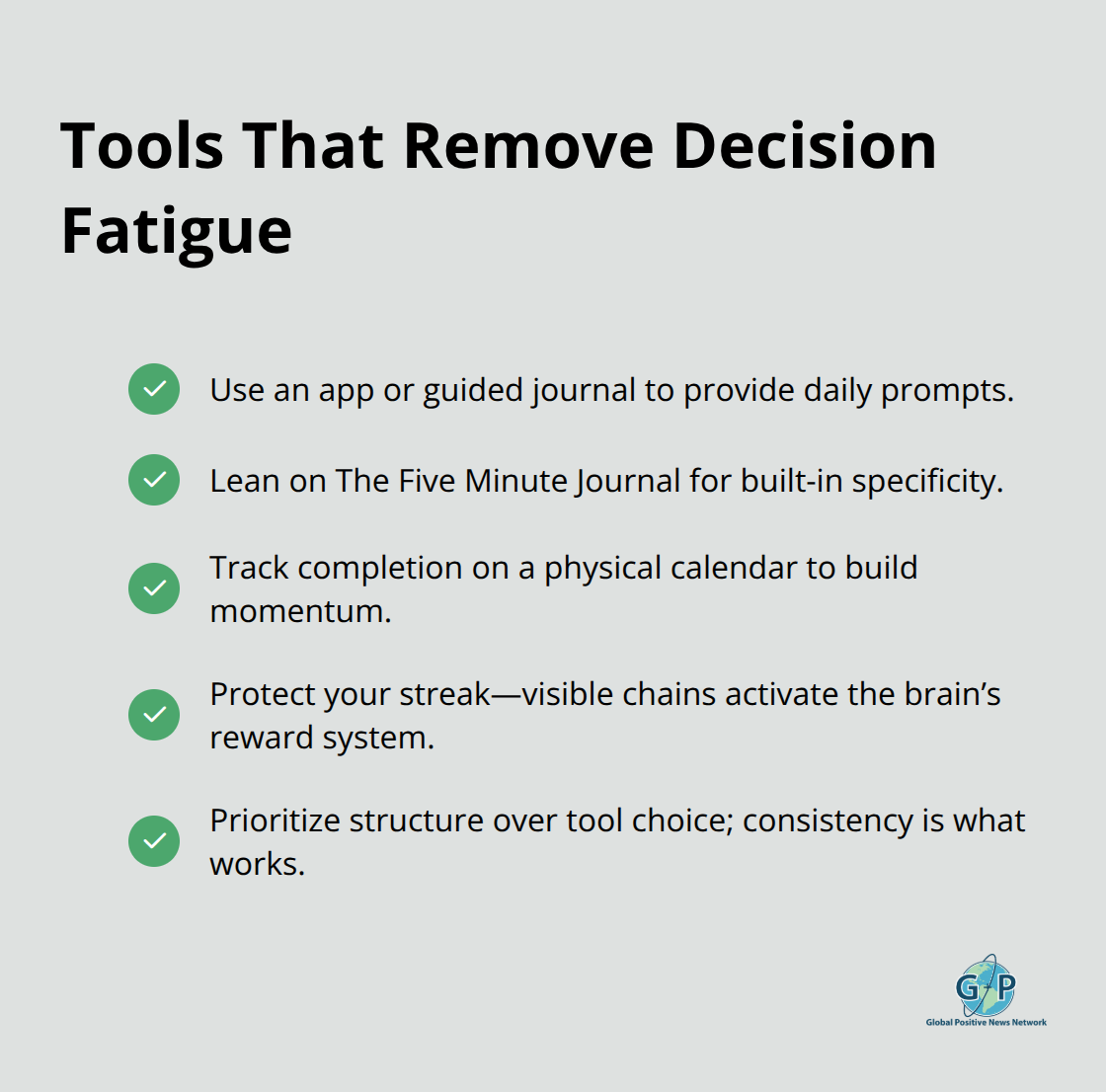
Apps and physical tracking systems eliminate the friction of deciding what to write about. The Five Minute Journal provides daily prompts and tracking that force specificity rather than letting you write vague statements, which research shows produces stronger emotional benefits. A physical calendar where you mark each day you complete your gratitude practice creates visual momentum. Seeing a chain of marked days activates your brain’s reward system and makes breaking the streak psychologically difficult. The structure of these tools matters more than the tool itself-what works is whatever system you’ll actually use consistently.
Handle Missed Days Without Guilt
The real obstacle isn’t finding time-it’s handling the guilt when you miss days. Stop pretending you’ll practice every single day. Research found that practicing one to three times weekly produces stronger benefits than daily practice because daily repetition can cause habituation and diminish the emotional impact. When you miss a session, resume without commentary or self-criticism the next scheduled day. Gratitude practitioners who restart quickly after lapses maintain their practice far longer than those who abandon everything after a single missed day.
Adapt Your Practice to Your Actual Life
Track what actually blocks your practice: Is it morning chaos, evening exhaustion, or forgetting entirely? If mornings fail, move to lunch. If apps feel overwhelming, use a notebook. The practice only works if you actually do it, which means abandoning the ideal version and building the version that fits your actual life. Some people thrive with community accountability, while others need solo practice with visual tracking. Test different approaches for two weeks each, then commit to what produced consistent action rather than what sounded best in theory.
Final Thoughts
Daily gratitude reflections shift how you interpret your life without requiring perfection or complex systems. After weeks of consistent practice, you stop waiting for ideal moments to feel thankful and instead notice the ordinary kindnesses, small victories, and unexpected connections already present around you. Your brain literally rewires itself to spot positive events more readily, which means you experience genuine moments of appreciation without forcing them.
The transformation happens quietly as you sleep better, feel less anxious during stressful days, and respond to setbacks with more resilience. Your relationships deepen because you express specific appreciation to the people who matter, and these changes compound over months into a perspective where difficulty feels temporary rather than overwhelming. Commit to one practice that fits your actual life-whether that’s three minutes of evening reflection, a weekly accountability group, or a physical journal on your nightstand-since consistency matters far more than complexity.
We at Global Positive News Network recognize that daily appreciation isn’t self-help but a practical tool for mental health and meaningful connection. Share how gratitude has changed your perspective, your sleep, or your relationships, because these stories inspire others to start their own practice. Your gratitude story matters, and small daily choices create lasting transformation.
Explore more positive news:
Enjoying stories like this?
Global Positive News Network is reader-supported. If you’d like to support the mission, you can visit the Official GPNN store.