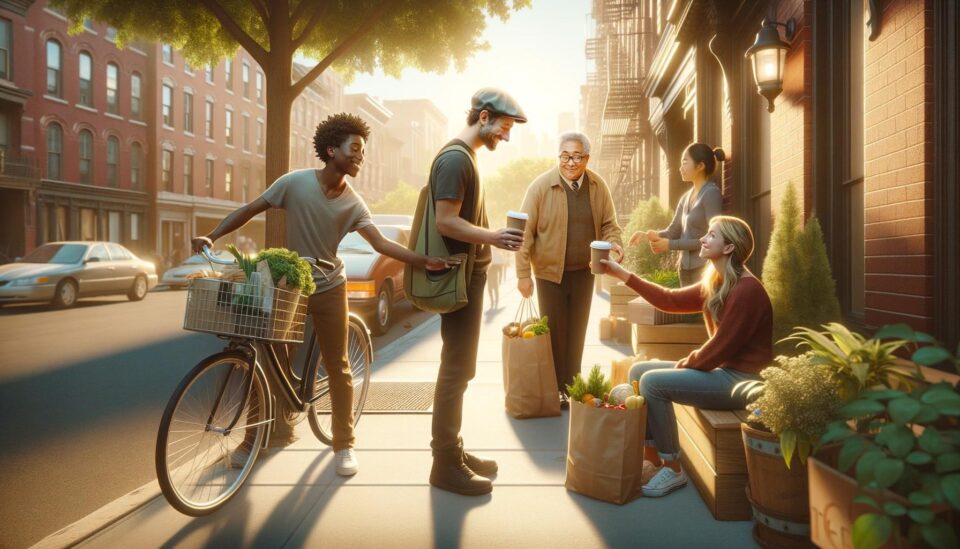
You probably think generosity requires big donations or grand gestures. We at Global Positive News Network believe daily acts of generosity are far more powerful.
Small kindnesses compound over time, transforming individuals and entire communities. This blog post shows you exactly how to start.
How Small Acts of Kindness Ripple Through Communities
Research from Psychological Bulletin analyzed 201 independent studies involving 198,213 participants and found that kindness boosts wellbeing across multiple domains. The data is clear: small acts work. What makes this even more significant is that spontaneous kindness produces stronger wellbeing gains than planned or obligatory acts. This means a genuine gesture to help a neighbor has more lasting power than a forced donation. The ripple effect isn’t metaphorical. When you help someone, that person becomes more likely to help others, creating a chain reaction that extends far beyond your initial action. About 63% of UK adults report that kindness improves their own mental health and that of others, showing widespread recognition that these small moments matter.
Why Spontaneous Kindness Works Better Than Grand Gestures
Spontaneous acts activate your brain’s reward centers, releasing dopamine and endorphins-what researchers call the helper’s high. This neurological boost happens fastest with authentic gestures because they feel genuine rather than obligatory. A handwritten note or unexpected help with errands creates stronger emotional connections than material gifts ever could. Time-based generosity, like volunteering at food banks or helping a neighbor with chores, builds closer bonds and lasting memories. The key difference is intention.
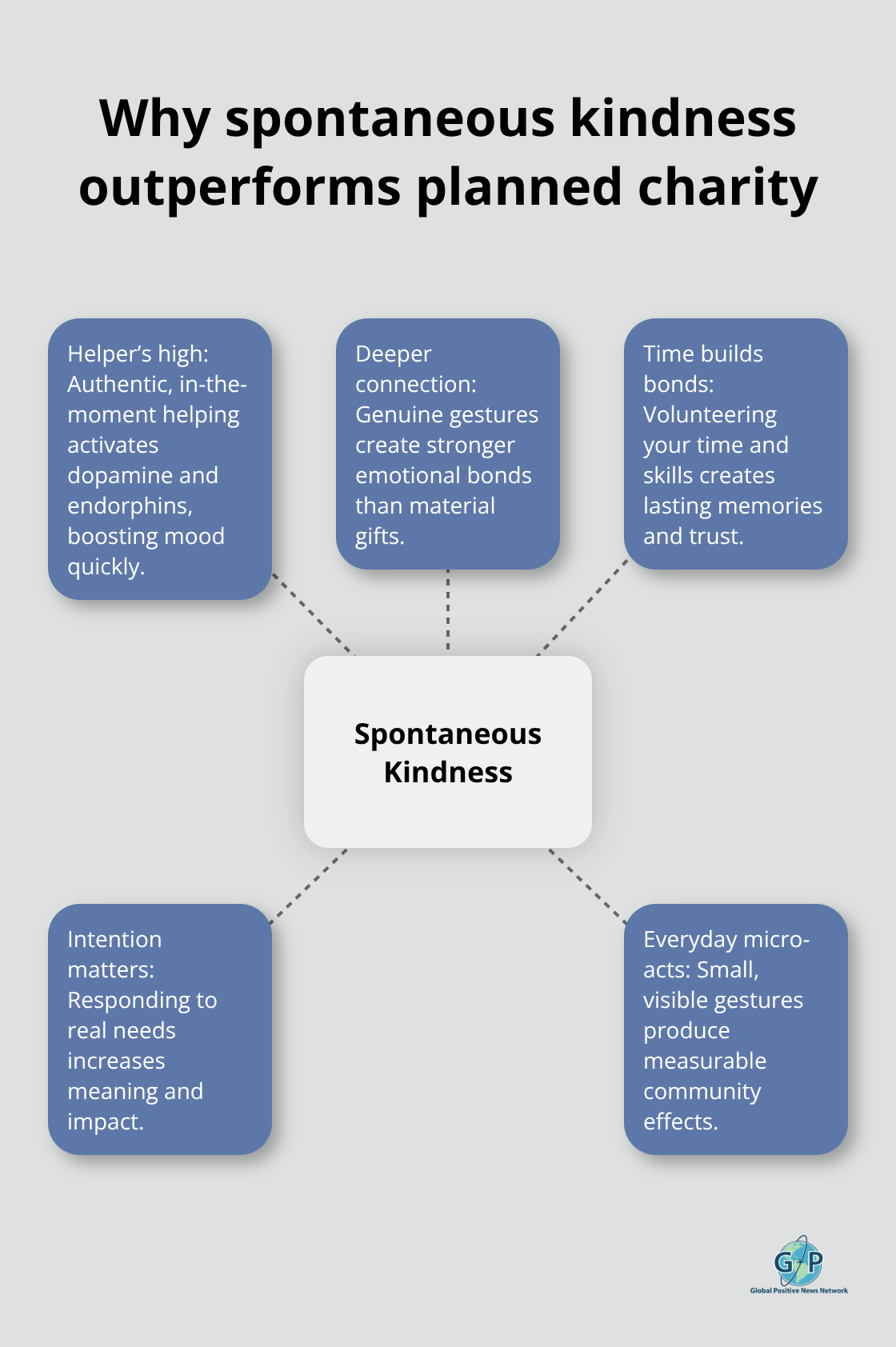
When kindness flows naturally from noticing someone’s need, it carries more weight than planned charity. This is why holding a door, offering a listening ear, or sharing a skill like cooking a meal creates measurable community impact that statistics can track.
How One Action Triggers Community-Wide Change
Soldiers’ Angels demonstrates this principle in action. Their programs-from monthly food distributions to card requests for deployed service members-show that small, consistent acts accumulate into transformative community outcomes. When volunteers write encouragement cards to service members, those recipients feel valued. That restored dignity often inspires them to help others in their circles. Real examples matter here. A neighbor who passes on an offer to help doesn’t end the chain with that one person. Others see generosity in action and start contributing themselves. This observable pattern of giving builds a self-reinforcing loop where each act inspires another and amplifies overall community impact far beyond what any single person could achieve alone.
The Observable Pattern That Spreads Generosity
Communities that embrace consistent small acts develop stronger social bonds and mutual support networks. When people witness kindness repeatedly (whether through direct experience or community stories), they internalize generosity as a normal behavior rather than an exception. This shift in community culture happens gradually but creates lasting change. The momentum builds as more individuals recognize that their small contributions matter. What starts as one person’s decision to help a neighbor eventually becomes a neighborhood norm where people actively look out for one another. This transformation doesn’t require coordination or formal programs-it simply requires visibility and repetition. As you consider your own role in this cycle, the next section explores practical ways you can start contributing today.
Starting Your Generosity Practice Today
What You Already Have Is Enough
Generosity does not require financial resources. A 2018 study in Psychological Bulletin found that time-based generosity produces stronger wellbeing gains than monetary donations alone. Start with what you already possess: your skills, your time, your attention. If you cook well, prepare a meal for someone managing illness or a new baby. If you work in tech, offer to help an elderly neighbor navigate their phone or computer. If you simply have transportation, drive someone to a medical appointment. These specific acts address real needs without expense.
The Mental Health Foundation reports that 63% of UK adults recognize kindness improves mental health outcomes, yet most people wait for permission or the right moment to act. That moment is now. Pick one skill you possess and offer it this week.
Small Gestures That Create Immediate Impact
Write a handwritten note to someone who influenced your life-not a text, but actual pen on paper. Handwritten messages create stronger emotional impact than digital communication. Leave a small gift on a neighbor’s doorstep: fresh vegetables from your garden, homemade cookies, or even new socks (socks rank among the most requested items for deployed service members and veterans, revealing how specific small gifts address genuine needs).
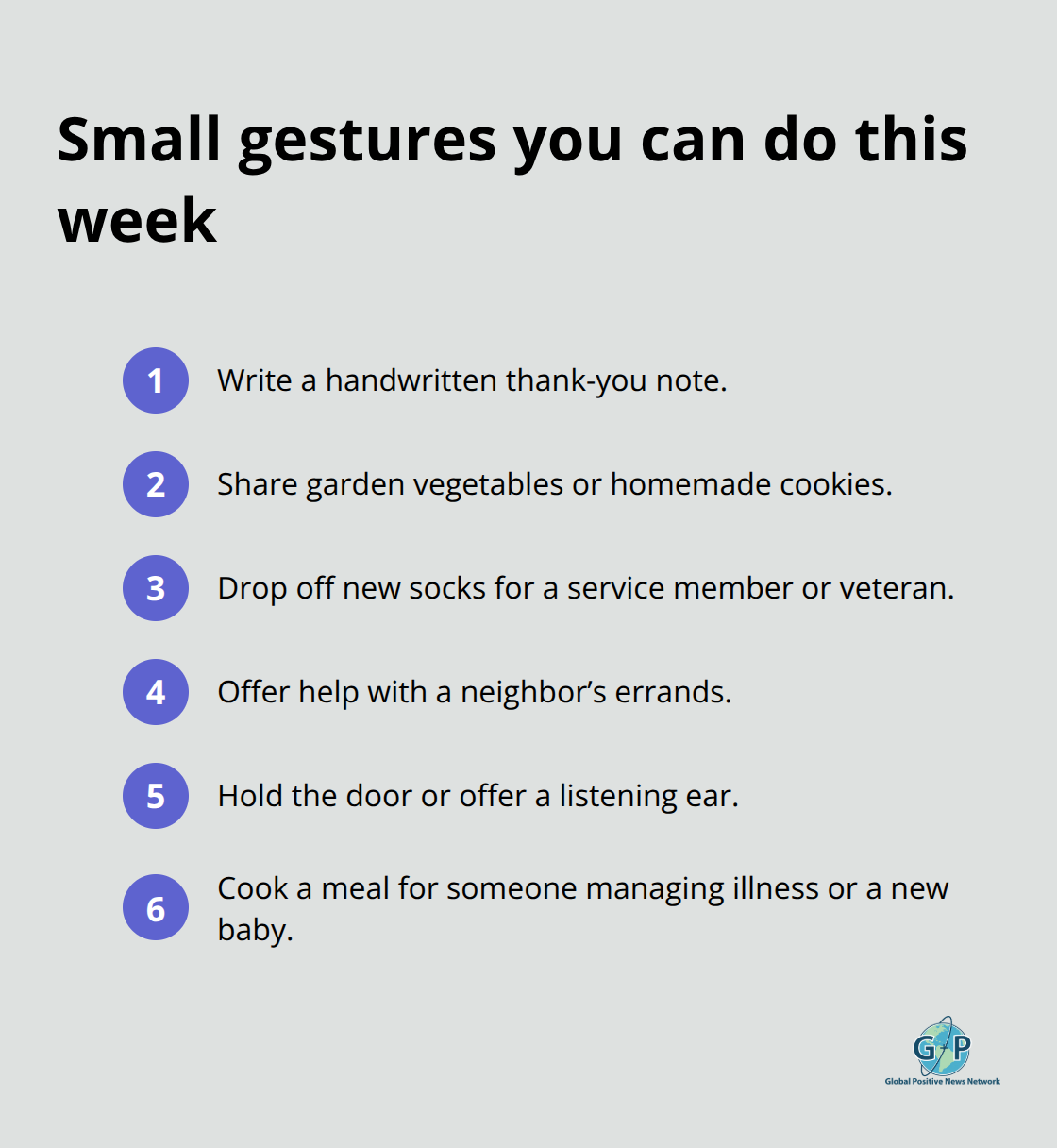
The cost is minimal; the impact registers immediately.
Building Consistency Into Your Weekly Life
Consistency matters far more than grand gestures. Volunteers who commit to regular acts of kindness-even just one per week-report sustained improvements in their own mood and sense of purpose, according to research by Jenkinson and colleagues in 2013. Designate Tuesday evenings for volunteering at a local food bank or community center. Commit to calling one friend or family member every Wednesday. Set a standing appointment to help an elderly neighbor with yard work or household tasks on Saturday mornings. This predictability creates multiple benefits: the recipient knows they can count on you, you build stronger relationships through repeated contact, and your own mental health improves through consistent purposeful activity.
Using Tools to Match Your Help With Real Needs
Platforms like Be My Eyes connect volunteers with people who need visual assistance through quick video calls-ideal for people with limited time. VolunteerHub or your local community center’s website list specific needs in your area, eliminating guesswork about what would actually help. Before giving anything, check what your local food bank actually needs (many have detailed lists online), what your nearby school is requesting for students, or what specific items deployed service members require. Mismatched generosity wastes everyone’s time. Targeted help works better.
Tracking Your Progress to Stay Motivated
Track your own acts for one week in a simple notebook or phone note. Record what you did, who you helped, and how you felt afterward. This practice is not vanity-it is data. Seeing your own generosity accumulate builds momentum and reveals patterns about which acts energize you most. That insight helps you sustain generosity long-term rather than burning out after initial enthusiasm fades. As you establish these habits and witness their effects on those around you, the question shifts from “What can I do?” to “How do I measure what my actions actually accomplish?”
Does Generosity Actually Improve Your Health
Generosity produces measurable physical health improvements, not just emotional ones. Research from the American Journal of Health Promotion shows that volunteers have lower blood pressure, reduced cortisol levels, and stronger immune function compared to non-volunteers. Curry and colleagues found in their 2018 analysis that acts of kindness lower stress hormones, which directly translates to fewer sick days and better cardiovascular outcomes. This isn’t theoretical benefit-it’s measurable change in your body. When you help someone, your brain releases dopamine and endorphins, creating what researchers call the helper’s high. This neurological response happens fastest with spontaneous acts because they feel authentic rather than obligatory.
How Your Body Responds to Acts of Kindness
The Mental Health Foundation reports that 63% of UK adults recognize kindness improves mental health, yet most people underestimate how much their own wellbeing improves when they give. Volunteers report higher life satisfaction scores, lower anxiety symptoms, and reduced depression markers. Jenkinson and colleagues documented in 2013 that this benefit appears across all age groups-from teenagers volunteering at community centers to retirees helping neighbors. The consistency matters. People who volunteer regularly show sustained improvements in mood and sense of purpose, while those who volunteer sporadically experience temporary boosts that fade quickly. Your nervous system adapts to regular generosity, creating a baseline improvement in stress resilience that persists whether you’re actively helping or not.
What Community Data Actually Shows
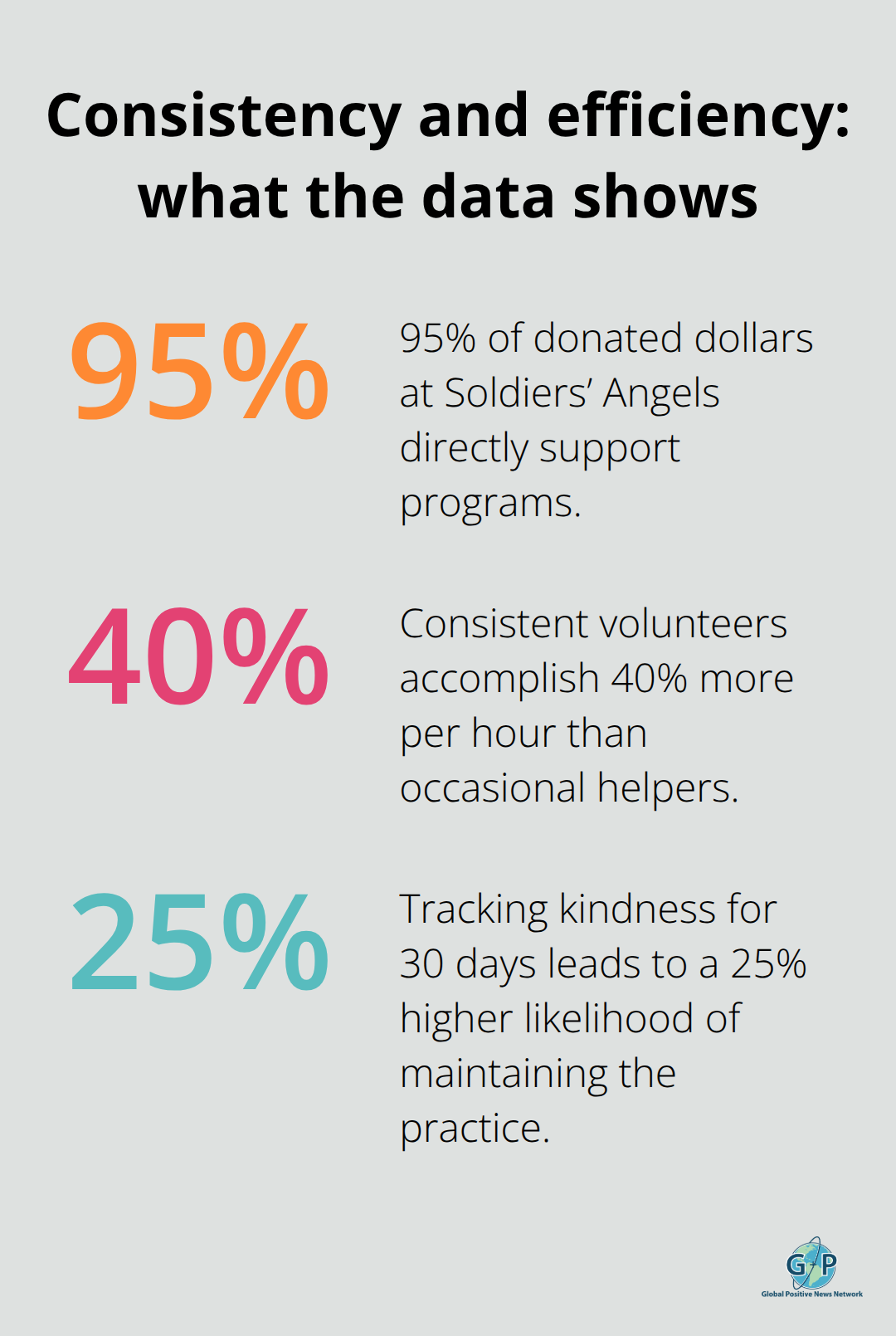
Organizations like Soldiers’ Angels demonstrate measurable community impact through concrete numbers. Their monthly food distributions reached military families across multiple regions, with expansion from Charlotte to Salisbury creating weekly pantries instead of monthly distributions. This scaling happened because volunteers saw direct impact on specific families and committed to increasing frequency. Card Request volunteers sent thousands of personalized messages to deployed service members, with recipients reporting restored dignity and increased morale. The organization reports that 95 cents of every donated dollar directly supports programs, meaning your contribution creates proportional impact without administrative waste.
Local food banks track volunteer hours and food distributed, revealing that consistent volunteers accomplish 40% more per hour than occasional helpers because they understand the system. When you commit to regular volunteering, you become efficient, which multiplies your impact.
Communities with organized initiatives-whether through structured volunteer programs or local mutual aid networks-show measurable reductions in social isolation. People who participate in consistent community giving report stronger neighborhood connections and increased sense of belonging. This social connection directly correlates with better health outcomes according to research from Brown and colleagues in 2012, which found that social isolation increases mortality risk as much as smoking does.
How Regular Acts Compound Into Transformation
One-time kindness produces temporary mood improvement for both giver and receiver. Consistent weekly acts create permanent shifts in how your brain processes stress and social connection. A person who volunteers monthly experiences different neurological patterns than someone who volunteers once yearly, even if total hours are identical. Frequency matters more than volume. Tracking your acts over weeks reveals which types of generosity energize you versus drain you, allowing you to sustain practice long-term instead of burning out. People who track their kindness acts for 30 days report 25% higher likelihood of maintaining the practice beyond the initial month compared to those who don’t track.
Your own data becomes motivation. When you see written evidence that you’ve helped someone weekly for two months, you recognize yourself as someone who gives, not someone who occasionally does good. This identity shift is where transformation happens. Communities that normalize visible, repeated kindness develop culture shifts where generosity becomes expected behavior rather than exceptional. Neighbors start checking on each other proactively. Local organizations receive consistent volunteer support instead of crisis-driven surges. Children grow up witnessing regular acts of kindness as normal, shaping their own values. This intergenerational impact extends benefits far beyond immediate recipients into the future.
Final Thoughts
Daily acts of generosity outperform grand gestures because they create sustained change rather than temporary relief. A single large donation provides a moment of help, but consistent small actions build community culture where people expect to support one another. Spontaneous, repeated kindness produces stronger wellbeing gains than occasional large contributions, and when you commit to weekly generosity, your brain adapts to lower baseline stress levels.
Starting your own practice requires no special circumstances or resources. This week, identify one skill you possess and offer it to someone who needs it. Cook a meal for someone managing illness, help an elderly neighbor with technology, drive someone to an appointment, or write a handwritten note to someone who influenced your life. Track what you accomplish in a simple notebook so that patterns emerge over weeks and months.
The transformation happens gradually but compounds relentlessly, and after one month of weekly acts, you’ll notice shifts in your own mood and stress levels. After three months, people in your community will begin reciprocating without being asked. We at Global Positive News Network amplify stories of exactly this kind of impact to inspire others toward their own generosity practice.