
Body positivity books have the power to reshape how you see yourself. At Global Positive News Network, we’ve found that reading the right books can fundamentally change your relationship with your body and self-worth.
This guide walks you through the most transformative reads available, from classics to modern memoirs. You’ll also learn practical ways to use these books for real personal growth.
Books That Actually Change How You See Yourself
Naomi Wolf’s The Beauty Myth remains the sharpest critique of how beauty standards function as social control. Published in 1991, Wolf demonstrated that narrow beauty ideals aren’t natural-they’re manufactured to keep women compliant and spending money. This book cuts through the noise of body positivity platitudes and shows you exactly how capitalism profits from your insecurity.
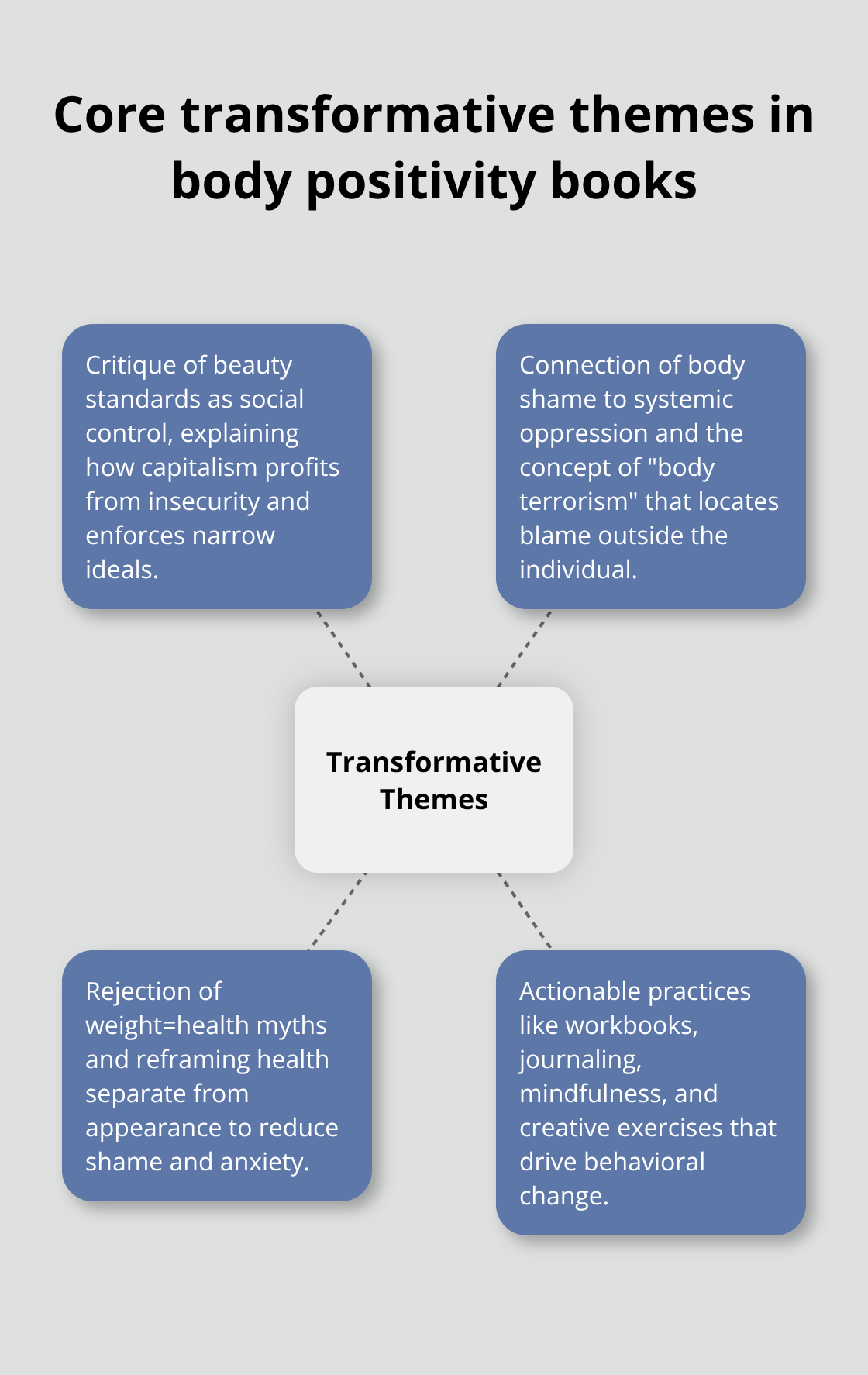
Sonya Renee Taylor’s The Body Is Not an Apology connects body shame directly to systemic oppression. Taylor introduces the concept of body terrorism, making clear that your struggle with your appearance isn’t a personal failing-it’s the result of deliberate cultural messaging. The Body Is Not an Apology Workbook provides concrete exercises you can actually use, not vague inspiration. These aren’t feel-good books; they’re analytical works that help you understand why you internalized harmful messages in the first place.
Works That Offer Practical Pathways Forward
Lindo Bacon’s Health At Every Size fundamentally rejects the idea that weight determines health. This matters because most body image struggles stem from the false belief that thinness equals wellness. Bacon’s framework lets you separate health from appearance entirely, which is liberating in ways that generic positivity can’t match. Emily K. Sandoz’s Living with Your Body and Other Things You Hate uses Acceptance and Commitment Therapy combined with mindfulness. The book includes online guided meditations you can follow along with at home. Megan Jayne Crabbe’s Body Positive Power introduces body neutrality-a practical middle ground between loving your body and hating it. Crabbe includes specific exercises to reduce body-checking behaviors, which means you’ll actually stop obsessing over how you look in mirrors or reflective surfaces. Ann Saffi Biasetti’s Befriending Your Body pairs journaling prompts with yoga-based movement practices, which gives you embodied tools rather than just intellectual understanding. The Art of Body Acceptance by Ashlee Bennett uses creative exercises like art and journaling, which works better than traditional therapy for people who struggle with words.
Memoirs That Show Real Transformation
Stephanie Yeboah’s Fattily Ever After provides a Black, plus-size perspective that mainstream body positivity completely ignores. Yeboah doesn’t pretend body image struggles are universal-she shows how anti-fat bias and racism compound each other. Roxane Gay’s Hunger explores weight and trauma with unflinching honesty, refusing the narrative that weight loss equals happiness. Kiese Laymon’s Heavy examines how body shame connects to family trauma and systemic racism, which offers insight into why your body image issues might run deeper than magazine covers. These memoirs matter because they prove that transformation doesn’t require a perfect before-and-after story. Jes Baker’s Things No One Will Tell Fat Girls tackles the specific lies society tells larger bodies, and her practical advice is grounded in lived experience rather than academic theory. Leah Vernon’s Unashamed centers disability and size together, which expands the conversation beyond what most body positivity books cover.
Moving From Understanding to Action
These books provide the foundation you need-they explain the “why” behind your body image struggles and offer concrete tools to address them. The next section shows you how to actually integrate these insights into your daily life, turning what you read into lasting change.
How Body Positivity Books Rewire Your Brain
Body positivity books don’t just make you feel better temporarily. Research shows that reading narratives about body acceptance actually changes how your brain processes self-criticism.
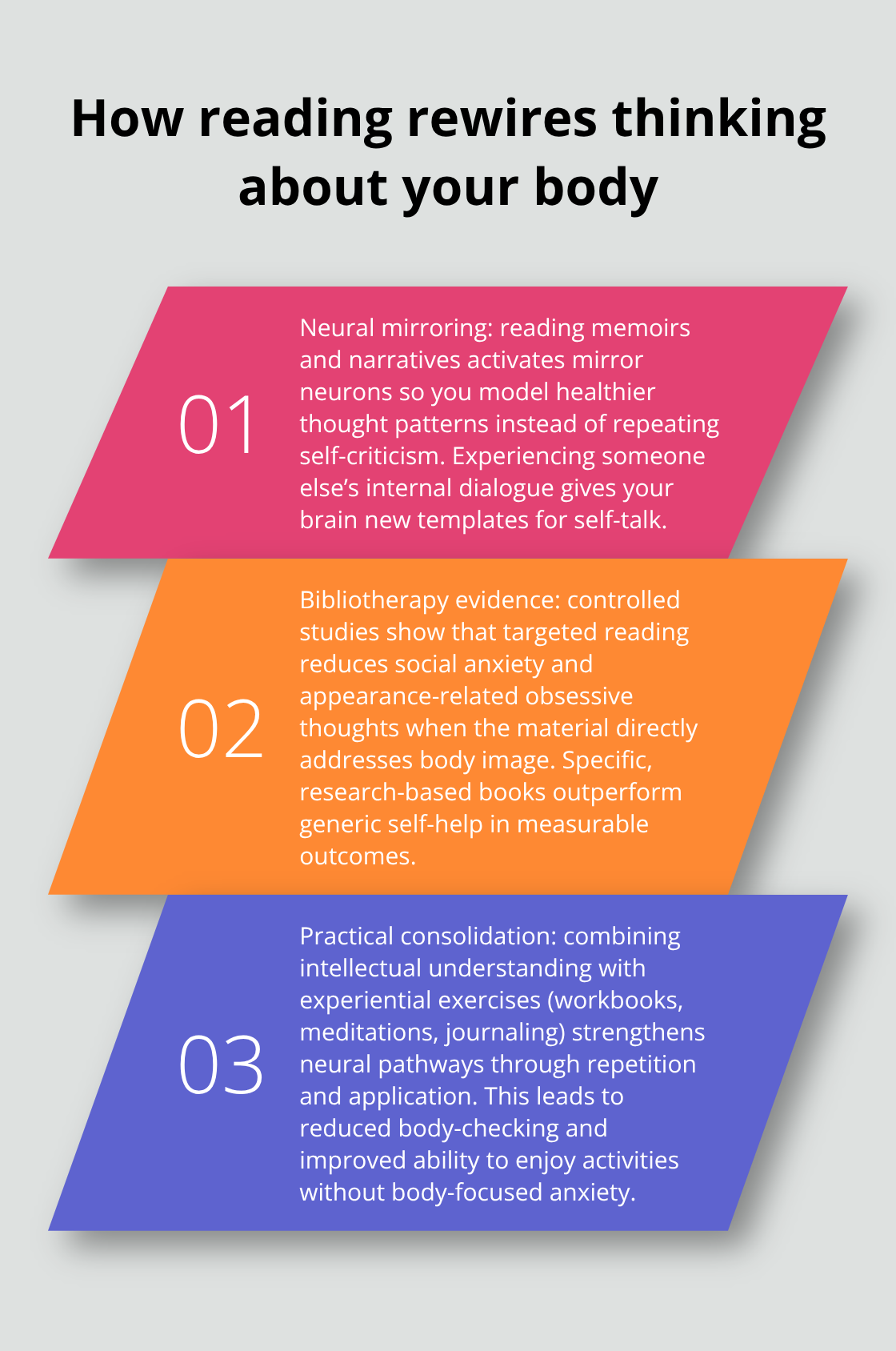
When you read Roxane Gay’s Hunger or Kiese Laymon’s Heavy, you’re not just consuming information-you’re experiencing someone else’s thought patterns around body shame, which activates mirror neurons in your brain. This neural mirroring effect means your brain literally practices new ways of thinking about your body.
Studies on bibliotherapy, the therapeutic use of reading, demonstrate that people who engage with books addressing body image show measurable reductions in social anxiety and appearance-related obsessive thoughts. The specificity matters here. A generic self-help book won’t work the same way as Lindo Bacon’s Health At Every Size, which dismantles the weight-health connection with actual research, or Megan Jayne Crabbe’s Body Positive Power, which gives you concrete body-checking reduction techniques. When you understand intellectually why diet culture exists and emotionally experience someone else’s freedom from it, your anxiety around food and appearance drops significantly.
Breaking the Comparison Trap Through Real Stories
One of the most damaging aspects of body shame is isolation-the belief that you’re the only one struggling. Memoirs like Stephanie Yeboah’s Fattily Ever After and Leah Vernon’s Unashamed shatter this isolation. They show how systemic forces shape body image struggles across different identities. When you read that a published author experienced the same mirror-avoidance behaviors or the same intrusive thoughts about your appearance, your brain stops treating these experiences as personal failures.
This shift from self-blame to systemic awareness reduces shame-based depression significantly. Jes Baker’s Things No One Will Tell Fat Girls works similarly-it names specific lies society tells larger bodies, which means you can recognize and reject these lies when you encounter them in real life. The practical benefit is immediate: you develop what therapists call cognitive reframing (the ability to recognize a harmful thought and replace it with a more accurate one). When you’ve read multiple perspectives on body image struggles, your brain has templates for healthier self-talk.
People who read body-positive memoirs report lower rates of body-checking behaviors, reduced time spent in negative self-talk, and measurable improvements in their ability to enjoy activities without constant body-focused anxiety.
From Reading to Actual Behavioral Change
The books that drive real mental health improvements are the ones with workbooks or practical exercises embedded in them. Emily K. Sandoz’s Living with Your Body and Other Things You Hate includes guided meditations you actually listen to, not just read about. Ann Saffi Biasetti’s Befriending Your Body pairs journaling prompts with specific yoga poses designed to rebuild embodied self-awareness. The Art of Body Acceptance by Ashlee Bennett uses creative exercises because not everyone processes healing through words.
These actionable components matter because reading alone doesn’t rewire your nervous system-you need to practice new behaviors while your brain is primed by the book’s insights. The workbook format found in The Body Is Not an Apology Workbook or The Intuitive Eating Workbook creates what neuroscientists call spaced repetition. You encounter and practice concepts multiple times over weeks, which strengthens neural pathways associated with self-compassion and body acceptance.
Your confidence improves when you complete a journaling exercise about your body’s strengths, then notice the next day that you’re slightly less critical of yourself in the mirror. Small behavioral shifts compound into measurable mental health improvements over time. The next section shows you how to structure your reading practice so these changes actually stick.
Making Body Positivity Books Stick
Reading body positivity books works only if you actually apply what they teach. Most people finish a powerful memoir like Roxane Gay’s Hunger or Kiese Laymon’s Heavy, feel inspired for a week, then slip back into old patterns because they never built a system to integrate the insights. The difference between readers who transform and readers who just feel temporarily better comes down to structure. You need a reading approach that connects books to your actual life, not a random stack of titles on your nightstand.
Schedule Reading Time Around Your Weakest Moments
Your reading routine should target when you struggle most with body image, not just whenever you feel like picking up a book. If your body-shaming thoughts spike in the morning while dressing, read before that happens. If evenings trigger food anxiety, spend 20 minutes with The Intuitive Eating Workbook or Alissa Rumsey’s Unapologetic Eating at night. Research shows that habits can start forming within about two months when paired with existing routines. This means reading right after your morning coffee or immediately before dinner works far better than finding random pockets of time.
Set a specific duration too. Fifteen to twenty minutes daily beats sporadic three-hour reading sessions because your brain needs consistent exposure to these ideas. When you finish one book, move directly to the next without gaps.
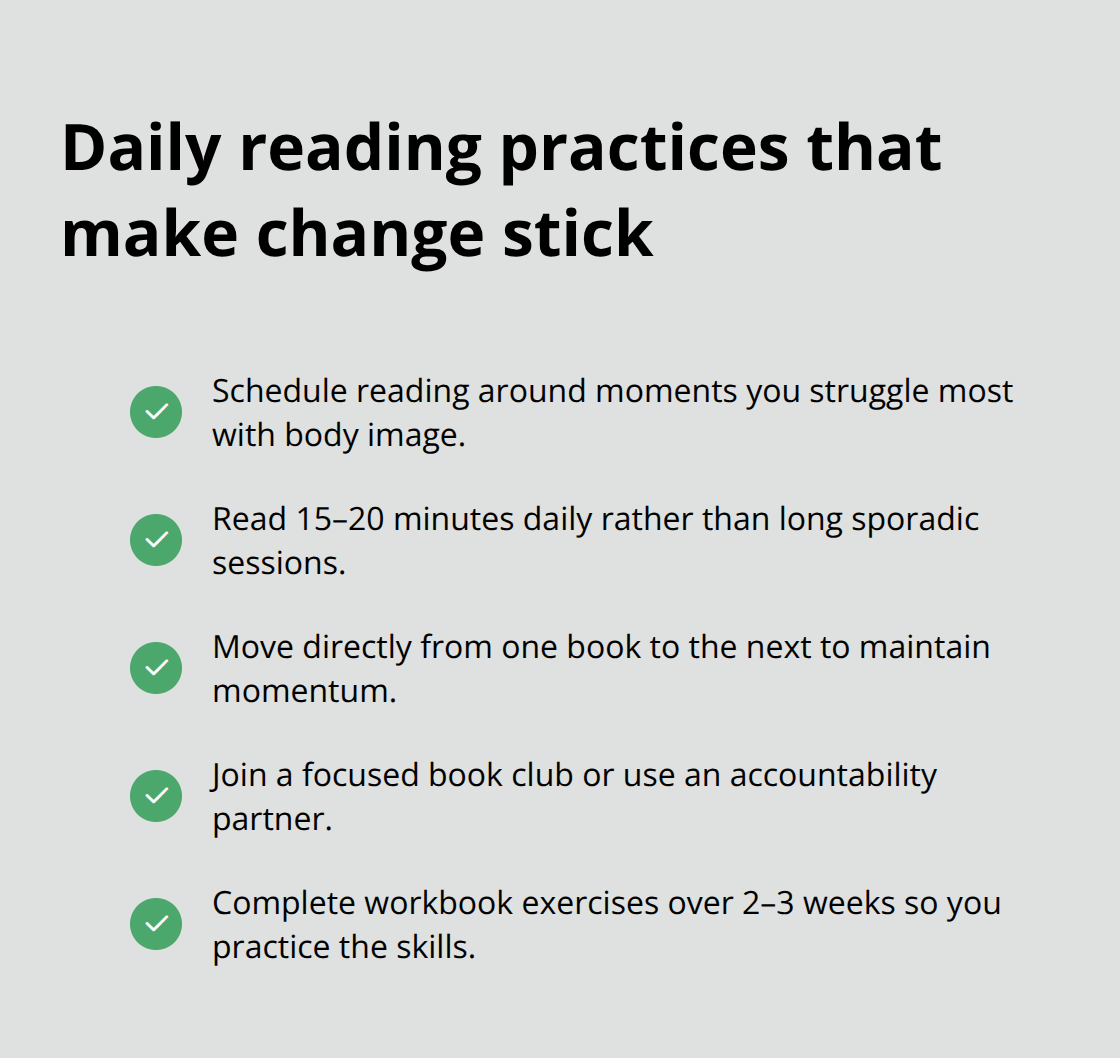
Bibliotherapy may be beneficial in treating depression, particularly with maintained engagement rather than completion speed. Workbook-based titles like Ann Saffi Biasetti’s Befriending Your Body or The Body Is Not an Apology Workbook should take two to three weeks each so you actually complete the exercises rather than just reading them.
Build Accountability Into Your Reading Practice
Reading alone means you can quit when things get uncomfortable. Communities force you to stay engaged when the work gets hard. Goodreads hosts thousands of body-positive book clubs where members post their weekly reflections and discuss passages that challenged them. Joining an existing club costs nothing and gives you real people noticing if you disappear halfway through Emily K. Sandoz’s Living with Your Body and Other Things You Hate.
Start with clubs focused on specific books like Health At Every Size or The Body Is Not an Apology rather than general reading groups. The specificity matters because general book clubs water down discussions, but a dedicated group keeps focus on practical application. If online communities feel isolating, start a local book club with two to four friends. Meet monthly to discuss one book, and spend fifteen minutes sharing one concrete change you made based on what you read. This forces you to notice behavioral shifts instead of just feeling inspired.
Some people find accountability partners more effective than groups. Text one friend weekly about which chapter you’re on and one actionable thing you’re trying. The external commitment makes you follow through when motivation fades, which is how real change happens. Jes Baker’s Things No One Will Tell Fat Girls and Stephanie Yeboah’s Fattily Ever After work particularly well for accountability because their direct, confrontational writing sparks genuine discussion.
Translate Reading Into Specific Daily Actions
The gap between understanding something intellectually and actually changing your behavior is enormous. Megan Jayne Crabbe’s Body Positive Power teaches body-checking reduction, but knowing about it means nothing if you still check mirrors compulsively. After reading about body-checking, pick one specific mirror you typically avoid or obsess over and set a rule. You look once when necessary, then leave. Track this for two weeks on your phone calendar with a simple checkmark. This transforms abstract knowledge into measurable behavior.
Similarly, after finishing Lindo Bacon’s Health At Every Size, don’t just accept that weight doesn’t determine health. Identify one health behavior unrelated to weight that you actually enjoy, then do it twice weekly. This might be walking because you like podcasts, not because it burns calories. The Art of Body Acceptance by Ashlee Bennett includes creative exercises, so after reading, spend ten minutes weekly on one exercise from the book instead of moving on immediately. Your brain consolidates new neural pathways through repetition and application, not passive reading.
When you finish Roxane Gay’s Hunger or Kiese Laymon’s Heavy, write one paragraph about how their experience relates to yours. This creates what therapists call emotional processing, which actually reduces shame rather than just understanding it intellectually. The books provide the foundation, but your actions create the lasting mental health shift. For additional support, body positivity quotes placed where you’ll see them daily can reinforce the messages you’re reading.
Final Thoughts
Body positivity books transform your self-image by combining intellectual understanding with practical tools you can apply immediately. The classics like Naomi Wolf’s The Beauty Myth expose how beauty standards function as social control, while modern works like Lindo Bacon’s Health At Every Size and Megan Jayne Crabbe’s Body Positive Power provide concrete strategies to change your behavior. Memoirs from Roxane Gay, Kiese Laymon, and Stephanie Yeboah prove that transformation happens when you stop blaming yourself and recognize systemic forces shaping your body image.
Start your body positivity reading journey with one book that resonates with your specific struggle, then commit to reading fifteen minutes daily at a time when body-shaming thoughts typically hit hardest. Join a book club or find an accountability partner to keep you engaged when motivation fades. Complete the workbook exercises instead of skipping them, because your brain consolidates new neural pathways through repetition and action, not passive reading alone.
Finding your next transformative read starts with identifying what you need most-if you want to understand systemic roots of body shame, begin with The Body Is Not an Apology or Fearing the Black Body; if you need practical eating strategies, The Intuitive Eating Workbook provides step-by-step guidance; if memoirs resonate more than theory, Fattily Ever After or Hunger offer unflinching honesty about real transformation. Goodreads and local libraries let you preview body positivity books before committing, and online communities connected to specific titles help you stay accountable. We at Global Positive News Network believe reading is one of the most powerful tools for building lasting self-worth, and your body positivity journey starts with one book and one decision to apply what you learn.
Explore more positive news:
Enjoying stories like this?
Global Positive News Network is reader-supported. If you’d like to support the mission, you can visit the Official GPNN store.