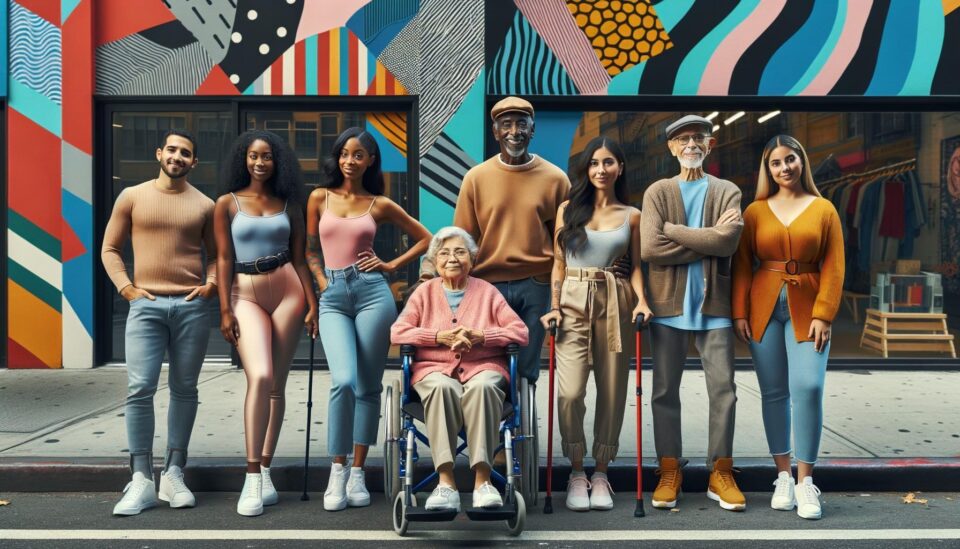
Art has always reflected society’s values, but for centuries, it excluded most bodies. Today, body positivity artwork is transforming galleries, social media, and studios worldwide.
At Global Positive News Network, we’re witnessing artists reject narrow beauty standards and create work that honors human diversity. This shift matters because representation shapes how we see ourselves and each other.
How Body Positivity Art Became Mainstream
For decades, Western art institutions celebrated a narrow aesthetic: thin bodies, specific skin tones, and conventional features dominated galleries and museums. Classical and Renaissance art idealized particular body types, and this exclusion persisted through photography, fashion illustration, and contemporary painting. The gatekeepers of art-curators, collectors, and critics-reinforced these standards, making it nearly impossible for artists depicting diverse bodies to gain visibility or economic support. This wasn’t accidental; it reflected the commercial interests of industries built on making people feel inadequate about their appearance.
Instagram Shattered the Gallery System
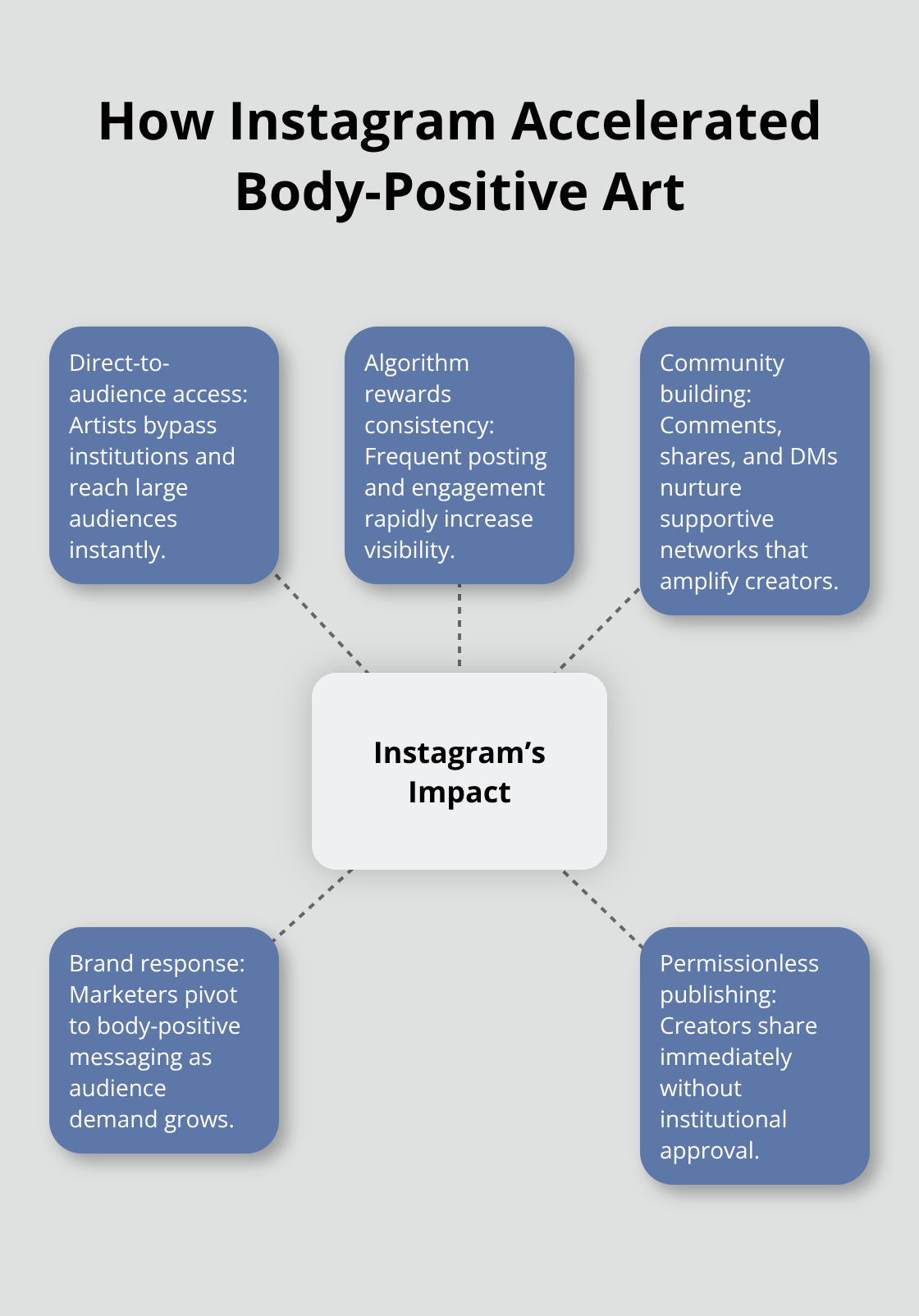
Social media demolished traditional gatekeeping. Instagram, launched in 2010, gave artists direct access to millions of potential viewers without needing approval from established institutions. Body-positive illustrators like Joanna Thangiah, Jovanna Radic Eriksson, and Rachele Cateyes built massive followings through work that celebrated bodies the mainstream ignored: stretch marks, cellulite, scars, and diverse body shapes. These artists created and shared immediately rather than waiting for permission. The platform’s algorithm, despite its flaws, rewarded consistent posting and community engagement, allowing artists who posted regularly to reach audiences faster than ever before. Commercial brands took notice as body-positive content became genuinely competitive on social feeds, forcing them to adapt their own marketing strategies.
The Science Behind the Impact
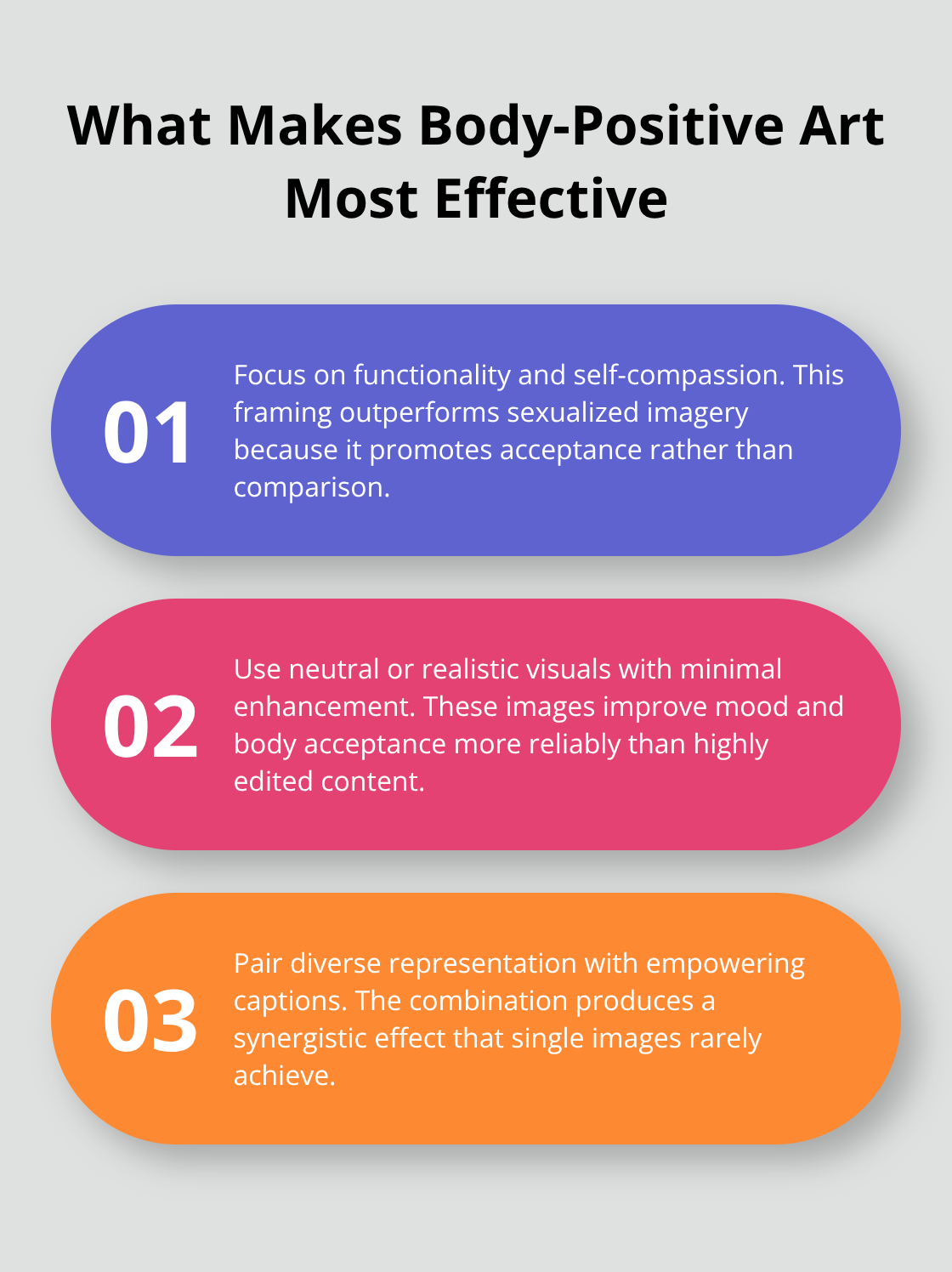
Research shows that exposure to body-positive content on social media produces measurable improvements in body appreciation and mood. Positive mood improved significantly after viewing body-positive content, and the benefits strengthened when images paired diverse body representations with empowering captions rather than images alone. This matters for artists because it proves their work isn’t just aesthetically valuable-it actively improves mental health outcomes for viewers.
What Works and What Doesn’t
Content emphasizing body functionality and self-compassion outperformed highly sexualized imagery, meaning artists who focused on realistic, non-enhanced depictions of bodies saw better engagement and impact. Neutral or realistic visuals often performed better for mood and acceptance than enhancement-heavy content. The most effective work combined diverse body representations with supportive text, creating a synergistic effect that single images couldn’t achieve. Artists who understood this science-that representation plus messaging equals real psychological benefit-positioned themselves as creators of genuine social value, not just aesthetic objects.
Moving Beyond Individual Artists
This shift from institutional gatekeeping to direct audience connection fundamentally changed what body-positive art could accomplish. Artists no longer needed to conform to traditional beauty standards to build careers and influence. The next section explores the specific art forms and platforms where this transformation became most visible, showing how different mediums and spaces continue to challenge conventional ideals.
How Different Art Forms Challenge Beauty Standards
Photography Confronts Reality Without Filters
Photography and portraiture have become the most direct weapons against conventional beauty ideals because they document actual bodies in real time. Unlike painting or sculpture, which people can dismiss as stylized interpretation, photographs demand confrontation with reality. Artists use natural lighting, minimal editing, and unflinching angles to capture stretch marks, scars, cellulite, and asymmetrical features as normal rather than flawed. Photographers control the entire narrative: pose, lighting, background, and framing determine whether a body appears powerful or diminished. Body-positive photographers reject the high-contrast, heavily filtered aesthetic that dominated Instagram for years, instead favoring soft natural light and minimal retouching. This shift changes viewer expectations about what bodies actually look like versus what commercial photography has trained us to expect. When someone sees a professional portrait celebrating their body type without filters or digital manipulation, the psychological impact differs fundamentally from viewing illustration or sculpture. Research shows that realistic, unenhanced imagery reduces upward appearance comparisons and increases body satisfaction more effectively than stylized or heavily edited work.
Three-Dimensional Forms Occupy Physical Space
Three-dimensional art forms including sculpture, textile design, and costume work take body celebration into physical space where viewers cannot ignore or dismiss the work as flat representation. Designer Daisy May Collingridge created four couture suits named Dave, Clive, Burt, and Hilary, each requiring approximately three months to complete using jersey and cotton materials. These garments feature layered, skin-like forms inspired by muscular anatomy diagrams, deliberately emphasizing the human body’s natural structure and variation. The labor-intensive nature of couture textile art means these pieces function as statements rather than mass-market products, positioning body-positive design as a serious artistic and commercial endeavor. Textile artists transform interior spaces into expressive, conversation-starting environments while fashion brands leverage body-positive design to push inclusive sizing and celebrate diverse silhouettes.
Digital Illustration Removes Barriers to Creation
Digital illustration and vector art have democratized body-positive creation because artists need only tablets and software rather than studio space, materials, or equipment. Illustrators including Joanna Thangiah, Jovanna Radic Eriksson, Rachele Cateyes, Ruby Allegra, and Kayley Mills built substantial followings through regular posting and direct audience engagement on social platforms. The accessibility of digital tools means emerging artists establish visibility and income without traditional gatekeeping, while the format allows infinite reproduction and sharing at virtually no cost. Digital work’s scalability makes body-positive imagery available as prints, products, and social content simultaneously, creating multiple revenue streams and audience touchpoints that older art forms cannot match. This accessibility also means that artists from underrepresented communities can participate in body-positive movements without requiring institutional approval or significant financial investment.
These different mediums work together to create a comprehensive challenge to conventional beauty standards. The next section explores where audiences can actually find and support these artists, from online platforms to local community spaces.
How to Find and Support Body Positive Artists
Etsy Connects Buyers Directly to Independent Creators
Etsy has become the primary marketplace for body-positive artists who reject commercial gatekeeping entirely. Lucy Setchellink sells the print All Bodies are Beautiful Bodies in two sizes: A5 for $7.04 and A4 for $14.07, with processing times of 1–2 business days before shipping. The A5 option removes price barriers for budget-conscious buyers, while the A4 size accommodates those wanting larger wall displays. International shipping to the United States costs $7.04, though buyers outside the US should expect tariffs or import fees depending on their location. The listing explicitly highlights inclusion of trans bodies and various body shapes, and customer reviews emphasize this representation as a critical feature rather than an afterthought. This specificity matters: artists who clearly state what bodies appear in their work attract audiences actively seeking authentic representation.
Instagram Drives Discovery and Direct Sales
Instagram remains the dominant discovery platform despite algorithmic limitations. Joanna Thangiah, Jovanna Radic Eriksson, Rachele Cateyes, Ruby Allegra, Kayley Mills, Pink Bits, Wendy Park, Kelly Bastow, Paola Zuccaro, and dozens of other illustrators built substantial followings through consistent posting and direct audience engagement.
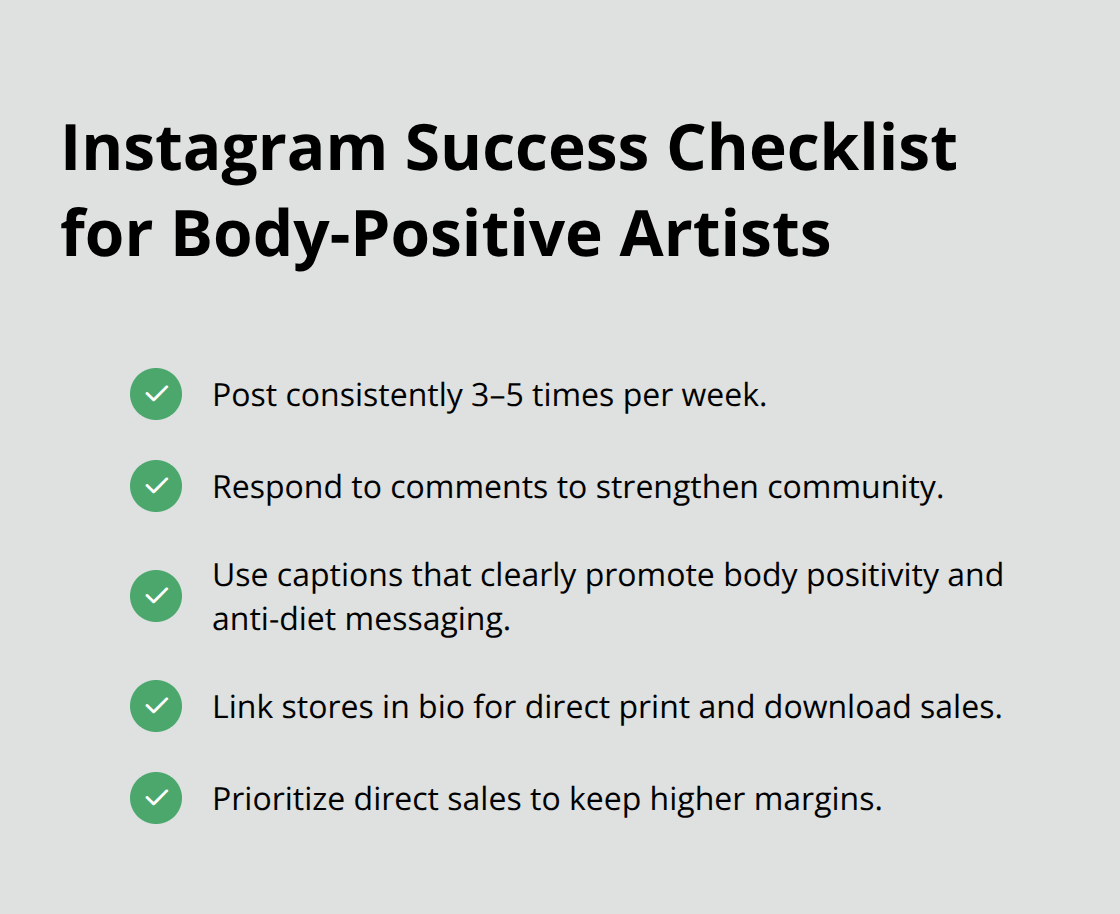
These artists typically share work 3–5 times weekly, respond to comments, and use captions that explicitly promote body positivity and anti-diet messaging. Followers can purchase prints, digital downloads, or commissioned work directly through artist websites or Etsy shops linked in their Instagram bios. This model cuts out middlemen entirely: the artist receives substantially higher margins than through traditional retailers, and buyers support creators directly.
Local Galleries Create Physical Encounters
Local community art spaces and independent galleries represent a second critical avenue, particularly for three-dimensional work and emerging artists without established online presence. Many cities host pop-up art markets, body-positive art exhibitions, and community galleries specifically featuring inclusive work. These spaces matter because they create physical encounters with art that social media cannot replicate, allowing viewers to experience scale, texture, and form in person. When purchasing from independent artists, ask about their production methods, materials sourcing, and whether they offer payment plans for higher-priced work. Artists creating textile pieces like Daisy May Collingridge’s couture suits require months of labor and justify premium pricing; buyers should understand this before purchasing.
Support Extends Beyond Purchase
Support also means crediting artists publicly when sharing their work, obtaining permission before reposting, and pairing their imagery with empowering captions rather than generic praise. Platforms like Patreon allow supporters to contribute monthly to artists’ work, providing predictable income that enables full-time creation rather than side-project status. This financial stability directly translates to more output, higher quality, and greater artistic ambition than sporadic sales alone can sustain. When you follow artists across multiple platforms, engage with their posts, and share their work with proper attribution, you strengthen their visibility and economic viability within communities that value inclusive representation.
Final Thoughts
Body positivity artwork has moved from the margins of art history into mainstream consciousness, reshaping how galleries, brands, and individuals understand representation. This transformation happened because artists refused to wait for institutional permission and audiences demanded to see themselves reflected authentically. Research demonstrates that exposure to diverse body representations paired with empowering messaging improves body satisfaction and mood significantly, proving that inclusive art produces real psychological benefits.
When people encounter body positivity artwork that celebrates their body type without filters or digital manipulation, something shifts psychologically. Seeing professional artwork that honors stretch marks, scars, and diverse shapes normalizes human variation in ways that conventional media never has. The cumulative effect of regular exposure to authentic representation reduces the internalized pressure to conform to narrow beauty standards that have caused genuine harm for generations.
The future of art celebrating human diversity depends on continued support for independent creators. Artists building careers through platforms like Etsy, Instagram, and local galleries prove that inclusive representation is economically viable and culturally necessary. We at Global Positive News Network believe that supporting body-positive artists means investing in a future where representation matches reality and beauty standards expand to include every body type.