Art has always reflected society’s values, and right now, body positivity art is reshaping how we see beauty and representation. At Global Positive News Network, we’re witnessing a powerful shift where artists reject narrow beauty standards and celebrate the full spectrum of human bodies.
From gallery walls to social media feeds, this movement is transforming cultural conversations about acceptance and diversity. The creativity fueling this change is undeniable, and its impact extends far beyond the art world.
How Modern Artists Are Dismantling Beauty Standards
Artists working in body positivity today deliberately reject the narrow ideals that dominated galleries for centuries. Jenny Saville’s large-scale portraits reveal raw, unfiltered human forms at monumental scale, forcing viewers to confront beauty beyond conventional standards. Rupi Kaur’s minimalist visuals celebrate feminine strength and imperfection in ways that feel accessible rather than aspirational. These aren’t theoretical exercises-they’re direct challenges to what gets displayed, valued, and purchased in the art world.
Social Media Amplifies Body Positivity Faster Than Galleries Ever Could
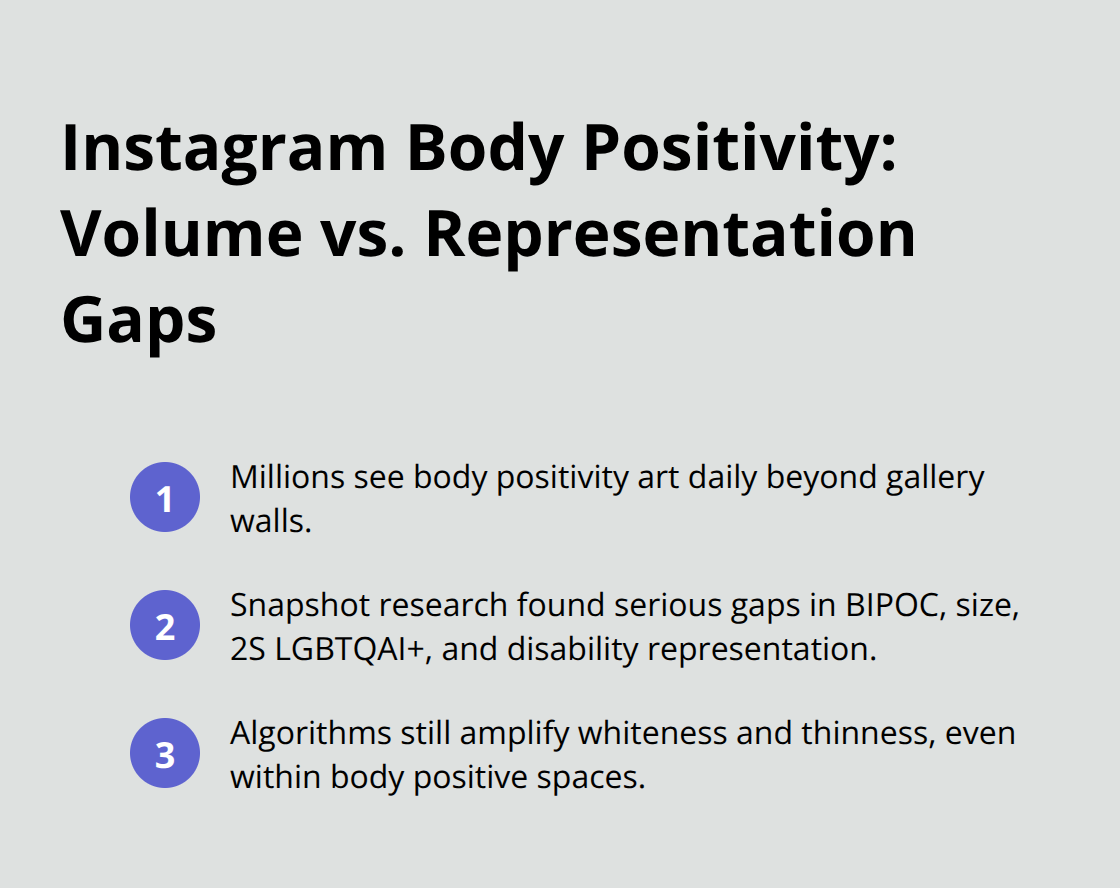
Social media accelerated this shift dramatically. As of March 2022, Instagram hosted 17.8 million posts tagged with BodyPositive and 9.8 million with BodyPositivity, according to research published in Frontiers in Sports and Active Living. This volume matters because it means body positivity art reaches millions daily, not just gallery visitors. However, the research reveals a troubling gap: a snapshot analysis of 141 public posts over five weeks in October-November 2021 showed that less than 20 percent included BIPOC representation, fewer than one-sixth depicted size diversity, only seven posts featured 2S LGBTQAI+ individuals, and just two mentioned disability. This means the movement’s visibility masks serious representation gaps. Whiteness and thinness remain central to what algorithms amplify, even within spaces claiming to celebrate all bodies.
What Real Representation Looks Like in Galleries Today
Museums and galleries are slowly shifting, but progress remains uneven. Contemporary exhibitions increasingly feature artists like Toyin Ojih Odutola, whose intricate drawings explore skin, race, and body image with nuance that challenges viewers to see beyond surface-level diversity. Visithra Manikam’s vibrant paintings celebrate body diversity explicitly, inviting joy rather than tolerance. The Bodies of Work exhibition advanced inclusivity through structural inclusion rather than tokenistic representation.
What matters for creators is this: institutions respond to demand. Attending exhibitions featuring body-positive work, purchasing from diverse artists, and following creators like Sally Hewett (whose embroidery honors scars and stretch marks as beautiful features) signals to galleries what audiences actually want. This direct support sustains the movement far more than hashtags alone.
Why Platform Algorithms Control What Bodies Get Seen
The data reveals something uncomfortable: more than a quarter of body positivity posts on Instagram include direct product or service links, tying positivity to consumption of supplements, workout programs, or cosmetic procedures. This commodification means that body-positive art competes not just with narrow beauty standards but with commercialized versions of acceptance. The posts that gain traction tend to depict transformation narratives-before-and-after imagery, fitness journeys, visible change-rather than celebrating movement for joy or bodies at rest.
To counter this, seek out artists who resist transformation language entirely. Megan Jayne Crabbe and Michelle Elman merge art with advocacy in ways that don’t require purchasing anything. Follow emerging illustrators like Joanna Thangiah, Jovanna Radic Eriksson, and Rachele Cateyes, who center fat positivity and inclusive representation without commercial hooks. Curating your own feed deliberately (unfollowing accounts that reinforce narrow ideals and following creators who depict genuine diversity) changes what the algorithm learns to show you and everyone you interact with. This shift in your own consumption habits directly influences which artists gain visibility next.
Making Body Positive Art That Feels Real
Reject Flattery and Embrace Authentic Depiction
Creating body positive art starts with rejecting the instinct to flatter or edit. Sally Hewett’s embroidery work demonstrates this directly-she stitches scars, stretch marks, and skin texture as central features, not afterthoughts to hide. The technical choice matters: embroidery forces deliberate attention to imperfection because each stitch remains visible and permanent. When you work in any medium, commit to depicting bodies as they exist rather than smoothing them into idealized versions.
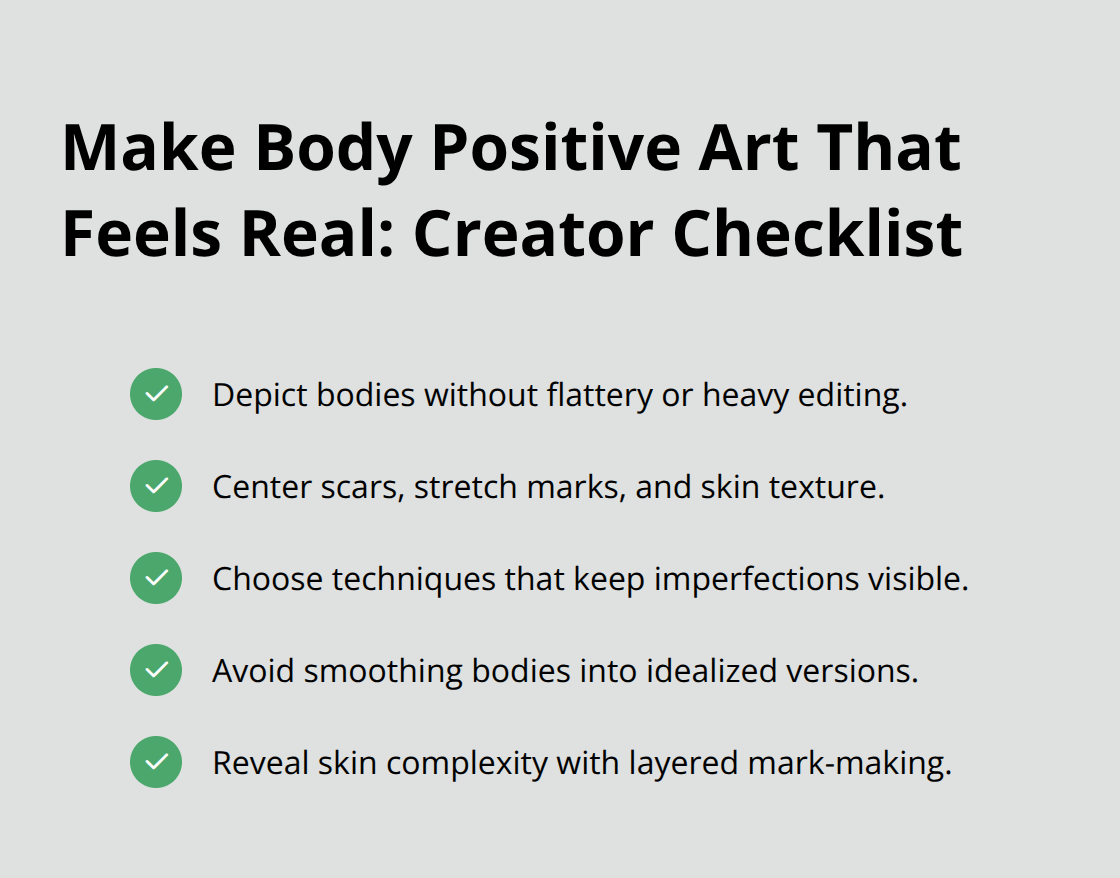
Toyin Ojih Odutola’s intricate drawings achieve this through layered mark-making that reveals skin complexity, not simplicity. The body positivity movement and representation of diverse body types in art are reshaping societal attitudes towards beauty and acceptance.
Photography offers another approach. Teri Hofford’s raw, unfiltered bodies shot in natural light without heavy retouching show that authenticity doesn’t require technical perfection. Choose a medium that requires you to slow down and observe-pencil, ink, clay, or fiber all force attention that digital tools can bypass through filters and smoothing functions.
Use Color and Symbolism to Communicate Celebration
Color choices directly communicate whether you celebrate diversity or reproduce narrow standards. Visithra Manikam’s vibrant paintings use bold, varied palettes that reject the muted tones historically associated with “tasteful” figure representation. When working digitally, resist the urge to match skin tones to a limited swatch library-mix custom colors for each body you depict. For physical media, invest in quality materials that render skin accurately across darker tones; many affordable paint sets fail spectacularly at this task.
Symbolism matters equally. Jessamyn Stanley and Dianne Bondy’s movement and yoga work demonstrates that depicting bodies in motion without transformation language shifts meaning entirely. A body stretching isn’t becoming something better-it simply exists with agency. Include bodies at rest, bodies aging, bodies with visible disability, bodies that don’t perform fitness. The resistance to commercial body positivity means avoiding before-and-after framing, visible “progress,” or any visual narrative suggesting the body needs correction.
Build Skills Through Small Projects and Community
Start with small projects-self-portrait drawings, body contour mapping where you trace outlines and fill them with colors or words representing how different body parts feel-to practice without pressure. Join communities organized around hashtags such as #BodyPositiveArt on Instagram to see what emerging illustrators like Rachele Cateyes, Joanna Thangiah, and Ruby Allegra actually create rather than what algorithms amplify.
Their work proves that body positive art thrives when it centers joy and acceptance over transformation. Specificity-depicting actual bodies with actual features-reaches viewers far more powerfully than generic celebration ever could. This foundation prepares you to explore how communities and movements sustain this work at scale.
Body Positive Art Communities and Movements
Emerging illustrators dominate this space far more than established gallery artists. Joanna Thangiah, Jovanna Radic Eriksson, Rachele Cateyes, Ruby Allegra, Kayley Mills, Kelly Bastow, Paola Zuccaro, Sanne Thijs, and Marcela Sabiá work directly on Instagram, building audiences of hundreds of thousands without gallery representation. Their output matters because they release work constantly, respond to follower feedback, and depict bodies that museums still largely ignore. Rachele Cateyes centers fat positivity explicitly, rejecting the coded language of mainstream body positivity. Ruby Allegra depicts varied body shapes with emphasis on self-love rather than fitness achievement. These creators earn income through commissions, digital product sales, and brand partnerships with companies actually aligned with their values rather than exploiting the movement for profit.
Emerging Artists Leading the Body Positivity Movement
The most successful illustrators refuse transformation narratives entirely, which means their work accumulates followers who want celebration without the commercial pressure that dominates larger platforms. Following these specific artists directly (rather than searching hashtags) gives you access to work before algorithms filter it through the same whiteness and thinness that structures mainstream visibility. Their consistent output and direct engagement with audiences create accountability that traditional gallery systems cannot replicate. These artists prove that body positive work thrives when it centers joy and acceptance over visible change.
Online Communities Supporting Body Positive Creators
Online communities built around body positivity art operate separately from general art spaces. The Unedit positions body positivity and feminism as core since 2016, spotlighting Instagram illustrators who create work challenging mainstream beauty standards. Communities on platforms like Discord and Patreon connect creators who share anti-capitalist or fat-positive frameworks, which matters because it filters out artists using body positivity as aesthetic branding. These spaces function as accountability networks where members share work in progress, discuss representation gaps in their own practice, and call out commodification when it emerges. Art therapy communities also intersect here, with practitioners using body-positive creation as structured support for people confronting body image issues.
Collaborations Between Artists and Advocacy Organizations
What distinguishes functional communities from performative ones is whether they actively discuss intersectionality, race, disability, and aging rather than treating body positivity as size diversity alone. Collaborations between artists and organizations like fat activism groups, disability justice collectives, and Black queer networks anchor creative work in historical movements rather than isolated self-care. These partnerships determine whether exhibitions, social media campaigns, and community events center non-normative bodies or reproduce the same exclusions that sparked the movement initially. Seeking out creators who explicitly credit these collaborations in their work means supporting artists who understand body positivity’s roots in Black feminist and anti-fat activism rather than its commercialized version.
How Direct Support Shapes Future Creative Work
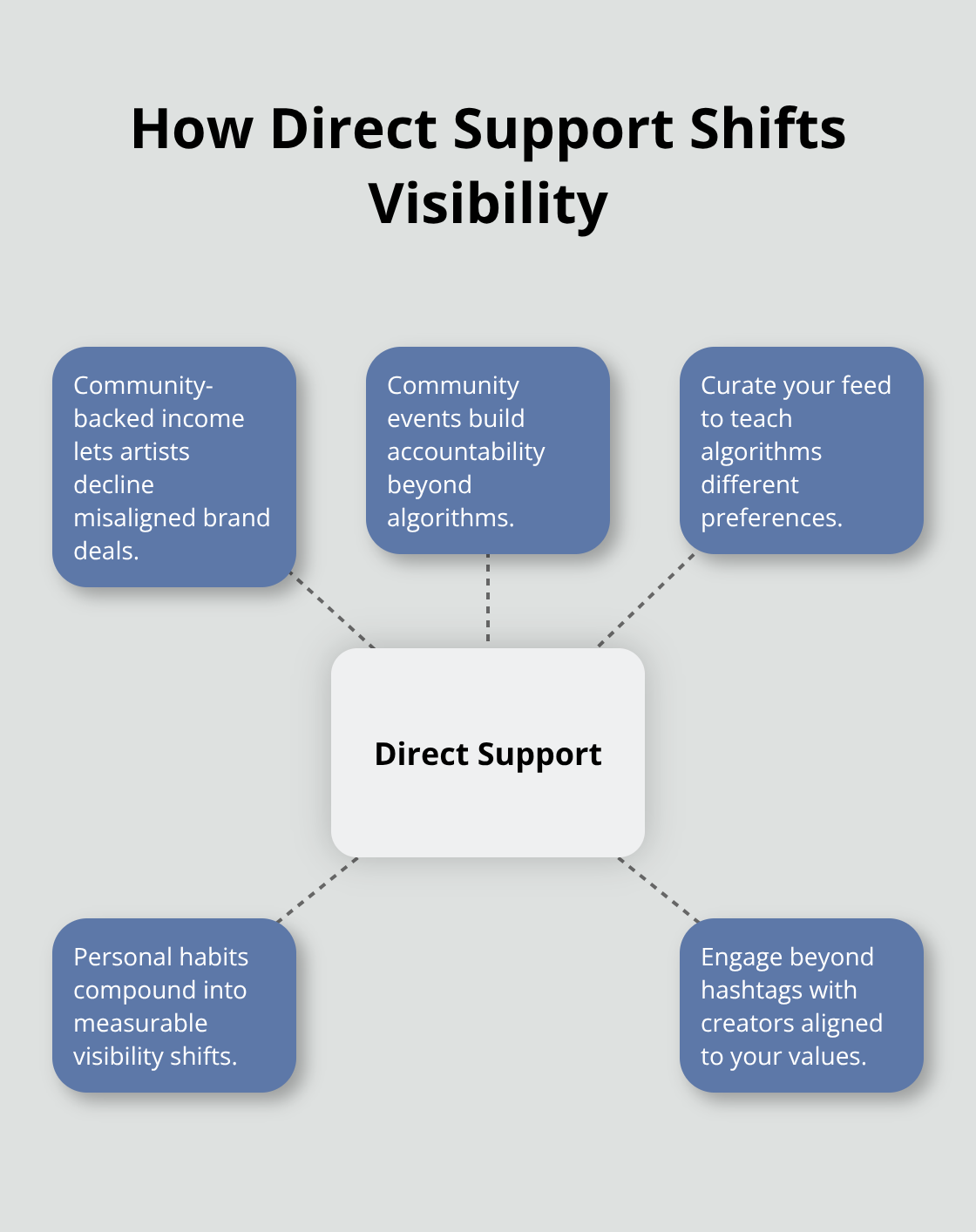
Purchasing work from emerging illustrators, attending community art events, and engaging with content that resists transformation language directly shifts what creators prioritize. Artists who earn reliable income from their community don’t need to accept brand partnerships that contradict their values. Art nights, workshops, and group projects organized by body-positive communities create accountability that algorithms cannot replicate. When you curate your own feed deliberately, unfollow accounts reinforcing narrow ideals, and follow creators depicting genuine diversity, the algorithm learns your preferences and surfaces different work to others in your network. This mechanism means individual consumption habits accumulate into measurable shifts in visibility. Communities organized around hashtags like BodyPositiveArt function as discovery tools, but only if you move beyond passive scrolling and actually engage with specific creators whose practice aligns with your values.
The barrier isn’t finding these artists-it’s committing to follow their work consistently rather than treating body positivity as seasonal content.
Final Thoughts
Body positivity art has fundamentally shifted how institutions and audiences perceive beauty. What began as resistance to narrow commercial standards has become impossible to ignore in mainstream spaces. Fashion brands now feature diverse body types in campaigns, not as tokenism but as market reality, and media outlets actively seek stories about body acceptance rather than treating them as niche content. This transformation happened because artists refused to compromise on authentic representation, and audiences responded by demanding more.
The movement’s influence extends beyond aesthetics into structural change. Museums now actively recruit curators and artists from marginalized communities rather than waiting for external pressure, and galleries that ignored body positivity art five years ago now feature it prominently because they recognize audience demand. This institutional shift matters because it determines which artists gain resources, which bodies get displayed, and which narratives shape cultural understanding of beauty. Artists who resist commercialization continue to build sustainable careers through direct community support rather than brand partnerships.
Body positivity art will likely deepen its focus on intersectionality rather than broaden into vagueness, with the most compelling work already centering disability, aging, race, and queerness alongside size diversity. The movement’s future depends on whether creators maintain accountability to fat activism and Black feminist roots or allow it to become another aesthetic trend stripped of political meaning. We at Global Positive News Network recognize that art functions as genuine cultural change when it refuses compromise.