

Confidence isn’t built overnight, and it doesn’t require dramatic life changes. At Global Positive News Network, we’ve found that small, consistent actions compound into genuine self-assurance over time.
Your positive mindset daily starts with habits so simple you can fit them into any schedule. This guide shows you exactly how to build unshakeable confidence through tiny, repeatable actions.
How Small Actions Rewire Your Brain for Confidence
Your brain physically changes when you repeat an action consistently. Research from BJ Fogg at Stanford shows that tiny habits work because they exploit how your nervous system actually functions. When you perform the same small action after a reliable trigger, your brain strengthens the neural pathway connecting that trigger to the behavior. Habits are context dependent; they strengthen through repetition and associations with cues from the surrounding environment. This is why morning affirmations feel forced on day one but automatic by day 90. The key insight most people miss is that you don’t need willpower once the neural pathway solidifies. Instead of relying on motivation to say an affirmation each morning, your brain simply fires the same pattern it has practiced hundreds of times.
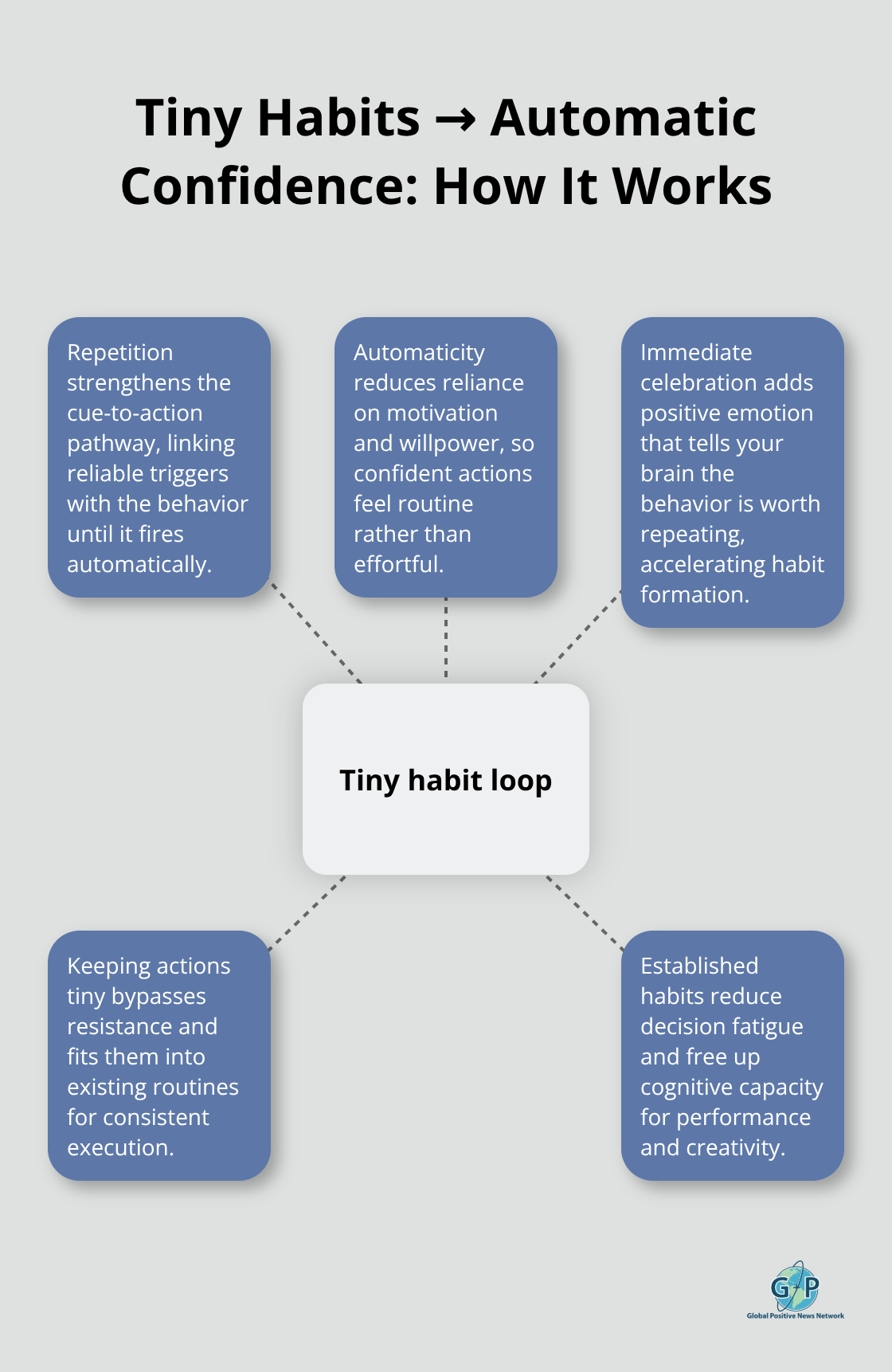
This neurological shift separates people who maintain confidence from those who lose momentum after a few weeks. The Flow Research Collective found that individuals operating from established habits experience 2 to 5 times greater productivity and creative output than those constantly making decisions about what to do next. Your confidence compounds because your brain stops treating confident actions as optional choices and starts treating them as automatic responses.
Start with actions so small they feel trivial
The mistake most people make is underestimating how small a habit can be and still work. Instead of committing to a 30-minute morning routine, pick one specific action that takes 60 seconds. Write down three things you’re grateful for. Do five push-ups. Say one positive affirmation out loud. These micro-actions bypass the resistance your brain creates around larger commitments. When you anchor a tiny habit to something you already do daily (like pouring your first cup of coffee or sitting at your desk), the behavior integrates seamlessly into your existing routine. Mayo Clinic research on stress management confirms that positive self-talk and small physical movements reduce anxiety and improve how you process difficult situations. The celebration matters more than the size of the action. After completing your tiny habit, spend three seconds acknowledging the win-a simple mental note or quiet yes works. This emotional reward signals your brain that the behavior is worth repeating, accelerating the automaticity process.
Break confidence down into observable behaviors
Confidence feels abstract until you translate it into specific actions. Instead of thinking “I need to be more confident,” identify what a confident person actually does in your situation. A confident person at work speaks up once per meeting. A confident person in social settings makes eye contact and asks one genuine question. A confident person facing rejection treats it as information, not judgment. Each of these is a concrete behavior you can practice daily. Arthur Ashe famously said one important key to success is self-confidence, and a key to self-confidence is preparation. When you practice the specific behavior repeatedly, you eliminate the gap between how you want to feel and how you actually feel. The preparation itself generates the confidence. You’re not faking it or waiting for motivation to arrive. You’re systematically building the neural hardware that produces confident responses.
Move from theory to your first tiny habit
The real work starts when you stop thinking about confidence and start acting. Pick one anchor moment from your day-after your shower, at your desk, after lunch, or before bed. Choose one micro-action that takes under two minutes (a few positive affirmations, a short walk, or three sentences in a journal). Attach the action to that anchor moment. Celebrate immediately after you complete it. This single loop, repeated daily, creates the foundation for everything else. The specificity matters far more than the ambition. A person who does five push-ups every morning for 90 days builds more confidence than someone who plans a complete fitness overhaul and quits after two weeks. Your next chapter explores which tiny habits work best for different situations and how to stack them together once the first one becomes automatic.
Which Tiny Habits Actually Stick
Start with specific gratitude statements
The habits that work are the ones you’ll actually do, not the ones that sound impressive. Start your morning with three specific gratitude statements instead of a vague positive thought. Say them out loud: I’m grateful for my coffee. I’m grateful my legs work. I’m grateful I finished that project yesterday. Speaking gratitude aloud activates different neural pathways than thinking it does. Mayo Clinic research confirms that practicing gratitude daily reduces depression and anxiety while improving stress resilience. The specificity matters because your brain locks onto concrete details but struggles with abstract positivity. Set a timer for two minutes and write three things you’re grateful for in a journal or on your phone. Don’t overthink it.
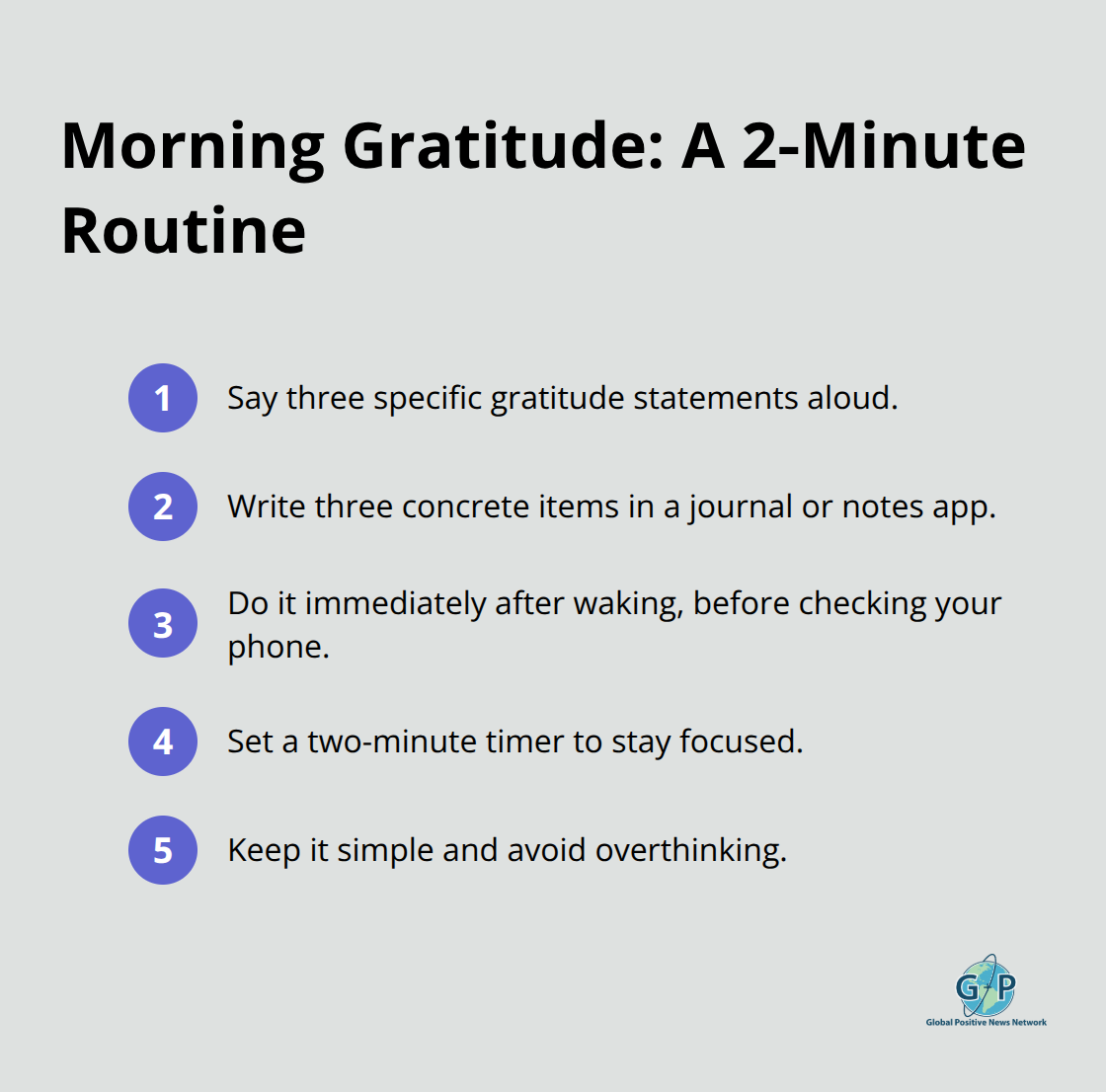
The act of writing forces your brain to slow down and notice what’s actually working in your life. Do this immediately after waking, before checking your phone. This anchor moment works because your brain is already in a transition state, making new habits easier to attach.
Use movement to reset your mental patterns
Movement breaks interrupt the mental patterns that undermine confidence-they’re not about fitness. After every 90 minutes of work or whenever you feel stuck on a decision, do five push-ups, walk around your block, or climb stairs for one minute. The Flow Research Collective found that people who move consistently throughout the day maintain 2 to 5 times greater productivity than sedentary workers. Physical movement directly counters the self-doubt your brain generates when you sit too long with the same problem. Your body’s state influences your mind’s state. After movement, your nervous system resets, and you return to your task with fresher perspective.
Replace negative scripts with factual rewrites
For self-talk, replace your automatic negative scripts with specific rewrites grounded in your actual experience. When you catch yourself thinking it’s too complicated, say aloud it’s a puzzle I’ll solve differently. When you think I’ll probably fail, say I’ve handled hard things before. These aren’t empty affirmations-they’re factual reminders tied to real evidence from your life. Practice one rewrite daily for two weeks until it becomes automatic. Positive thinking can help with stress management and anxiety. Your brain believes what you tell it repeatedly, so choose your words deliberately and anchor them to real evidence. The next chapter reveals how to track these habits systematically and maintain momentum when motivation fades.
Tracking Progress and Maintaining Momentum
The difference between people who build lasting confidence and those who quit after two weeks comes down to one thing: they track progress in ways that actually work. A simple checkmark on a calendar each day you complete your tiny habit creates a visual record your brain responds to. This isn’t about perfectionism. It’s about creating friction-free feedback that shows you’re making progress. Use a paper calendar, a notes app, or a habit tracker app like Habitica or Streaks. The medium matters less than consistency. What matters is that you can see at a glance whether you completed your habit today. After 30 days of visible checkmarks, your brain starts craving the pattern. This is why a 30-day streak feels harder to break than day three. Your nervous system wants to maintain the pattern you’ve established.
Track completion, not perfection
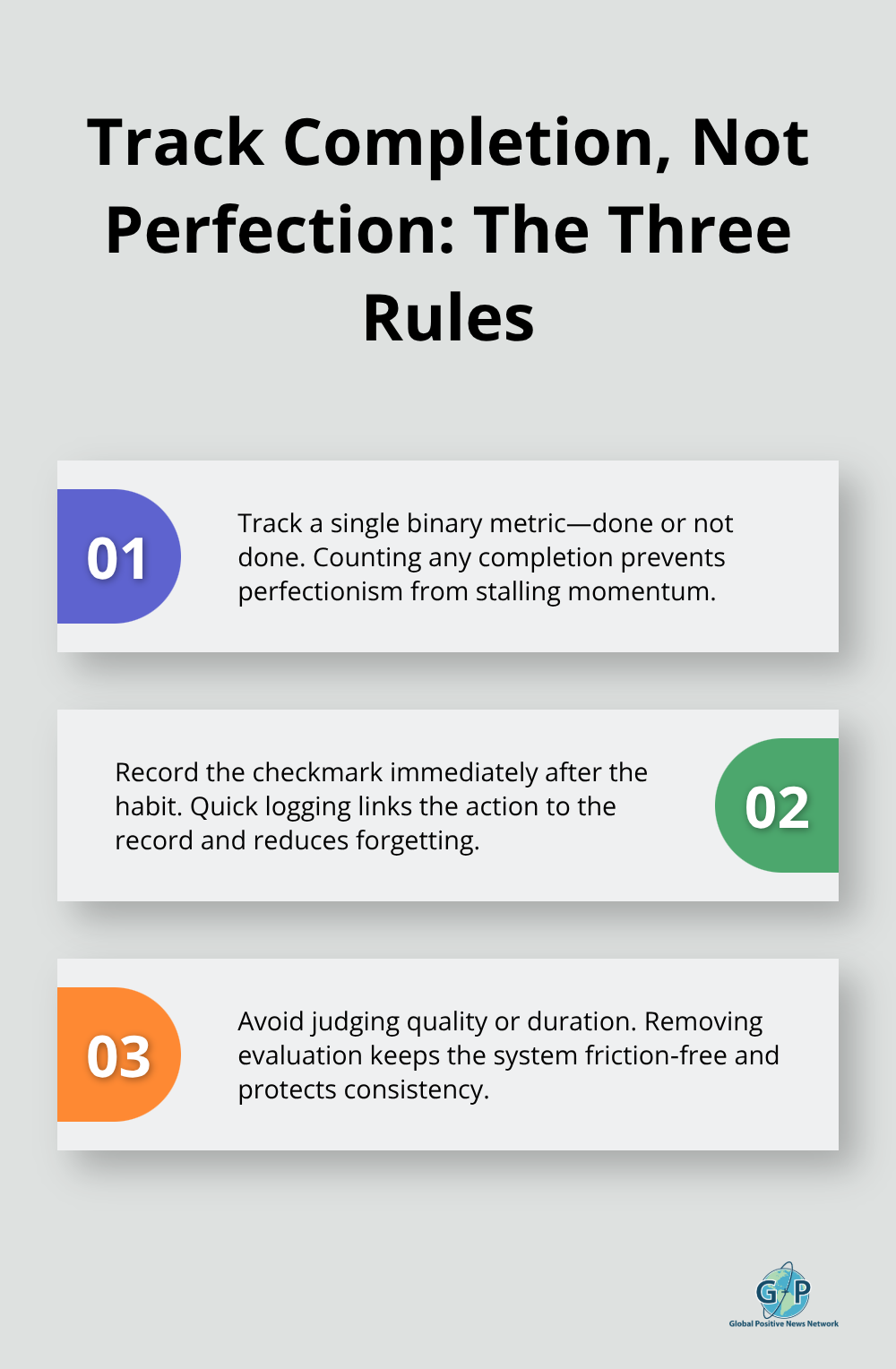
Track one metric only per habit: did you do it or not. Don’t track quality, duration, or how you felt. A five-push-up day counts the same as a fifty-push-up day. This removes the decision-making that kills momentum. When you overthink whether today’s gratitude practice was good enough, you inject doubt into a system designed to build certainty. People who track progress stay consistent longer than those who rely on memory. Write your completion in the tracker immediately after finishing your habit, before your brain moves to the next task. This creates a direct association between the action and the record.
Restart without shame after missed days
Setbacks happen, and they’re not failures. Missing one day doesn’t erase your progress or reset your neural pathways. What matters is restarting immediately the next day without shame or extended absence. If you miss a day, do your tiny habit the following morning and mark it down. Don’t skip two days in a row trying to catch up. The research on habit disruption shows that one missed day has minimal impact, but two consecutive misses significantly increase the likelihood of quitting permanently. When you restart, keep the habit identical to what you were doing before the break. Don’t add extra reps or extend the duration to compensate. This prevents the habit from becoming harder and triggering resistance.
Celebrate wins with specificity and immediacy
Celebrate small wins aggressively. When you hit a 7-day streak, acknowledge it. At 30 days, mark it differently on your calendar. At 90 days, share your win with one person. This isn’t vanity. These celebrations are the emotional fuel that moves habits from conscious effort into automaticity. Your brain releases dopamine when you acknowledge progress, and that chemical signal reinforces the behavior. Immediate, specific celebration after completing a habit increases the likelihood of repetition compared to delayed or generic praise. Tell yourself exactly what you did: I did my affirmations today. I moved for one minute today. I wrote my gratitude. The specificity matters because vague self-congratulation doesn’t trigger the same neural response.
Watch confidence shift beyond the habit itself
After 90 days of consistent tracking and celebrating, your confidence becomes measurable in ways beyond the habit itself. You’ll notice you speak up more in meetings without rehearsing. You’ll handle rejection differently. You’ll approach new challenges with less internal resistance. These shifts happen because the tiny habit you tracked every single day rewired how your nervous system responds to situations that used to trigger self-doubt.
Final Thoughts
The 90-day mark transforms your tiny habits from conscious practices into automatic responses. Your nervous system no longer treats confident actions as optional choices-it fires them as default patterns. A person who spent three months writing gratitude statements continues noticing what works in their life. Someone who moved for one minute after every work block returns to that reset button when stress arrives. The neural pathways you built through consistent repetition remain active, which means your confidence compounds long after you stop tracking.
Your positive mindset daily shifts from something you do to something you are. The affirmations you practiced become your internal voice. The movement breaks become your automatic reset button. The gratitude practice becomes how you naturally process your day. You’ve rewired your nervous system to default toward confidence instead of self-doubt, and that rewiring persists.
Start your journey this week by picking one tiny habit and anchoring it to one reliable moment in your day. Five push-ups after your morning coffee works. Three gratitude statements before bed works. One positive rewrite of a negative thought during lunch works. Pick whichever one you’ll actually do, commit to 30 days of tracking, and celebrate when you hit that first milestone. We at Global Positive News Network believe confidence emerges through action, not inspiration-visit Global Positive News Network for uplifting content that supports your growth.
Having a hard day?
The 2 Minute Hope Reset is a short free guide with three small practices for the days that feel heavy. Two minutes each, nothing to keep up with.
Get the free guideExplore more positive news:
Enjoying stories like this?
Global Positive News Network is reader-supported. If you’d like to support the mission, you can visit the Official GPNN store.