

Community service doesn’t require a grand gesture or years of commitment. At Global Positive News Network, we’ve seen how ordinary people create extraordinary change by simply showing up for their neighbors.
The community service inspiration in this post comes from real individuals and teams who started exactly where you are now. Their stories prove that meaningful impact begins with a single decision to act.
Real Stories of Community Heroes Making a Difference
Starting Small Builds Lasting Impact
Starting small is not a limitation-it’s the most reliable path to sustained impact. One individual in Indiana recognized that student food insecurity prevented classmates from concentrating in class, so she opened the Crimson Cupboard, an on-campus food pantry that now serves hundreds of students monthly. Another person began volunteering monthly at a local shelter, assisting cooks and serving meals, discovering that small acts of connection-a compliment or genuine eye contact-brighten residents’ nights and reinforce human dignity. These examples share a fundamental truth: impact doesn’t require a five-year plan or a nonprofit board. It requires showing up consistently.
According to the U.S. Census Bureau, between September 2022 and September 2023, 28.3% of Americans formally volunteered through an organization, totaling roughly 75.8 million people who contributed 4.99 billion hours worth approximately $167.2 billion in economic value. What separates those who volunteer once from those who build lasting change is consistency, not ambition. The most effective volunteers treat their commitment like a recurring appointment, not a one-time event.
Teams Create Visible Transformation
When groups coordinate around a shared neighborhood need, the results become impossible to ignore. Community cleanup events deliver tangible, measurable outcomes-Ocean Conservancy’s International Coastal Cleanup mobilized nearly half-a-million volunteers in 2023 to remove more than 14 million pieces of trash, proving that collective action produces concrete results. Citi’s Global Community Day and Keep America Beautiful’s Great American Cleanup demonstrate how corporate teams foster neighborhood pride while addressing real environmental damage.
Young people lead these efforts with particular effectiveness because they refuse to accept problems as permanent. They organize literacy programs at community centers, coordinate food drives with specific deadlines and drop-off locations, and establish mentorship networks that connect younger students with college-bound peers. The Courtney Wilczewski Foundation coordinates large volunteer events across multiple states, showing that youth-led initiatives scale beyond single neighborhoods.
Why Teams Succeed Where Individuals Struggle
Teams succeed because they distribute responsibility-one person handles logistics, another recruits volunteers, a third measures outcomes. This division of labor makes sustained action manageable for people with jobs, families, and competing commitments. When multiple volunteers share the workload, no single person carries the full weight of maintaining momentum.
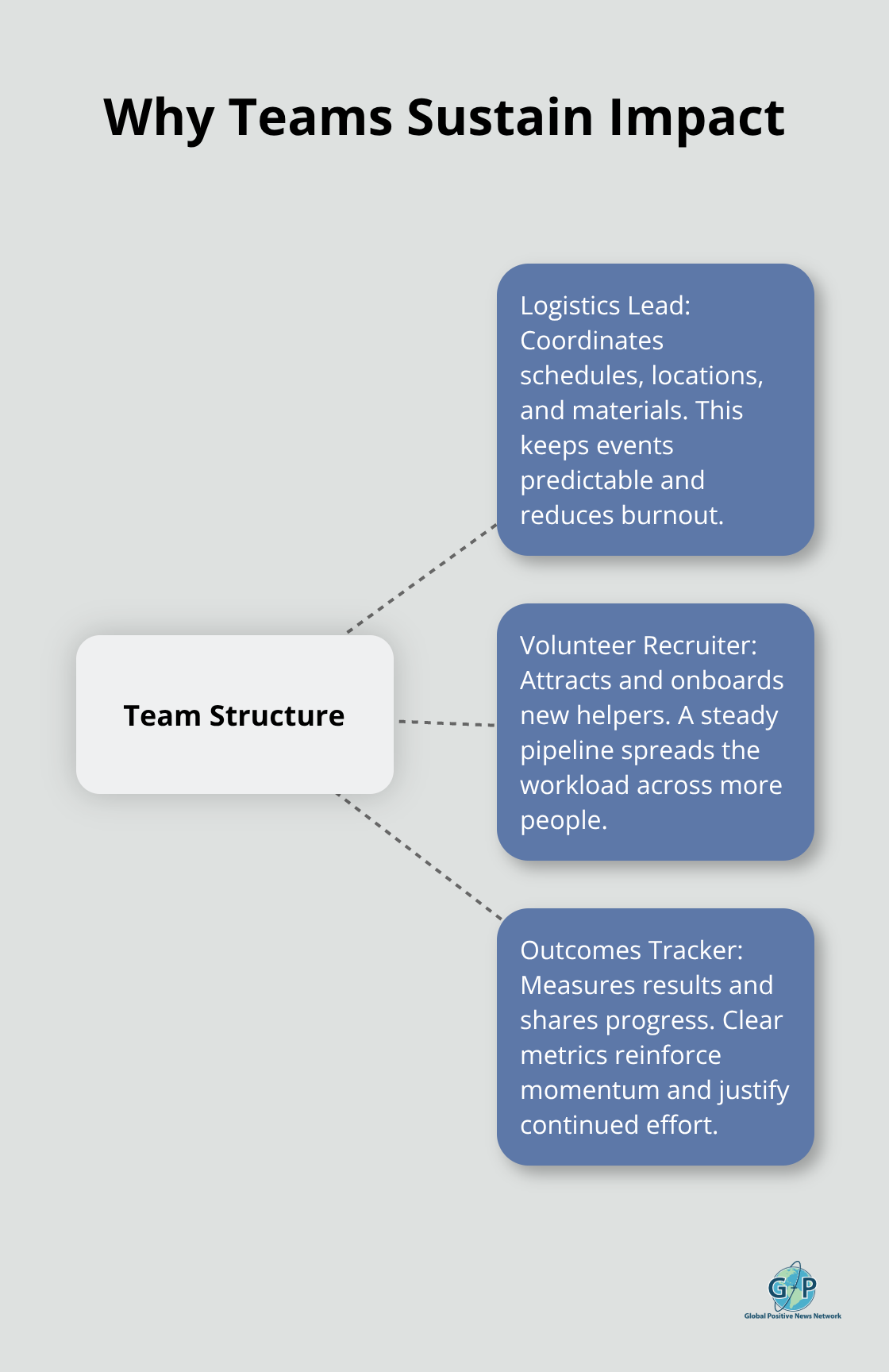
This structure allows communities to tackle larger problems and sustain efforts over months or years rather than weeks.
The next section explores how to identify which opportunities match your skills and schedule, and how to find the right group or organization to join.
How to Match Your Skills and Schedule to Community Needs
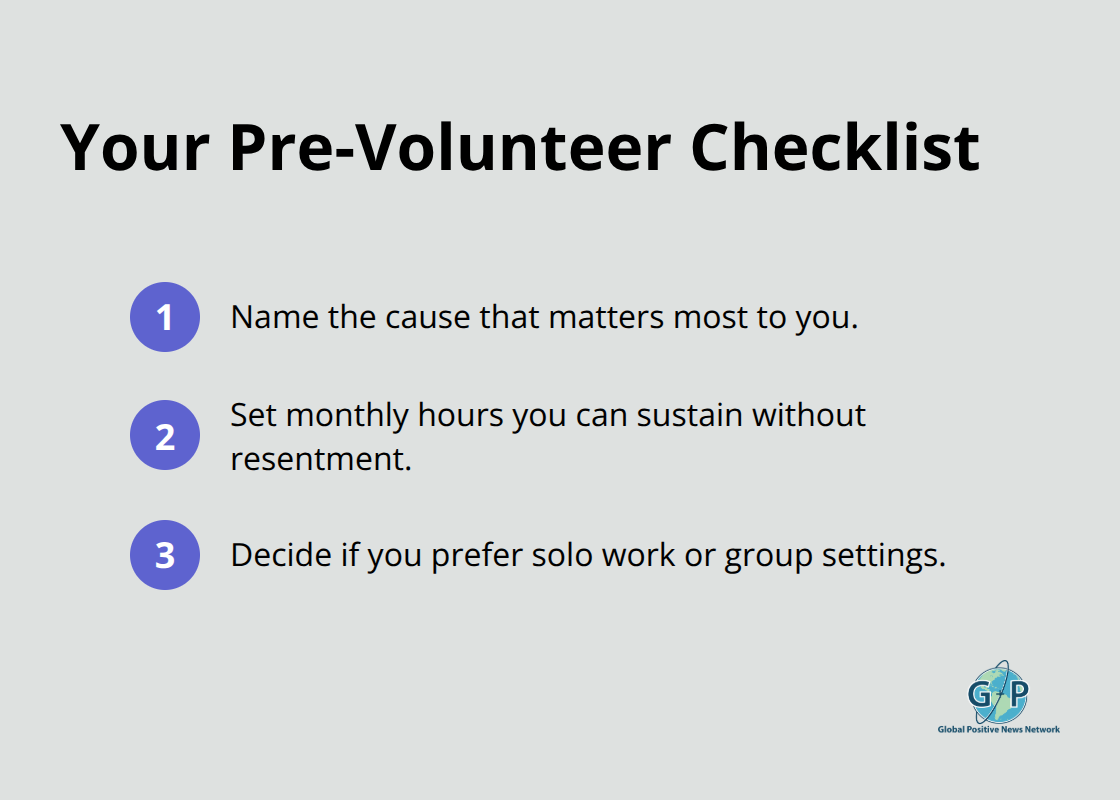
Finding the right volunteer opportunity means starting with brutal honesty about what you actually have to give. Most people fail at volunteering not because they lack compassion but because they commit to something incompatible with their lives. The U.S. Bureau of Labor Statistics reports that on an average day in 2022, more than 11 million people volunteered, yet many quit within months because they chose activities that demand more than they can sustain. Before searching for organizations, write down three things: the specific cause that matters most to you, the hours you can realistically commit each month without resentment, and whether you prefer working alone or with others. A person with strong writing skills who can dedicate two evenings monthly should pursue mentoring or thank-you note writing for service members, not join a weekly cleanup crew.
Someone with flexible daytime availability should prioritize food distribution or shelter meal service, where consistent presence directly impacts meal counts and kitchen operations. The mismatch between your capacity and your commitment is the primary reason volunteers quit.
Organizations Want Your Honesty
Nonprofits would rather have someone commit to four hours monthly and show up reliably than someone who promises twenty hours and disappears after two months. When you contact an organization, state exactly what you can do and when you can do it. Organizations like Dress for Success, which coordinates clothing drives and interview outfit programs, or Best Friends Animal Society, which manages animal shelter volunteering, have entry points ranging from two-hour shifts to ongoing roles. Ask the organization what they need most urgently rather than assuming you know what helps. A food pantry coordinator can tell you whether they need volunteers during stocking hours, distribution hours, or both. A literacy program director knows whether you should commit to weekly sessions or flexible drop-in support. This conversation prevents you from investing time in work that doesn’t match the actual need.
Finding Your People Accelerates Commitment
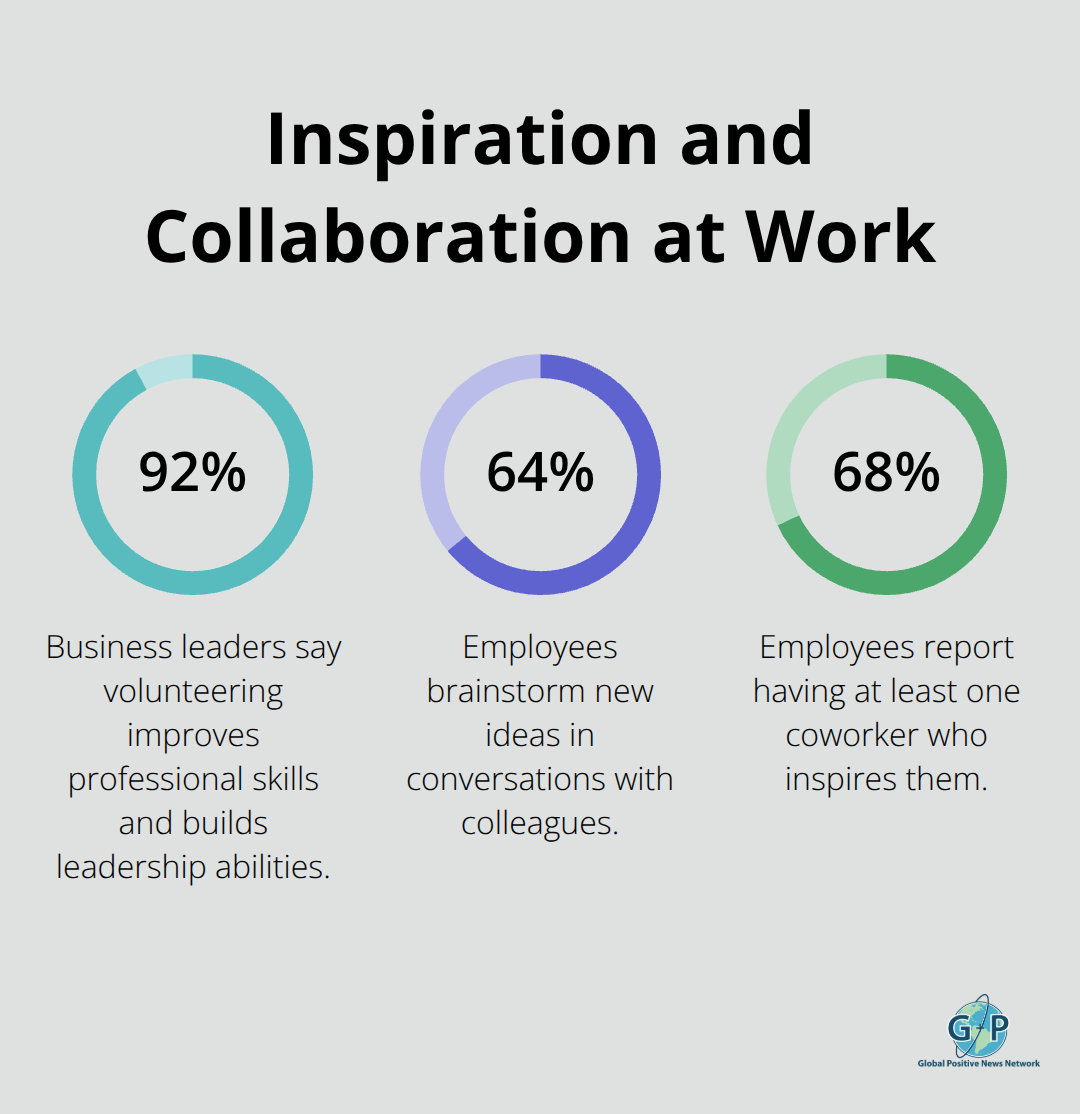
Volunteering becomes sustainable when you work alongside others who share your values. According to Deloitte research, 92% of business leaders agree that volunteering improves employees’ professional skills and builds leadership abilities, yet isolation kills momentum faster than difficulty. Search for volunteer opportunities that match your skills and schedule, which catalog volunteer activities across multiple causes with end-to-end planning and logistics managed by the platform. Local religious organizations, workplace volunteer programs, and community centers often coordinate group opportunities around specific causes. When you volunteer with colleagues or friends, you gain accountability, social connection, and shared celebration of progress. A team tackling a neighborhood cleanup or coordinating a donation drive for hygiene kits at homeless shelters creates momentum that sustains individual participants. Start with one organization that operates at times matching your schedule, commit to three months minimum, and evaluate whether the work and the people energize you or drain you before expanding to additional causes.
What Happens When You Find the Right Fit
Once you identify an organization and a cause that aligns with your actual capacity, something shifts. You stop treating volunteering as an obligation and start treating it as part of your routine. The people you meet become friends rather than strangers. The work produces visible results that you can point to and celebrate. This foundation of genuine fit and sustainable commitment prepares you to understand the broader impact your actions create-not just for the immediate community you serve, but for the networks and movements you help build.
How Your Actions Spark Movements
One Person Changes Everything
One person volunteers at a shelter for three months, serving meals and clearing tables. A coworker notices the change in their energy and asks what they’re doing. Within six weeks, five colleagues join the same shift. Six months later, the shelter coordinator recruits that original volunteer to help train new groups. This isn’t inspiration in the abstract sense-it’s a documented pattern. According to the O.C. Tanner Institute’s research on workplace inspiration, employees who feel inspired are 20 times more likely to promote their organization as a great place to work and 14 times more likely to want to stay. When someone volunteers visibly and talks about the work honestly, they become a permission structure for others. They prove that community service fits into a normal life, that it doesn’t require special credentials or unlimited time. The ripple effect starts not with grand announcements but with one person showing up consistently enough that others witness the impact firsthand.
This visibility matters more than any recruitment campaign. Sixty-four percent of employees brainstorm new ideas in conversations with colleagues, and 68 percent report having at least one coworker who inspires them.
When your volunteer work becomes part of office conversation-not as humble-bragging but as genuine reflection on what you’re learning-you create an opening for others to consider their own involvement.
Numbers That Reveal Real Impact
The measurable outcomes of community service extend far beyond individual inspiration. Between September 2022 and September 2023, American volunteers contributed 4.99 billion hours worth approximately $167.2 billion in economic value according to the U.S. Census Bureau. But numbers alone miss the point. A regular volunteer at a food distribution program doesn’t just move boxes-they help ensure that 251 million meals reach seniors annually through Meals on Wheels America, directly supporting over 2 million older adults. Ocean Conservancy’s International Coastal Cleanup removed more than 14 million pieces of trash in 2023 through nearly half-a-million volunteers, translating to measurable reductions in ocean plastic that harms marine ecosystems.
When you work consistently in one community or cause, you start recognizing patterns. You notice which families return to the food pantry multiple times monthly and begin connecting them with job training or housing resources. You see the same young person at the literacy program progress from struggling reader to confident speaker. You watch a neighborhood cleanup evolve from a one-time event into a monthly gathering where neighbors exchange contact information and organize other community initiatives together.
How Networks Build Lasting Change
This progression from isolated volunteers to interconnected networks is how lasting change actually happens. The O.C. Tanner Institute found that when both leaders and teams are inspiring, the odds of employees feeling inspired to try new things increase up to 38 times. Applied to community work, this means a single well-organized volunteer program that combines meaningful work with supportive peers creates conditions where people don’t just volunteer once-they build relationships that sustain engagement for years. These networks eventually develop the capacity to tackle bigger problems. They identify funding sources, partner with established nonprofits, and advocate for policy changes. A group that started with monthly neighborhood cleanups might eventually pressure city officials to improve waste management in that area. A team coordinating food distribution might launch a campaign for better access to grocery stores in food deserts. The infrastructure for social change builds from consistent volunteer participation, not from occasional gestures.
Final Thoughts
Community service matters now because isolation and disconnection have become the default. People work remotely, move frequently, and scroll through feeds instead of knowing their neighbors. Yet the evidence is clear: when you show up consistently for your community, you reverse that isolation for yourself and everyone around you. Volunteers report lower depression rates, better mental health, and stronger life satisfaction.
The deepest reason community service inspiration takes hold is that it proves change is possible. In a world where problems feel overwhelming and distant, volunteering demonstrates that one person’s consistent action produces measurable results. You don’t need permission, credentials, or a five-year plan-you need honesty about what you can give and willingness to show up consistently.
Identify one local organization addressing a cause that genuinely matters to you, then contact them and describe exactly what you can commit to monthly without resentment. Commit to three months minimum, show up on schedule, and pay attention to what you learn and who you meet. Visit Global Positive News Network to explore stories of community impact and discover how others are building change in their neighborhoods.
Having a hard day?
The 2 Minute Hope Reset is a short free guide with three small practices for the days that feel heavy. Two minutes each, nothing to keep up with.
Get the free guideExplore more positive news:
Enjoying stories like this?
Global Positive News Network is reader-supported. If you’d like to support the mission, you can visit the Official GPNN store.