

Most people wait for happiness to arrive on its own. At Global Positive News Network, we believe creative positivity challenges offer a faster path forward.
These structured activities rewire how your brain processes emotions. Small, intentional actions compound into measurable shifts in your outlook and daily experience.
How Positivity Challenges Rewire Your Brain
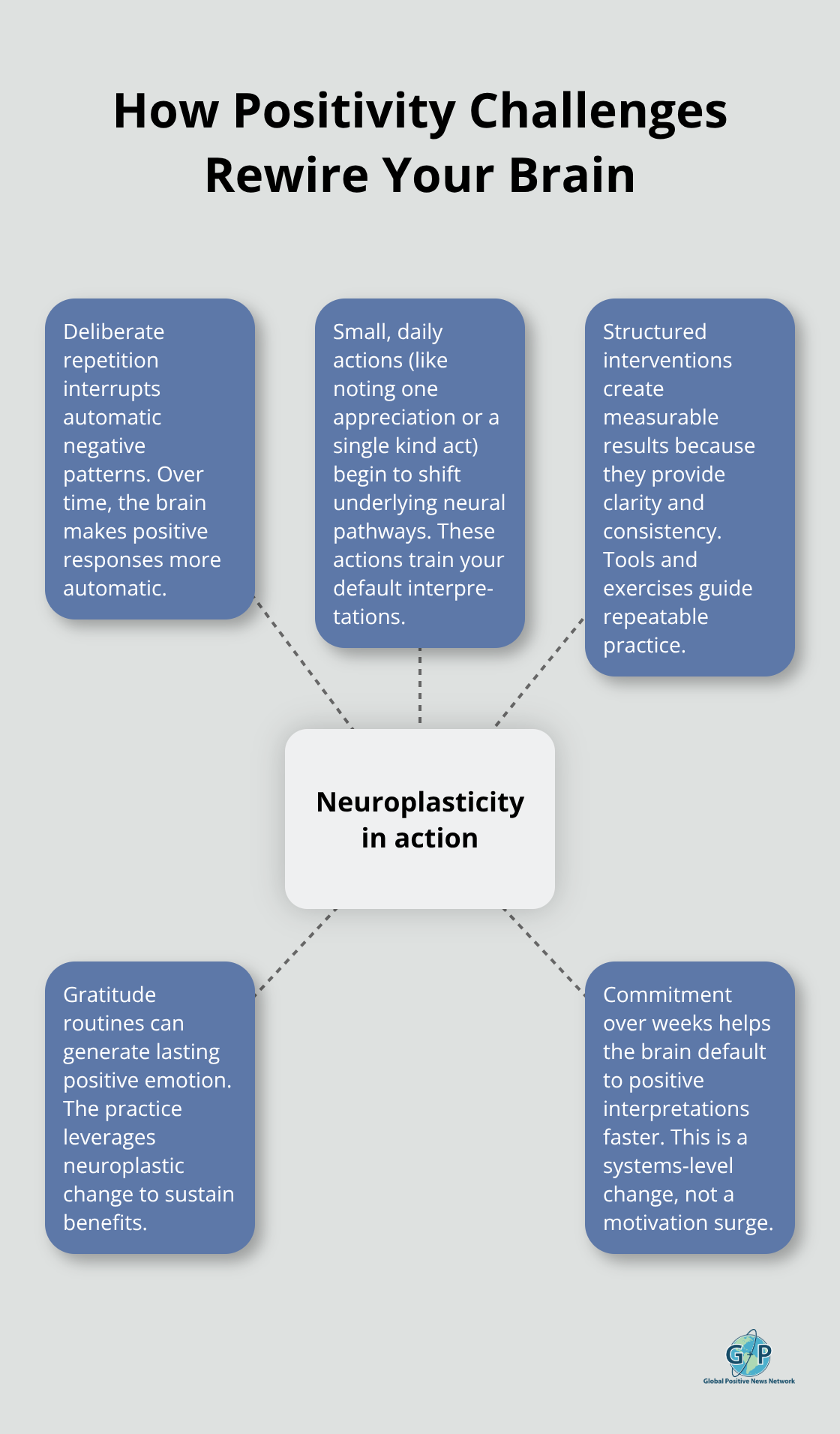
Positivity challenges work because they interrupt automatic negative thinking patterns through deliberate repetition. Research from Gardner, Lally, and Wardle in 2012 shows that repetition strengthens habit formation, making positive responses more automatic over time. When you complete a small daily action-whether that’s writing down one thing you appreciate or performing a single act of kindness-your brain doesn’t just record that moment. It begins to shift the neural pathways that govern how you process information.
After two to three weeks of consistent practice, your brain starts defaulting to positive interpretations faster than before. This isn’t motivation or willpower. It’s neuroplasticity at work. The Positive Psychology Toolkit, which contains over 500 science-based exercises, demonstrates that structured interventions produce measurable results when people commit to them daily. One study by Kini and colleagues in 2016 found that consistent gratitude routines create lasting positive emotion through these neuroplastic changes.
Structure Beats Vague Intentions
The key difference between challenges and random positivity attempts lies in consistency and structure. A vague goal like being more positive fails because your brain has no clear instruction. A specific challenge-like expressing appreciation to one person each day for a week-gives your brain an exact task to repeat. Implementation intentions, which researchers Gollwitzer and Sheeran studied in 2006, increase both the frequency and automaticity of positive behavior.
When you use an if-then plan (if I finish breakfast, then I write one gratitude entry), you remove the friction that kills most positive practices. Technology amplifies this effect. Apps that send reminders and track your streaks provide the external structure your brain needs to build the habit without relying on motivation alone.
How Community Strengthens Your Practice
Community transforms a personal practice into something that sticks. Hartanto and colleagues found in 2022 that regular gratitude interventions reduce stress and anxiety while improving mood and social connectedness. When you share your positivity challenge with others, you create mutual accountability. This matters because humans are social creatures who respond to external expectations.
A friend checking in on your progress makes quitting harder and completing the challenge feel more rewarding. Group challenges also normalize the practice, which removes the awkwardness many people feel when starting something new. If you’re the only person journaling about gratitude, it feels strange. If ten people in your circle are doing it together, it becomes ordinary. Shared challenges produce better outcomes than solo attempts, though the research on exact percentages varies by population.
The real power emerges when you stop fighting your brain’s resistance alone. Your accountability partners become your momentum. This foundation of support sets the stage for exploring which specific challenges work best for your personality and lifestyle.
Which Positivity Challenges Actually Work
Gratitude Logging: The Foundation That Works
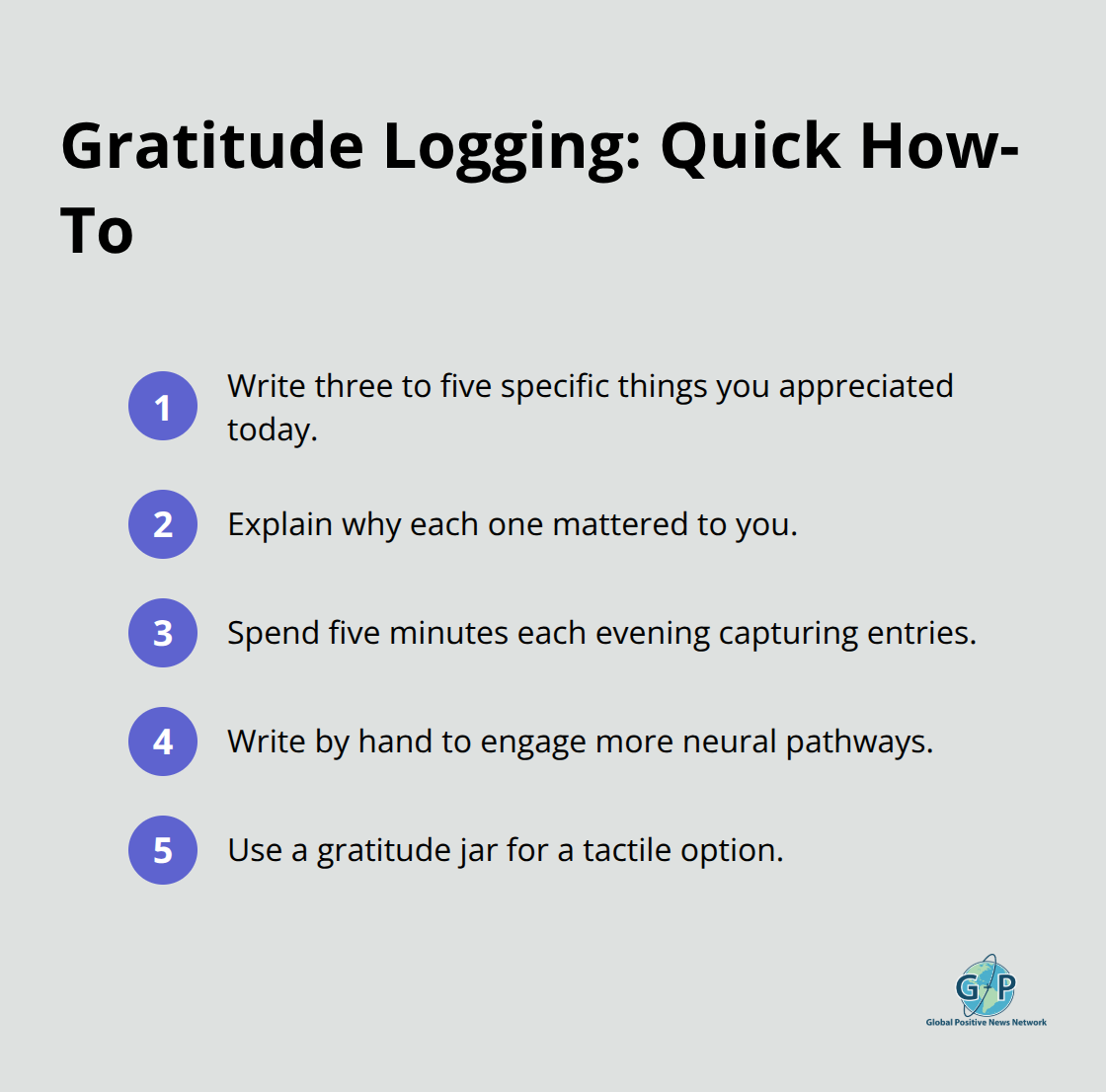
Gratitude logging dominates the positivity challenge space for good reason. Research by Emmons and McCullough in 2003 shows that consistent gratitude practice increases optimism and improves mental health indicators measurably. The mechanics are straightforward: you write down three to five specific things you appreciated that day, focusing on why they mattered rather than listing them like a shopping inventory. The difference matters enormously. Instead of writing groceries, you write that your friend remembered how you take your coffee and brought you a cup without asking, which meant someone was thinking about your preferences. This specificity activates your brain’s reward system differently than generic thankfulness.
A study by Allen in 2018 found that daily gratitude journaling creates neurological shifts within two weeks when done consistently. Try five minutes each evening, writing by hand rather than typing. The physical act of writing engages more neural pathways than digital entry. If traditional journaling feels tedious, try a gratitude jar where you deposit one handwritten note daily, then read them all on difficult weeks.
The tactile experience of pulling out old notes reactivates the positive emotions from when you wrote them.
Acts of Kindness: Breaking the Self-Focus Cycle
Acts of kindness challenges work because they flip your focus outward, breaking the self-referential thinking patterns that fuel anxiety and depression. Performing one deliberate act of kindness daily improves your mood according to research by Fredrickson. The trick is making kindness specific and slightly uncomfortable. Texting a friend is kind but easy. Calling someone you haven’t spoken to in months is harder and produces stronger mood elevation. Paying for the coffee of the person behind you in line takes thirty seconds but creates a ripple of positivity you’ll never fully witness.
The best kindness challenges combine consistency with novelty, so you don’t default to the same safe action repeatedly. This variation prevents your brain from automating the behavior in ways that reduce its emotional impact. Each new kindness act requires fresh attention and intention, which strengthens the neural rewiring process.
Creative Expression: The Deeper Transformation
Creative expression challenges like journaling with specific prompts push you past surface-level reflection into actual psychological shifts. Instead of free writing, use prompts like describing a recent challenge from someone else’s perspective, or listing three ways a failure taught you something valuable. This reframing exercise forces your brain to construct alternative narratives rather than rehearsing the same negative interpretation. Wood, Joseph, and Maltby in 2009 noted that gratitude practices are remarkably versatile and work across individual, classroom, and workplace settings.
The real insight is this: gratitude and kindness challenges feel good initially, but creative expression challenges feel uncomfortable at first and produce deeper, longer-lasting changes. Pair them together over a three-week period for maximum impact on how your brain processes difficulty. The combination creates a foundation strong enough to handle what comes next-measuring whether these shifts actually stick and how to sustain them over months and years.
How to Know Your Positivity Challenge Is Actually Working
Establish Your Baseline and Track Specific Metrics
Tracking progress in a positivity challenge requires moving beyond vague feelings to measurable data points. The most practical approach is establishing a baseline before you start, then measuring specific changes weekly. On day one, rate your current mood on a scale of one to ten and note how often negative thoughts interrupt your day. Write down the specific situations that trigger stress or anxiety. This baseline becomes your reference point.
After one week of your chosen challenge, rate your mood again and count how many days you caught yourself defaulting to negative thinking. The difference reveals whether the challenge is rewiring your brain or simply making you feel busy. Research showed that tracking progress through apps and written logs increases the likelihood of maintaining the habit because you see concrete evidence of change.
Recognize Subtle Shifts as Real Progress
Many people abandon challenges after two weeks because they expect dramatic transformation when real progress is subtle. You might notice you laugh more easily, or that you fall asleep faster, or that an interaction with a difficult coworker feels less draining. These micro-shifts compound into measurable mood improvements over three to four weeks, but only if you document them.
Without documentation, your brain defaults to remembering what went wrong that day rather than the incremental wins. Set one specific metric you’ll track daily: the number of times you caught yourself reframing a negative thought, or how many hours you slept well, or how many people you made laugh. Pick something you can actually count. General feelings are unreliable narrators of progress.
Celebrate Weekly Wins Immediately
The second critical factor is celebrating wins before they feel substantial. Most people wait until they feel dramatically happier to acknowledge progress, which means they miss months of incremental improvement. Instead, celebrate weekly. If you completed your kindness challenge four days out of seven, that’s a win worth acknowledging, not a failure because you missed three days.
This matters because your brain responds to celebration by releasing dopamine, which makes the behavior feel rewarding and increases the likelihood you’ll repeat it. Your nervous system needs this reinforcement to sustain effort over time.
Use Accountability to Lock In Your Habit
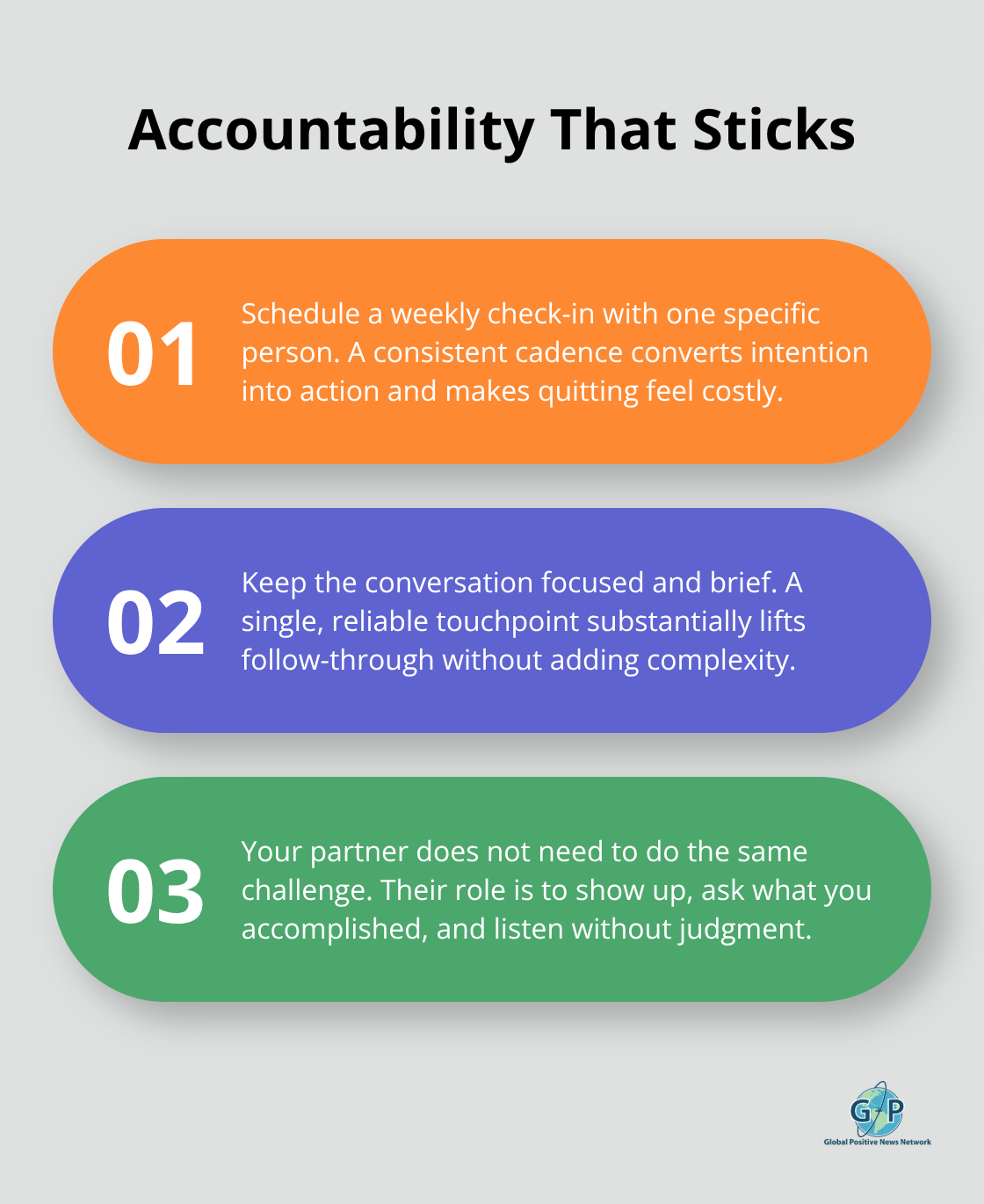
Accountability partners amplify progress dramatically. Share your weekly progress with one specific person who checks in with you every Sunday evening and asks what you accomplished. This one conversation increases follow-through rates substantially. The person doesn’t need to do the same challenge-they simply need to show up and listen.
If you cannot find an accountability partner, join a community challenge through social media or a platform focused on positive psychology. Post your daily progress publicly, even to a small group of strangers, and activate the same psychological mechanism. The combination of tracking specific metrics, celebrating small wins immediately, and reporting progress to another person transforms a vague intention into a sustainable habit that actually rewires how your brain processes daily experience.
Final Thoughts
Creative positivity challenges transform perspective because they replace passive waiting with active rewiring. You stop hoping happiness arrives and instead build it through deliberate, repeated actions. The research confirms what you’ll experience yourself: small daily practices create measurable shifts in mood, stress levels, and how your brain interprets daily events.
Starting your own challenge requires one decision and one action. Pick a single practice from what you’ve learned here-gratitude logging, acts of kindness, or creative expression-and commit to it for exactly three weeks (not forever, not until you feel like it). Set a specific time each day, tell one person what you’re doing, and track one metric that matters to you. The structure removes the burden of motivation, and after three to four weeks of consistent effort, your default thinking patterns shift toward noticing what’s working rather than what’s broken.
The sustainable practice emerges after those initial three weeks when your brain has begun rewiring itself. You’ll notice you naturally gravitate toward kindness, or you’ll find yourself reflecting on what you appreciated without forcing it. Visit Global Positive News Network to explore stories of people who’ve transformed their outlook through intentional practice and to discover resources that support your journey.
Having a hard day?
The 2 Minute Hope Reset is a short free guide with three small practices for the days that feel heavy. Two minutes each, nothing to keep up with.
Get the free guideExplore more positive news:
Enjoying stories like this?
Global Positive News Network is reader-supported. If you’d like to support the mission, you can visit the Official GPNN store.