

Most people check their news feeds out of habit, only to feel worse afterward. At Global Positive News Network, we believe your daily media diet should energize you, not drain you.
Positive news stories daily can genuinely shift how you feel and think. This guide shows you exactly where to find them and how to make them part of your routine.
Why Positive News Shifts Your Mental State
The Real Cost of Negative News Consumption
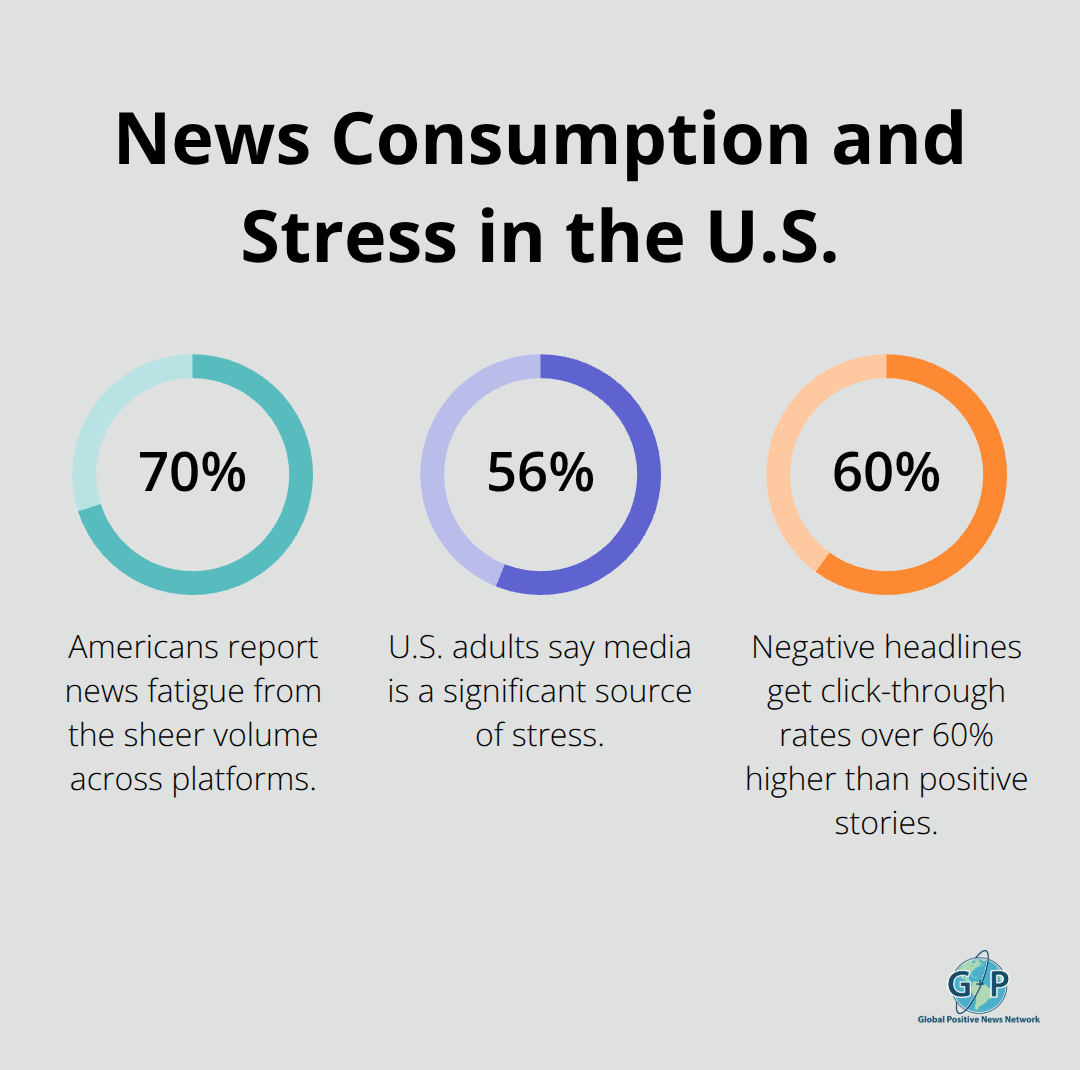
News consumption shapes your brain chemistry in measurable ways. According to research cited by the Pew Research Center and the American Psychological Association, about 70% of Americans report news fatigue from the sheer volume of coverage across platforms. More troubling, 56% of American adults say media is a significant source of stress in their lives. Negative headlines attract disproportionate attention because they generate more engagement-click-through rates exceed 60% higher than positive stories.
News outlets prioritize conflict, tragedy, and fear because these emotions drive clicks. Your brain absorbs this pattern daily, and the cumulative effect produces real anxiety and diminished hope. This isn’t a character flaw on your part; your nervous system simply responds to the content you feed it.
How Positive Stories Rewire Your Brain Chemistry
The science of uplifting content is equally measurable. When you deliberately read positive stories, your brain releases dopamine, which boosts mood immediately. Cortisol levels-the stress hormone-drop when you encounter positive narratives, helping calm your mind and counteract the physiological damage of constant negative input. A Washington Post experiment using emotion-recognition technology found that viewers watching feel-good videos smiled for 39% of the video duration on average. One dog-focused video pushed that to 80% smiling time, with mood improvements of approximately one full point on a five-point scale. That’s not trivial. Positive stories also strengthen your emotional resilience, making you better equipped to handle genuine challenges when they arise.
The Power of Structured Positivity
The research is clear: you can’t think your way out of anxiety, but you can systematically change what enters your attention. Psychologist Tal Ben-Shahar confirms that people who read good news become genuinely happier and more optimistic about the world. The shift happens fastest when you pair this with a structured routine rather than random browsing. Set a specific time each day-perhaps morning coffee or your lunch break-to read one uplifting story. This creates a predictable anchor point where positivity becomes part of your rhythm, not an afterthought. The habit sticks because you’ve removed the friction of deciding when to seek out hope.
Now that you understand how positive news affects your brain, the next question becomes practical: where do you actually find these stories?
Where to Find Uplifting News That Actually Works
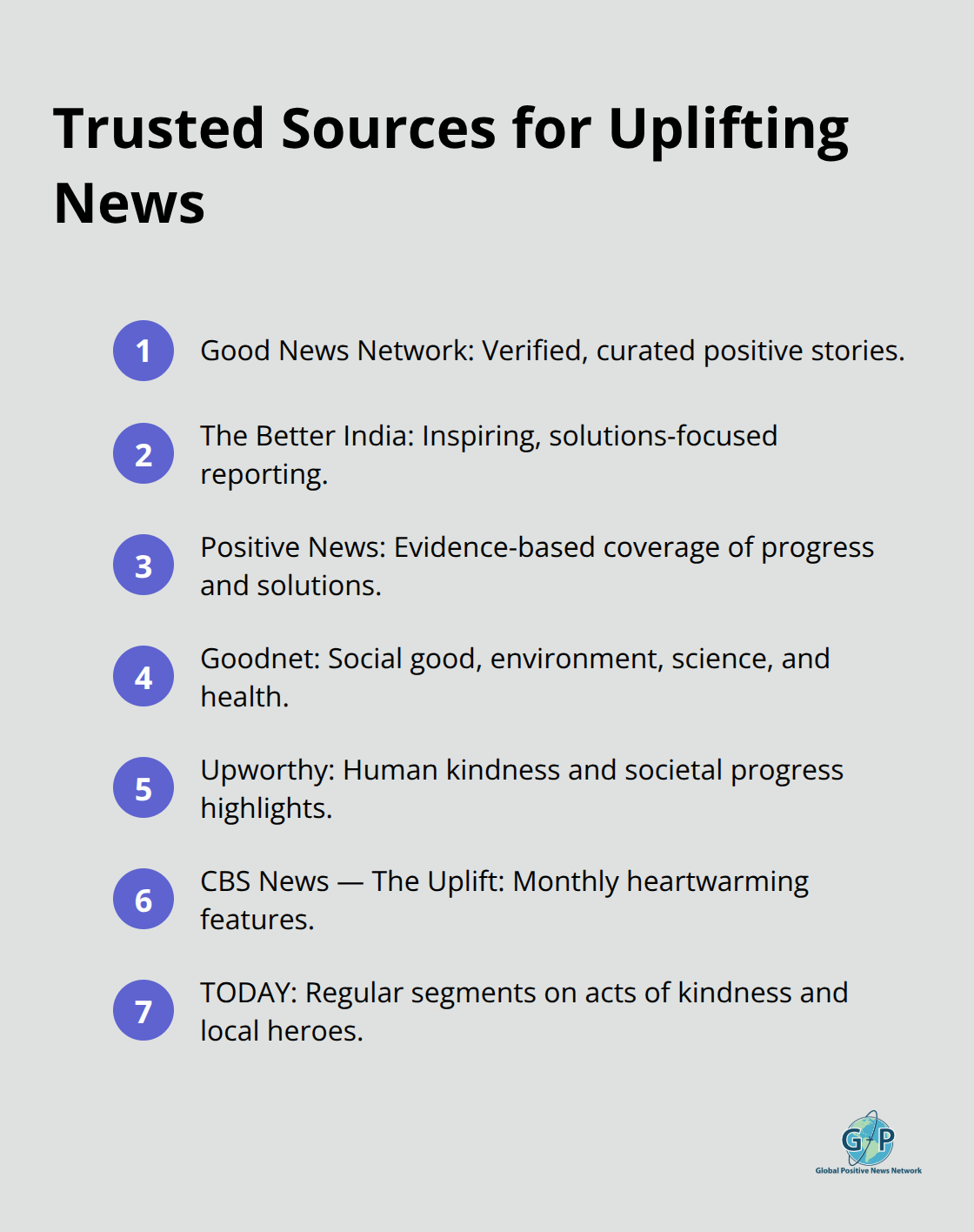
The hardest part of building a positive news habit isn’t wanting to do it-it’s knowing which sources deliver genuine, verified stories without clickbait or manufactured sentiment. Most platforms claiming to offer uplifting content mix real stories with shallow feel-good filler that doesn’t stick with you. Sources like Good News Network, The Better India, and Positive News focus on verified, curated sources of uplifting news stories with evidence-based reporting. This means no exaggeration, no unverified claims, and no recycled viral moments presented as news. Beyond these platforms, outlets like Goodnet and Upworthy consistently cover progress across society, environment, science, and health. CBS News runs The Uplift, a monthly series of heartwarming stories available on their app, featuring everything from mentorship programs to community rescues. TODAY also publishes regular good news segments covering acts of kindness and local heroes.
The key difference between these sources and mainstream news outlets is simple: they actively report on what’s working, not just what’s broken.
Start With One Platform and Commit
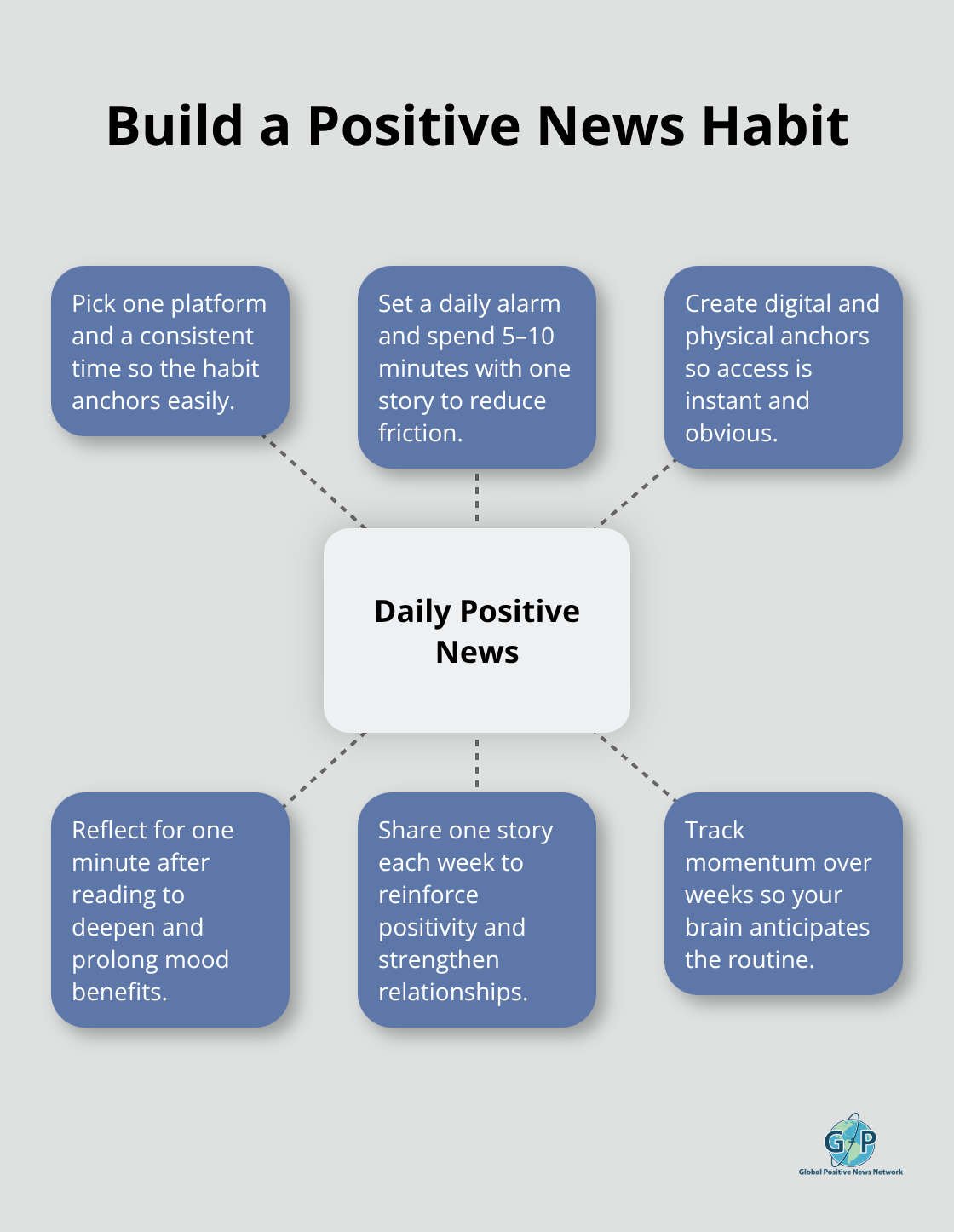
Start with one platform and commit to checking it at a specific time each day-morning coffee works for most people. This removes the friction of searching and creates an automatic trigger for your positive news habit. The most effective approach treats positive news like a scheduled appointment rather than something you’ll remember to do randomly. Set your phone alarm for the same time daily, then spend five to ten minutes reading one story from your chosen platform.
Create Physical and Digital Anchors
If you read on your phone, use your home screen or a dedicated folder to make the app immediately visible. Some people set their positive news time right before checking email or social media, creating a protective buffer that shifts their mental state before exposure to more stressful content. Others read during lunch to break up the workday stress. The timing matters less than consistency. Daily exposure to uplifting content boosts mood when consumed as part of a deliberate routine rather than occasional browsing.
Deepen the Impact Through Reflection
After reading, spend one minute reflecting on what struck you most about the story-this deepens the emotional impact and makes the positivity stick longer. Within two weeks of this practice, most people report noticing a measurable shift in their baseline mood and how they respond to challenges throughout the day. The habit compounds quickly once you establish the routine, and your brain begins to expect and anticipate these moments of hope. This foundation of consistent positive input prepares you to take the next step: actively sharing these stories and using them to strengthen your connections with others.
How to Actually Make Positive News Part of Your Daily Life
Anchor Positive News to Your Existing Routine
The gap between knowing positive news helps and actually reading it daily is where most people fail. You need a system that removes decisions, not another item on your to-do list. The most effective approach treats positive news consumption like brushing your teeth-non-negotiable and automatic. Pick a specific time slot that already exists in your routine: your morning coffee, the first five minutes at your desk, or your lunch break.
Research from the Journal of the Washington School of Psychiatry shows that timing consistency matters more than duration. People who read uplifting stories at the same time daily report stronger mood improvements than those who read sporadically, even if sporadic readers consume more total stories. Set a phone alarm for that exact time if needed. When the alarm sounds, you open your chosen platform and spend five to ten minutes with one story.
This removes the friction of deciding whether to read positive news and replaces motivation with habit.
Within two weeks, your brain anticipates that time slot and craves the content. Once this anchor point solidifies, you’ve built something far more valuable than a momentary mood boost-you’ve created a protective daily practice that gradually shifts your baseline emotional state.
Share Stories to Strengthen the Effect
The real power emerges when you share these stories with others rather than keeping them private. When you text a coworker about a story of community generosity or forward an article about scientific progress to your sister, you accomplish two things simultaneously: you reinforce the positivity in your own mind and you shift someone else’s mental state.
This creates genuine conversations rather than surface-level small talk. Instead of asking how someone’s day went, you might ask what they think about a particular act of kindness from a story you shared. These conversations strengthen relationships while anchoring positivity in shared experience. The mechanism is straightforward-positive narratives naturally generate discussion because they highlight human capability and progress, topics people actually want to talk about.
Build Momentum Through Consistent Sharing
Start small: share one story per week with one person. Watch how that person responds, then gradually expand. Within a month, you’ll notice your conversations shifting toward possibility rather than complaint, and the people around you will begin seeking you out as a source of perspective. This ripple effect means one story of kindness can inspire others to act, amplifying community impact far beyond your initial effort.
Final Thoughts
The shift from news fatigue to genuine optimism compounds faster than you might expect. When you commit to positive news stories daily, you actively rewire how your brain processes information and responds to the world. Research confirms that people who maintain this habit report measurably lower anxiety, stronger emotional resilience, and a fundamentally different outlook on what’s possible.
Small daily changes accumulate into lasting transformation. After two weeks of anchoring positive news to your existing routine, your baseline mood shifts noticeably. After a month of sharing stories with others, your conversations naturally gravitate toward possibility rather than complaint. After three months, you’ve built a protective practice that buffers you against the relentless negativity of mainstream media-not by ignoring real problems, but by balancing awareness with evidence of human progress and capability.
The people who succeed with this practice treat positive news consumption as non-negotiable, not optional. They set a specific time, they stick to reliable sources, and they share what they find. Choose one platform, set one alarm, and commit to five minutes tomorrow morning with Global Positive News Network, where stories of personal triumphs, acts of kindness, and community impact help you maintain an optimistic outlook.
Having a hard day?
The 2 Minute Hope Reset is a short free guide with three small practices for the days that feel heavy. Two minutes each, nothing to keep up with.
Get the free guideExplore more positive news:
Enjoying stories like this?
Global Positive News Network is reader-supported. If you’d like to support the mission, you can visit the Official GPNN store.