

You don’t need a life-changing event to feel happier. At Global Positive News Network, we’ve found that tiny daily positivity-those small, intentional moments-creates real emotional shifts that compound over time.
This guide shows you exactly how to weave these moments into your day, why consistency beats grand gestures, and how to build habits that actually stick.
How Small Moments Shape Your Happiness
The Negativity Bias You Fight Every Day
Your brain has a built-in negativity bias that makes it far easier to notice what went wrong than what went right. This means you naturally overlook the small positive moments happening throughout your day. Research from UC Berkeley’s Greater Good Science Center shows that people who intentionally practice daily micro-acts of positivity see their emotional well-being rise by 26% in just seven days. More importantly, participants felt 27% more able to influence their own happiness, which is the real breakthrough.
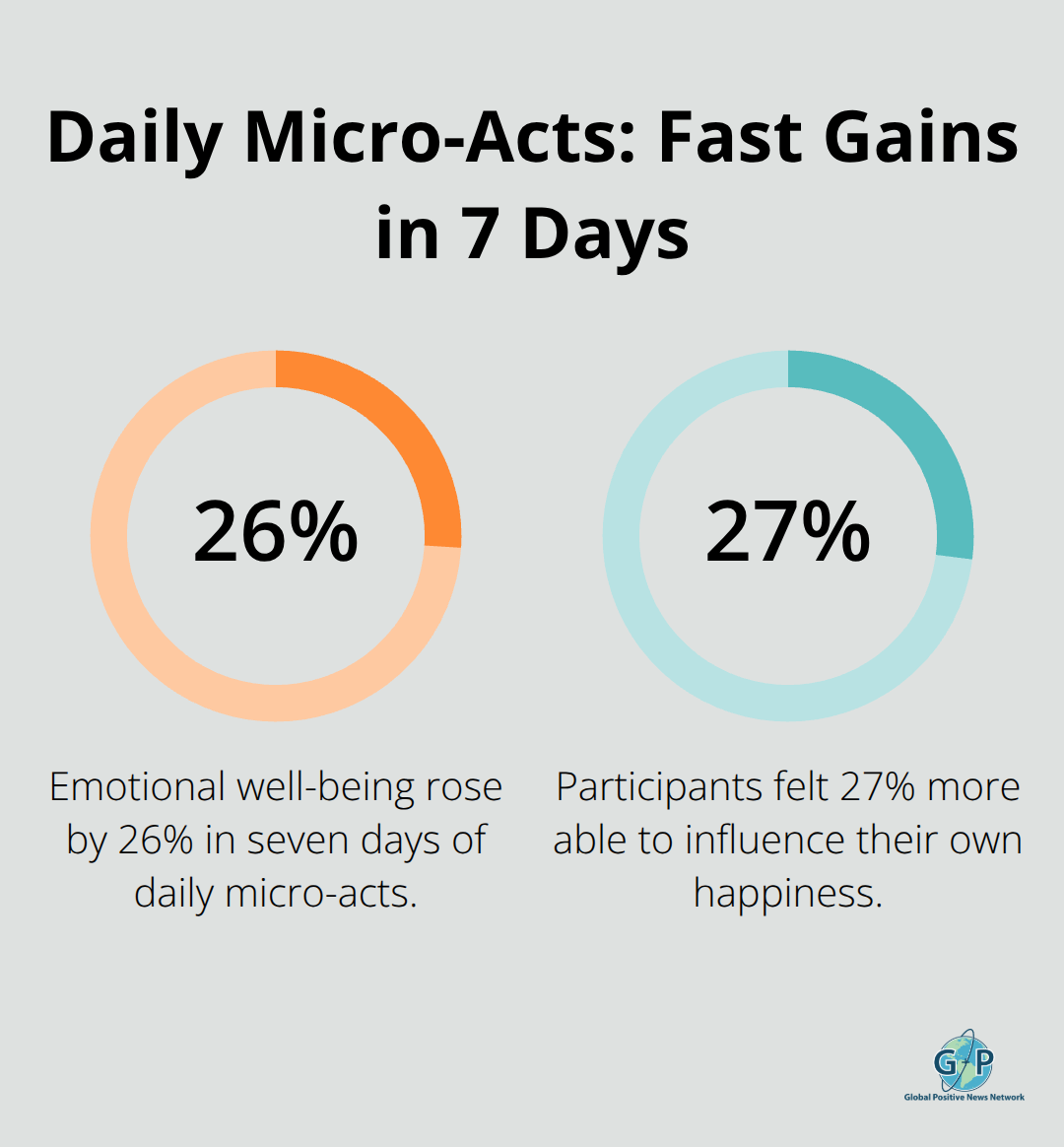
This isn’t about forcing positivity or ignoring genuine problems. Instead, you deliberately redirect your attention toward moments that already exist but slip past your awareness. When you notice the sun warming your face during a walk, a loved one nearby, or even the smell of coffee, your nervous system registers these as moments of safety and calm.
Glimmers: Your Body’s Built-In Stress Relief
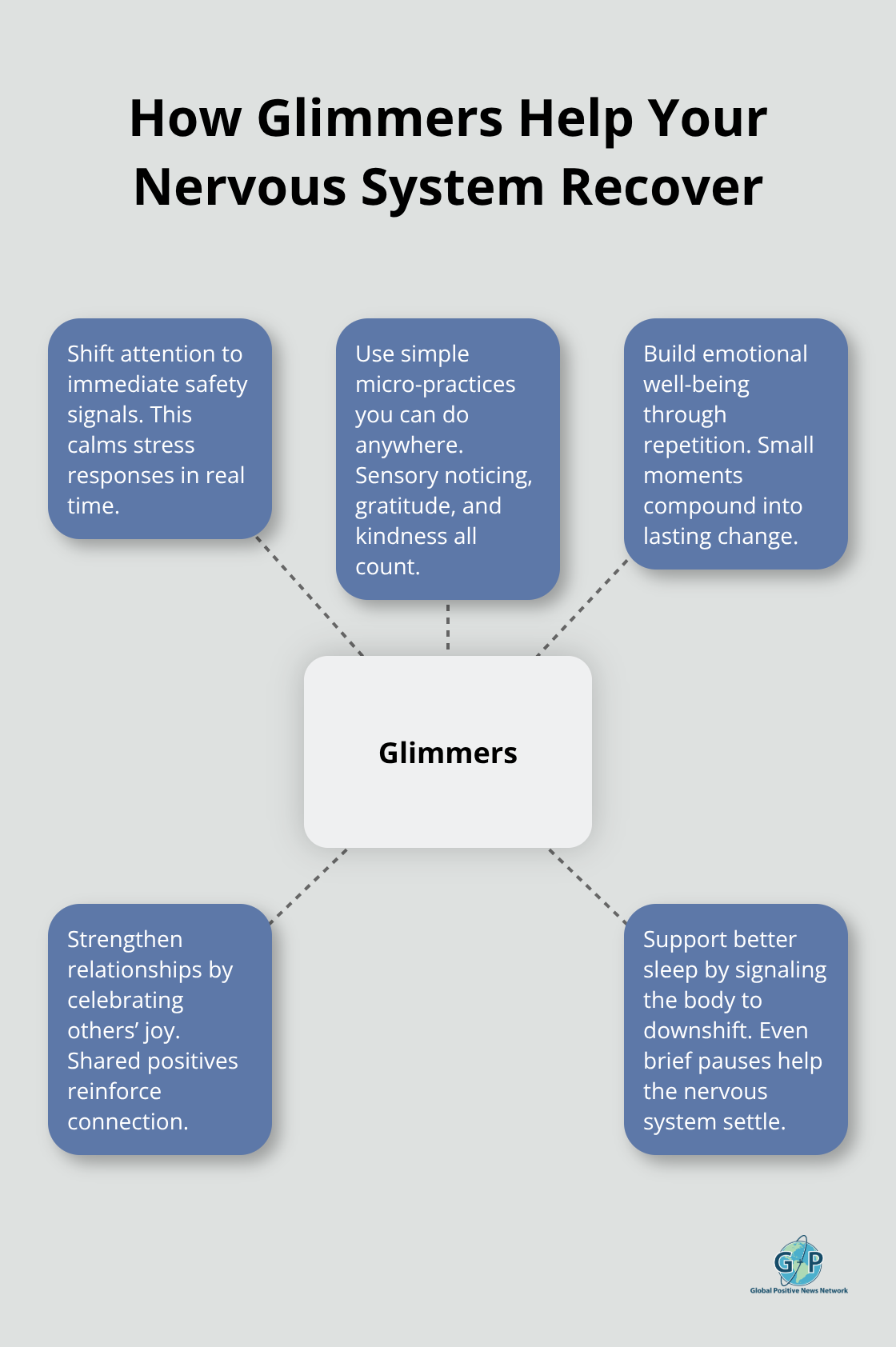
Deb Dana’s research on polyvagal theory calls these small positive moments glimmers, and they work because they help your body physically recover from stress in real time. The UC Berkeley study tracked over 22,000 people from 22 countries who completed a seven-day program of simple daily practices like gratitude lists, acts of kindness, and celebrating others’ joy.
Participants reported 23% more positive emotions like hope and optimism, and 30% felt more satisfied with their relationships afterward. Sleep quality improved by 12%, showing that these small moments have measurable effects on your physical health too. Your body doesn’t distinguish between a major life event and a moment of genuine connection-both trigger real physiological changes.
Why Daily Practice Beats One Big Effort
You cannot fix your well-being with a single vacation or one grand gesture. Consistency creates the change, and the data proves it. A five-week study by Judith Moskowitz at Northwestern University found that caregivers who practiced small daily steps reduced their anxiety significantly more than those who didn’t.
The key is planning your micro-acts ahead and tying them to existing routines, like taking a gratitude moment after your morning coffee or pausing for three deep breaths between tasks. People who tracked their daily moments in a journal spotted patterns over time and stayed more motivated to choose happiness the next day. This compounds into lasting resilience because you’re literally retraining your brain to notice the good, not just the bad.
Now that you understand why these moments matter and how consistency works, the real question becomes: how do you actually weave them into a life that’s already full?
How to Build Positivity Into Your Everyday Routine
Start Your Morning With Intention
The gap between knowing that small moments matter and actually capturing them is where most people fail. You wake up, rush through your day, and by evening you’ve missed dozens of opportunities for genuine connection and joy. The solution isn’t willpower-it’s architecture. You need to anchor positive practices to existing habits so they happen automatically rather than relying on motivation.
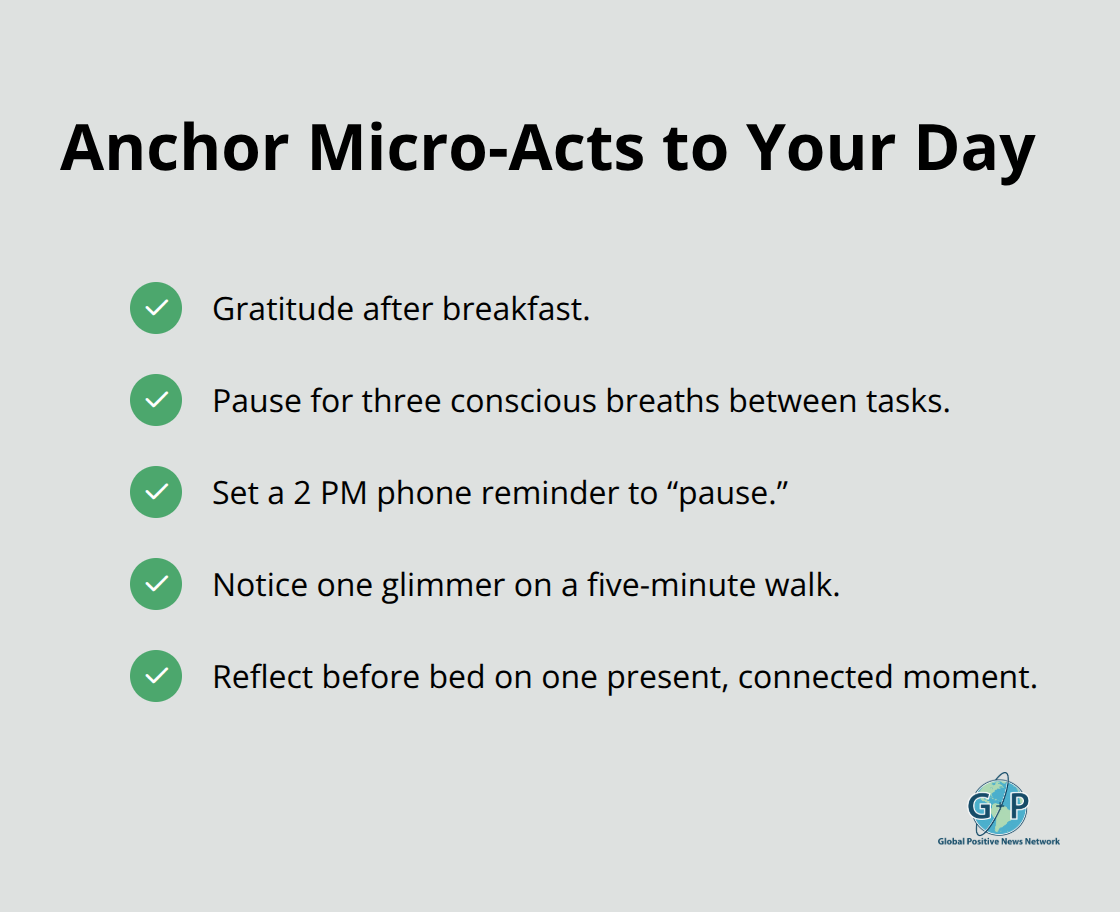
Spend three minutes each morning with one deliberate act before you check your phone. This could be writing down three specific things you’re grateful for-not vague ones like family, but concrete observations like how your coffee tastes or that your neighbor waved hello. Research suggests that gratitude journaling is associated with better physical and psychological health and increased happiness.
Capture Glimmers Throughout Your Day
If you have five minutes, take a walk outside specifically to notice one glimmer: the texture of tree bark, the sound of birds, warmth on your skin. Pause fully in that moment rather than rushing past it. Your brain needs you to slow down intentionally to register these as safety signals.
Throughout your day, the real skill is creating friction-free pauses. Set a phone reminder at 2 PM that simply says “pause,” and when it goes off, take three conscious breaths and notice one thing around you that’s pleasant. You’re not meditating for thirty minutes; you’re interrupting autopilot for ninety seconds. Research showed that people who practiced small daily steps toward anxiety reduction benefited from consistency over duration.
End Your Day With Reflection
In the evening, spend two minutes reflecting on one moment from your day when you felt genuinely present or connected. Write it down or tell someone about it-the act of articulating it cements it in memory and trains your brain to hunt for these moments tomorrow. People who do this report better sleep quality because your nervous system settles when you end the day focused on what went well rather than what needs fixing.
The key is tying each practice to something you already do: gratitude after breakfast, a mindful pause after lunch, reflection before bed. This removes the need to remember or find extra time. Once you establish these anchors, the next challenge emerges-how do you maintain momentum when life gets chaotic, and what happens when you want to deepen your practice beyond these daily foundations?
How to Actually Stick With Daily Positivity
Pick One Practice and Commit for Seven Days
The hardest part of building a positivity habit isn’t understanding why it works-it’s staying consistent when motivation fades. Most people start strong and quit within two weeks because they approach it like a New Year’s resolution instead of a system. You need three things: a practice so small you cannot fail, a way to see your progress, and accountability that doesn’t feel like a burden.
Pick one micro-act and commit to it for exactly seven days before adding anything else. Not a month, not until it feels natural-seven days. This matches the UC Berkeley Big JOY program structure, which works to create strong leaders of students while sending a clear message of alliance to its community. Choose something absurdly simple: write three gratitude observations after breakfast, or pause for one conscious breath between meetings. The specificity matters more than the difficulty. Vague goals like “be more positive” fail because you cannot measure them. Specific goals like “write one thing I noticed that made me smile before 9 AM” succeed because you either did it or you didn’t.
Track Your Results With Zero Friction
Track your results in a format that requires zero friction. A simple note in your phone’s reminder app works better than a fancy journal you have to dig out. A new method of coping with stress by teaching people how to focus on positive emotions reduced anxiety and depression after six weeks, with tracking playing a key role in maintaining consistency. The tracking itself becomes a feedback loop-you see the pattern emerge after a few days, and that evidence motivates the next day more than willpower ever could.
After seven days, you’ll have concrete proof that the practice shifted something in your day, whether that’s better sleep, fewer stress spikes, or simply noticing more moments that felt good. Once you complete the first seven days, add one additional micro-act if you want, but not before. The compounding effect happens through repetition of the same practice, not through variety.
Share Your Experience to Deepen the Impact
Share your specific experience with one person-tell them exactly what you did and what changed. Not to impress them, but because articulating your results makes them real and invites someone else into the practice. These practices naturally create moments of genuine connection that strengthen your relationships and your nervous system.
Final Thoughts
The evidence proves that tiny daily positivity works because it compounds over time. Over 22,000 people across 22 countries experienced measurable shifts in emotional well-being, sleep quality, and relationship satisfaction in just seven days through consistent small practices. You don’t need ideal circumstances or a life overhaul to feel genuinely happier-ordinary people who committed to these practices saw real results.
What makes this approach powerful is its sustainability. You build systems that work automatically because they tie to habits you already have, not to motivation or willpower that fades. A gratitude moment after breakfast, a conscious pause during your workday, a reflection before bed-these become part of your rhythm rather than another task to remember.
Your practice extends beyond your own happiness and naturally ripples outward to those around you. When you practice tiny daily positivity, you notice others’ joy more readily and offer genuine kindness because you’re not running on empty. Start with one micro-act and commit to seven days, then explore more ways to build your positivity practice and watch how consistency transforms your entire outlook.
Having a hard day?
The 2 Minute Hope Reset is a short free guide with three small practices for the days that feel heavy. Two minutes each, nothing to keep up with.
Get the free guideExplore more positive news:
Enjoying stories like this?
Global Positive News Network is reader-supported. If you’d like to support the mission, you can visit the Official GPNN store.