

Your mindset shapes how you respond to life’s challenges, relationships, and sense of purpose. At Global Positive News Network, we believe deep positive quotes about life have the power to shift your perspective and guide you toward meaningful change.
This article explores three transformative areas: resilience in the face of adversity, kindness that strengthens human bonds, and purpose that gives your life direction. Each section includes practical steps you can implement immediately.
Resilience Turns Setbacks Into Strength
How You Interpret Adversity Matters More Than the Event Itself
Resilience isn’t about bouncing back unchanged-it’s about learning from hardship and building something stronger. When you face a setback, your brain has two pathways: dwell on what went wrong or extract the lesson and move forward. Research in positive psychology shows that people who reframe adversity as a learning opportunity recover faster and build greater confidence than those who avoid processing the challenge. The difference lies in how you interpret the event, not the event itself.
Viktor Frankl and the Power of Choosing Your Response
Viktor Frankl, a Holocaust survivor who wrote Man’s Search for Meaning, demonstrated this principle by choosing his attitude even in the darkest circumstances. His work shows that when you accept you cannot control external events, you reclaim power over your response. This shift from victim to agent changes everything. Amelia Earhart captured this approach when she said the hardest action often leads to the greatest growth. She didn’t avoid risk-she embraced bold, decisive action despite fear.
Apply This Strategy to Your Daily Challenges
In your daily life, this means when something goes wrong, pause before reacting. Ask yourself what you can learn, then focus on one actionable step forward. If a project fails, extract three specific lessons and apply them immediately to your next attempt.
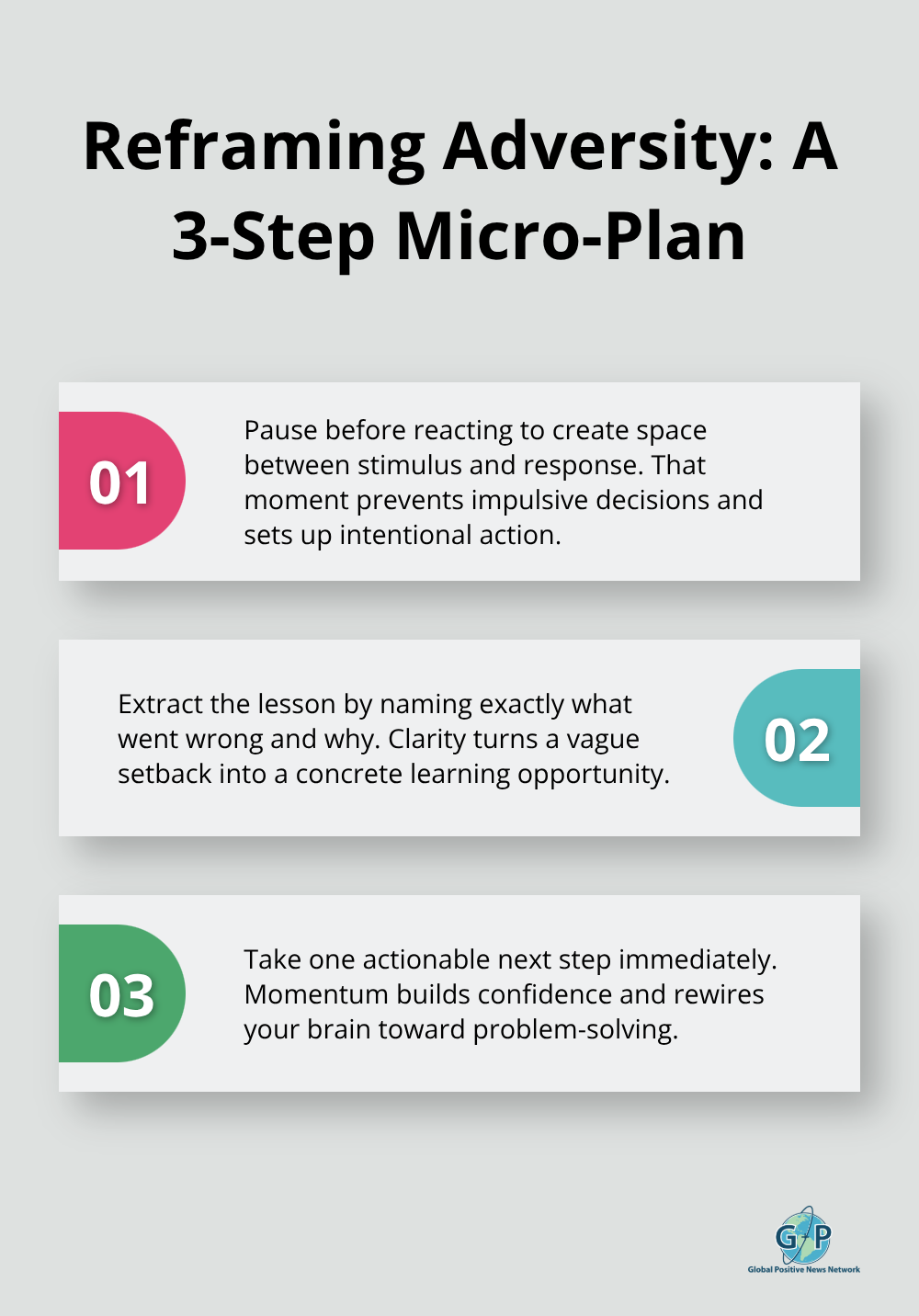
If a relationship ends, allow yourself to grieve, then reframe what that teaches you about your values and boundaries. This isn’t toxic positivity; it’s strategic thinking.
Real People Who Transformed Setbacks Into Strength
Real people practice this daily. After losing her business, entrepreneur Sara Blakely reinvested in herself and launched Spanx, now worth billions. She didn’t pretend the failure didn’t hurt-she treated it as expensive tuition. Stephen Hawking continued groundbreaking physics research despite ALS because he focused on what he could do, not what he couldn’t. People who adopt this mindset recover from job loss, illness, and trauma faster than those stuck in blame.
Start Small, Then Build Your Resilience Practice
Start small: today, identify one routine annoyance like traffic or a delayed email. Instead of frustration, choose a constructive response-use the time productively or practice courtesy. Tomorrow, tackle something bigger. When you face genuine adversity, write down what happened, what you can control, and one concrete next step. This simple practice rewires how your brain processes difficulty. The goal isn’t to eliminate setbacks; it’s to stop them from eliminating your forward momentum. As you strengthen your ability to reframe challenges, you’ll notice something shifts in how you relate to others-your own resilience opens the door to deeper compassion and connection with those around you.
Compassion Transforms Relationships and Communities
Your resilience matters most when shared with others. Kindness isn’t sentiment-it’s a measurable force that reshapes how people relate to you and how communities function. Research found that people who acts of kindness experience a measurable boost in life satisfaction, while recipients report increased trust and willingness to help others in turn. This isn’t reciprocal exchange; it’s a cascade. When you act with genuine compassion toward someone struggling, they don’t just feel better in that moment-they’re statistically more likely to extend kindness to a third person within days. The mechanism works because kindness signals safety. When someone extends real compassion during your hardship, your nervous system shifts from threat mode to openness, making you capable of thinking clearly and connecting with others.
Specificity Proves You Pay Attention
Stop thinking about kindness as grand gestures. Your neighbor struggling with isolation doesn’t need inspiration-they need you to deliver a specific meal, not offer vague help. A colleague who just failed a project needs you to name one strength you’ve observed, not provide generic encouragement.
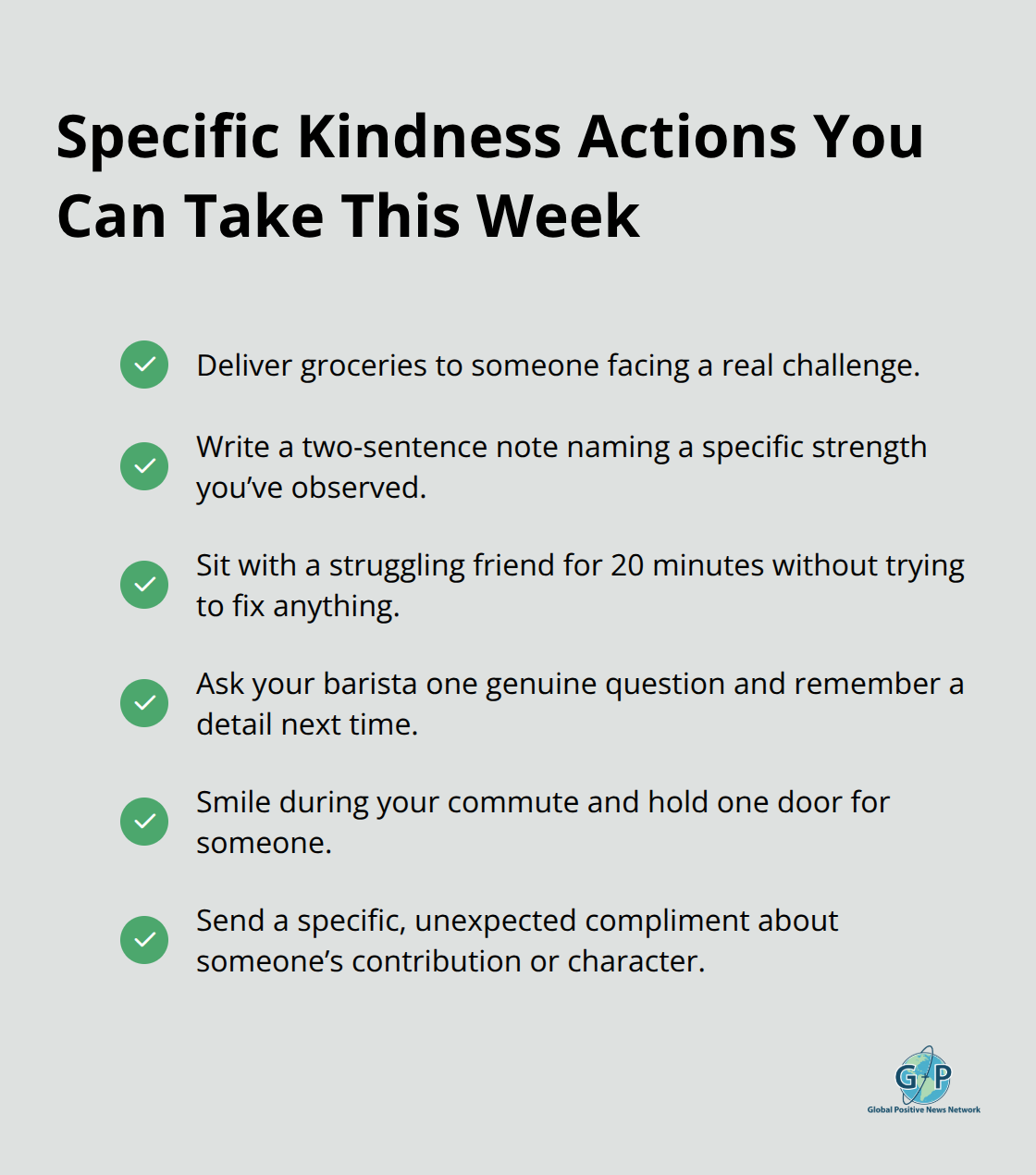
Specificity matters because it proves you’re paying attention. This week, identify one person in your immediate circle facing a real challenge and take one concrete action: deliver groceries, write a two-sentence note about their specific capability, or sit with them for 20 minutes without fixing anything. That single action costs you time but almost nothing else, yet research on social connection shows it measurably reduces the recipient’s cortisol levels and increases their sense of belonging. The ripple effect starts immediately-people who feel genuinely seen become people who see others.
Integrate Kindness Into Your Existing Routine
Integrate one small kindness into your existing routine rather than treating it as extra work. If you grab coffee daily, ask the barista one genuine question about their day and remember one detail next time. If you commute, smile at one person per trip and hold one door. If you work in an office, send one specific compliment weekly to someone who won’t expect it-not about their appearance but about their contribution or character. These micro-practices take seconds but accumulate. A Harvard study found that quality of relationships determined life satisfaction. People with strong social bonds lived longer and reported higher wellbeing across every life stage.
How Kindness Builds the Support Network You’ll Need
Your kindness isn’t payment toward a future return; it’s the infrastructure that prevents isolation and builds the support network you’ll need when your own resilience gets tested. Communities where people practice this consistently show measurably lower rates of depression, higher civic participation, and stronger economic resilience during crises. This foundation of genuine connection transforms how you experience hardship. When challenges arrive-and they will-you won’t face them alone. The people you’ve shown up for become the people who show up for you. This mutual strength creates something larger than individual resilience: it creates communities where people thrive together. As you strengthen these bonds through consistent, specific kindness, you’ll discover that purpose emerges naturally from connection-the next dimension of meaningful living.
Purpose Powers Action More Than Motivation Ever Will
Test Your Values Against Reality
Purpose isn’t a feeling you uncover through meditation or journaling alone. It’s a direction you clarify through deliberate action and then reinforce through daily decisions. Most people wait for purpose to arrive like inspiration, when actually purpose emerges from testing what genuinely matters to you against real-world constraints. Start by identifying three concrete outcomes you want in your life within the next two years. Not vague aspirations like happiness or success, but specific results: launch a side project, repair a broken relationship, master a skill, contribute meaningfully to your community. Write each one down with a single sentence explaining why it matters to you personally. Now test each one. Spend two weeks taking small actions toward the first outcome. Notice whether the work energizes you or drains you. Notice whether obstacles feel like learning opportunities or punishment.
Alignment Creates Measurable Physical Benefits
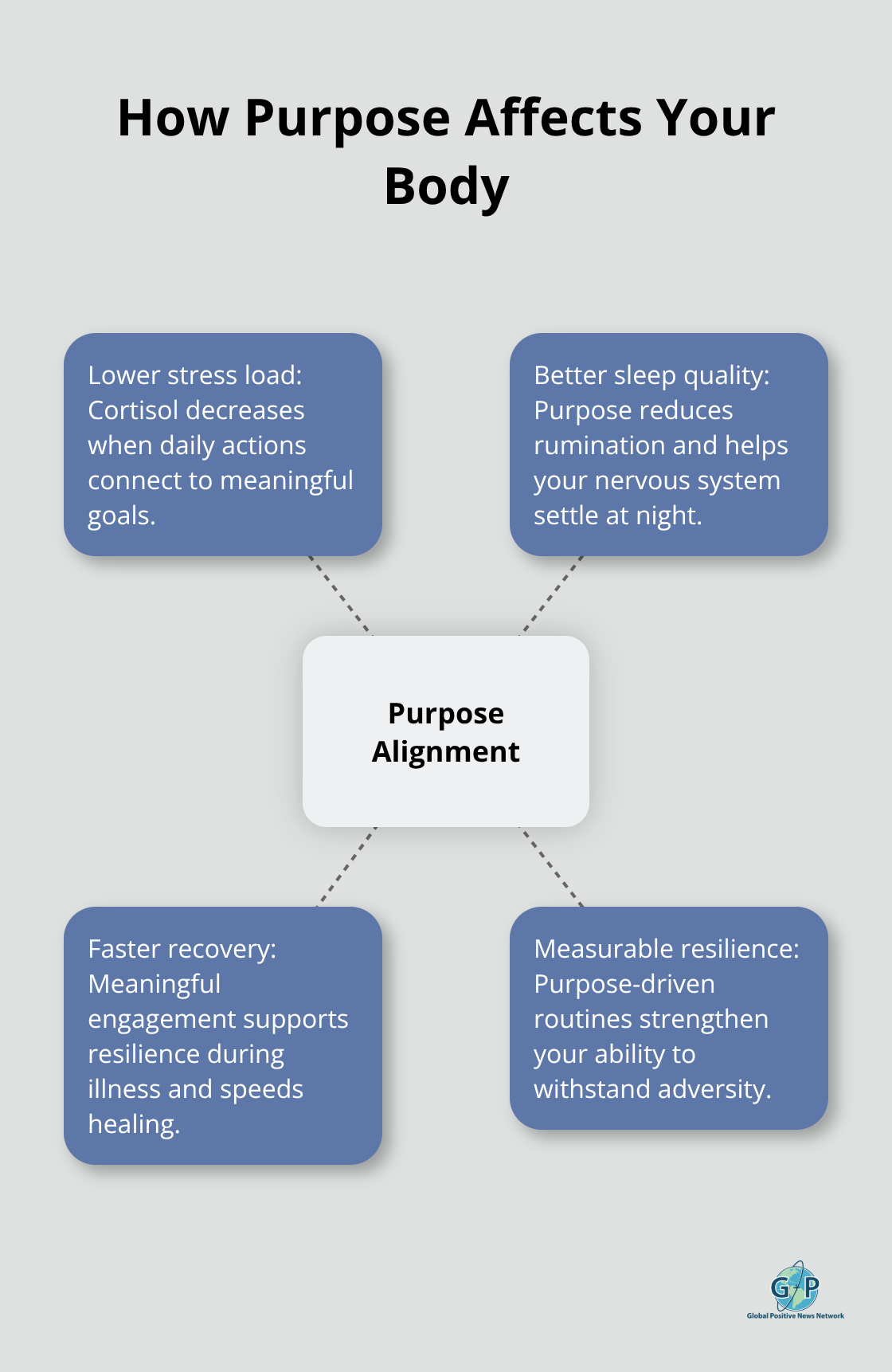
Purpose-driven people report higher engagement and persistence because their work aligns with their values, not because they have more discipline. A study found that people with a clear sense of purpose had lower mortality risk. This isn’t metaphorical benefit; it’s measurable physical resilience. Your body responds to meaningful work differently than obligatory work. Cortisol levels drop, sleep quality improves, and recovery from illness accelerates when your daily actions connect to something larger than obligation.
Leverage Your Unique Combination of Experiences
The practical shift happens when you stop asking what you should do and start asking what specific contribution only you can make. You bring particular skills, experiences, and perspectives that no one else carries. A teacher with trauma experience brings insight to struggling students that textbooks cannot teach. An accountant who survived financial ruin brings credibility to helping others rebuild. An introvert brings deep listening to communities that need it. Your previous hardship, your particular talents, your specific relationships-these aren’t distractions from purpose; they form the raw materials of it.
Connect Your Values to Weekly Action
This week, identify one specific gap in your immediate world that frustrates you. Someone at work lacks mentorship. A neighbor struggles with isolation. A child in your circle needs encouragement. Choose one gap and take one concrete action this month: mentor that person for two hours monthly, visit that neighbor weekly, or write that child one specific message about their capability. This action connects your values to daily reality. Repeat this monthly with a new gap. Within six months, you’ve woven purpose into your existing life without adding burden-you’ve simply redirected attention toward what matters. Purpose-driven living doesn’t require quitting your job or abandoning your responsibilities; it requires intentionality about where your existing energy already flows and amplifying it.
Final Thoughts
The three areas you’ve explored throughout this article-resilience, kindness, and purpose-work together as an interconnected system that transforms how you experience life. When you reframe adversity as learning, you build the emotional strength to show up for others. When you practice specific kindness, you create the relationships that sustain you through hardship. When you connect your values to daily action, you discover that purpose emerges naturally from the people and communities you serve.
Deep positive quotes about life work because they interrupt your default thinking patterns and offer an alternative perspective in moments when you need it most. A single sentence from Viktor Frankl or Amelia Earhart doesn’t solve your problem, but it shifts how you approach it. The real transformation happens when you move from reading these words to living them-you pause before reacting to frustration, you take one specific action toward someone struggling, and you identify one gap in your world and address it.
The lasting change you’re seeking comes from the daily practice of choosing your response, extending genuine compassion, and aligning your actions with what matters to you. Over weeks and months, this consistency rewires how your brain processes difficulty, how you relate to others, and what you believe is possible for your life. Start today with one small action aligned with resilience, kindness, or purpose, and visit Global Positive News Network to discover more resources that support meaningful change.
Having a hard day?
The 2 Minute Hope Reset is a short free guide with three small practices for the days that feel heavy. Two minutes each, nothing to keep up with.
Get the free guideExplore more positive news:
Enjoying stories like this?
Global Positive News Network is reader-supported. If you’d like to support the mission, you can visit the Official GPNN store.