

Your workplace probably feels relentlessly upbeat. Managers insist everything is fine, colleagues paste smiles through stress, and admitting struggle becomes taboo. This is aggressive positivity, and it’s damaging your mental health.
At Global Positive News Network, we believe workplaces thrive when people can be honest about their struggles. This guide shows you how to recognize toxic positivity, set boundaries, and build a culture where realistic emotions are actually welcome.
What Is Aggressive Positivity
Definition and the Problem
Aggressive positivity is the relentless demand to display only positive emotions while suppressing anything negative. It shows up as forced enthusiasm, dismissive responses to legitimate concerns, and the unspoken rule that admitting struggle makes you a liability. Phrases like “Everything’s fine,” “No complaining zone,” and “You can do anything” create a facade that ignores real problems. The issue isn’t optimism itself-it’s the weaponization of it to silence honest conversation.
The Scale of the Problem
Workplace psychological aggression, which includes aggressive positivity tactics, affected 41.4% of U.S. workers in the past 12 months. About 13% experienced it weekly. This aggression damages performance through two clear pathways: it tanks job satisfaction and affective commitment, and it degrades physical and mental health.
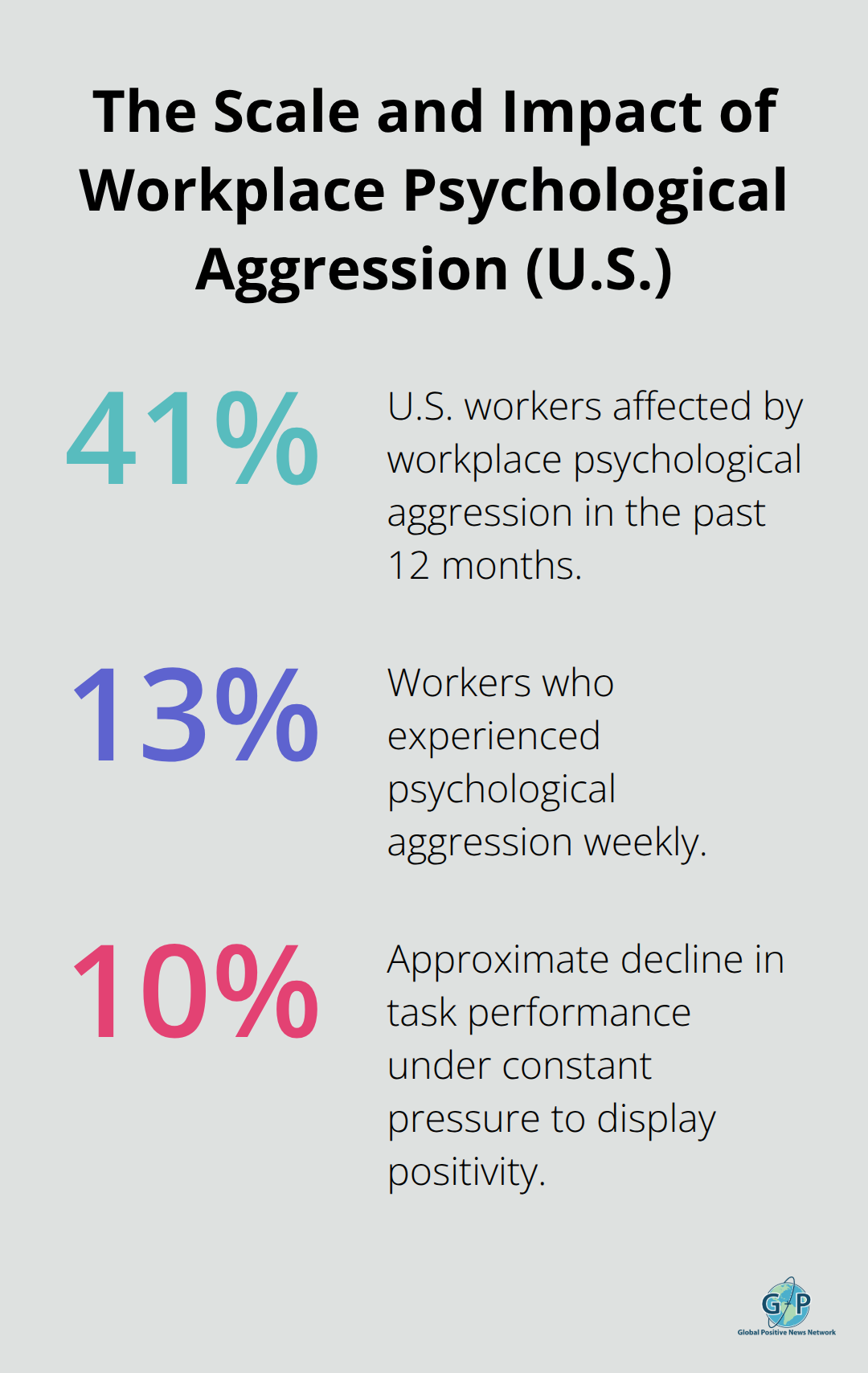
When employees face constant pressure to appear energized and grateful, their actual task performance declines by roughly 10%, while contextual performance-the discretionary effort that builds team cohesion-drops about 5%. Prolonged emotion suppression increases heart rate and activates the nervous system, leaving employees exhausted long before the workday ends.
Why Leaders Enable It
Aggressive positivity thrives in cultures where leaders equate dissent with disloyalty. Managers frame problems as mindset failures rather than resource gaps, creating the conditions for it to flourish. A top performer with a client waitlist doesn’t need a pep talk about attitude-they need working equipment and reasonable expectations. Yet hyper-energetic cultures respond to legitimate concerns with reframed motivation speeches instead of actual solutions.
The Silence That Follows
The damage compounds because employees stop raising issues altogether. Once people learn that voicing concerns triggers dismissal or toxic cheerleading, they stop communicating. This silence kills the psychological safety that drives honest problem-solving. Teams that suppress negative feedback also suppress the information leaders need to fix systemic failures. Real constraints like missing hardware or understaffing cannot be solved by mindset alone, yet aggressive positivity cultures treat them as personal failings that require better attitudes, not better budgets. Understanding how this culture takes root is the first step toward recognizing it in your own workplace and learning what you can do about it.
How to Push Back on Aggressive Positivity
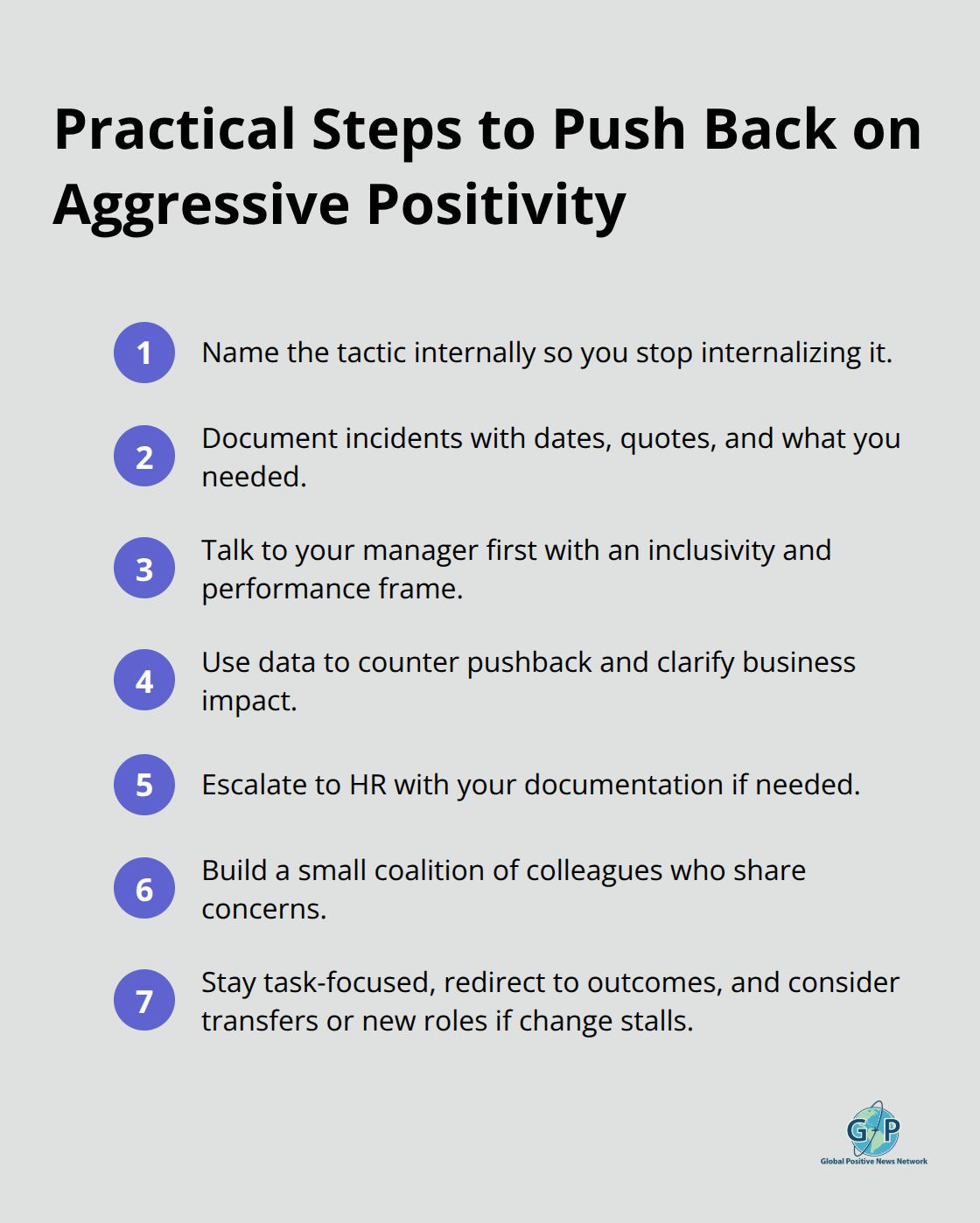
The moment your manager responds to a legitimate concern with “but we have an amazing team energy” or a colleague tells you to “just stay positive,” you face aggressive positivity head-on. Your first move is to name what’s happening internally. Aggressive positivity isn’t optimism-it’s a silencing tactic disguised as motivation. Once you identify it, you stop internalizing the message that your concerns are personal failures. You’re not struggling because you lack gratitude; you’re struggling because real problems exist and nobody’s allowed to say so.
Document the Pattern
Start documenting specific moments when this happens. Write down what was said, when it occurred, and what you actually needed in that moment. If your manager dismissed your understaffing concern with “our team thrives under pressure,” note that. If a colleague responded to your mention of burnout with “you’re so strong, you’ll bounce back,” record it. This documentation serves two purposes: it clarifies patterns you might otherwise dismiss as isolated incidents, and it provides concrete examples if you escalate the conversation later.
Most people don’t realize how often they’re exposed to aggressive positivity until they start tracking it.
Talk to Your Manager First
Your manager is the logical first conversation because they set the team’s emotional tone. Frame the issue around inclusivity and sustainable performance, not around your personal discomfort. Try something like: “I’ve noticed our team culture emphasizes constant high energy, and I’m concerned it’s excluding people with different working styles or those managing health challenges. I’d like to discuss how we can maintain optimism while also making space for honest conversations about obstacles.” This approach works because it shifts the focus from your individual complaint to a team-wide issue.
If your manager pushes back with “that’s just our culture” or “negativity brings everyone down,” respond with specifics. Mention that 41.4% of U.S. workers experience workplace psychological aggression, and that suppressing legitimate concerns actually damages team performance and retention. Your stellar performance gives you leverage-if clients request you by name or you have a waitlist, your manager knows losing you costs real revenue. Use that leverage quietly but clearly.
Escalate to HR When Needed
If this conversation stalls or your manager becomes defensive, escalate to HR. Frame it as seeking guidance on how to foster a more inclusive team dynamic. HR departments increasingly understand that toxic positivity creates legal liability around disability accommodations and mental health support. Bring your documentation to this conversation. Specific incidents carry far more weight than general complaints.
Build Your Coalition
You’re not alone in this struggle, even if it feels that way. Other team members likely share your concerns but fear speaking up. Start quiet conversations with trusted colleagues. Ask them directly: “Have you noticed our team culture makes it hard to talk about real challenges?” Most will confirm they’ve felt the same pressure. A coalition of two or three people requesting cultural change is far harder for leadership to dismiss than a single voice.
In the moment when aggressive positivity surfaces, keep your responses calm and task-focused. If someone says “just think positive,” respond with “I appreciate that, but I need to focus on solving this resource gap. Here’s what we need to move forward.” Don’t argue about mindset. Redirect to outcomes. If the environment doesn’t shift after documented conversations with your manager and HR, consider transferring to another team within your organization. Your client relationships and performance record make you valuable-use that to negotiate a move to a healthier department. If internal transfer isn’t viable, start exploring roles elsewhere. A workplace that punishes honesty isn’t worth your mental health, no matter how prestigious the company seems from the outside. The next section covers how to build a balanced workplace culture that welcomes both optimism and honest conversation-whether you’re in a position to influence that change or you’re preparing to move forward elsewhere.
How Leaders Build Cultures Where Honesty Works
Managers Model Vulnerability First
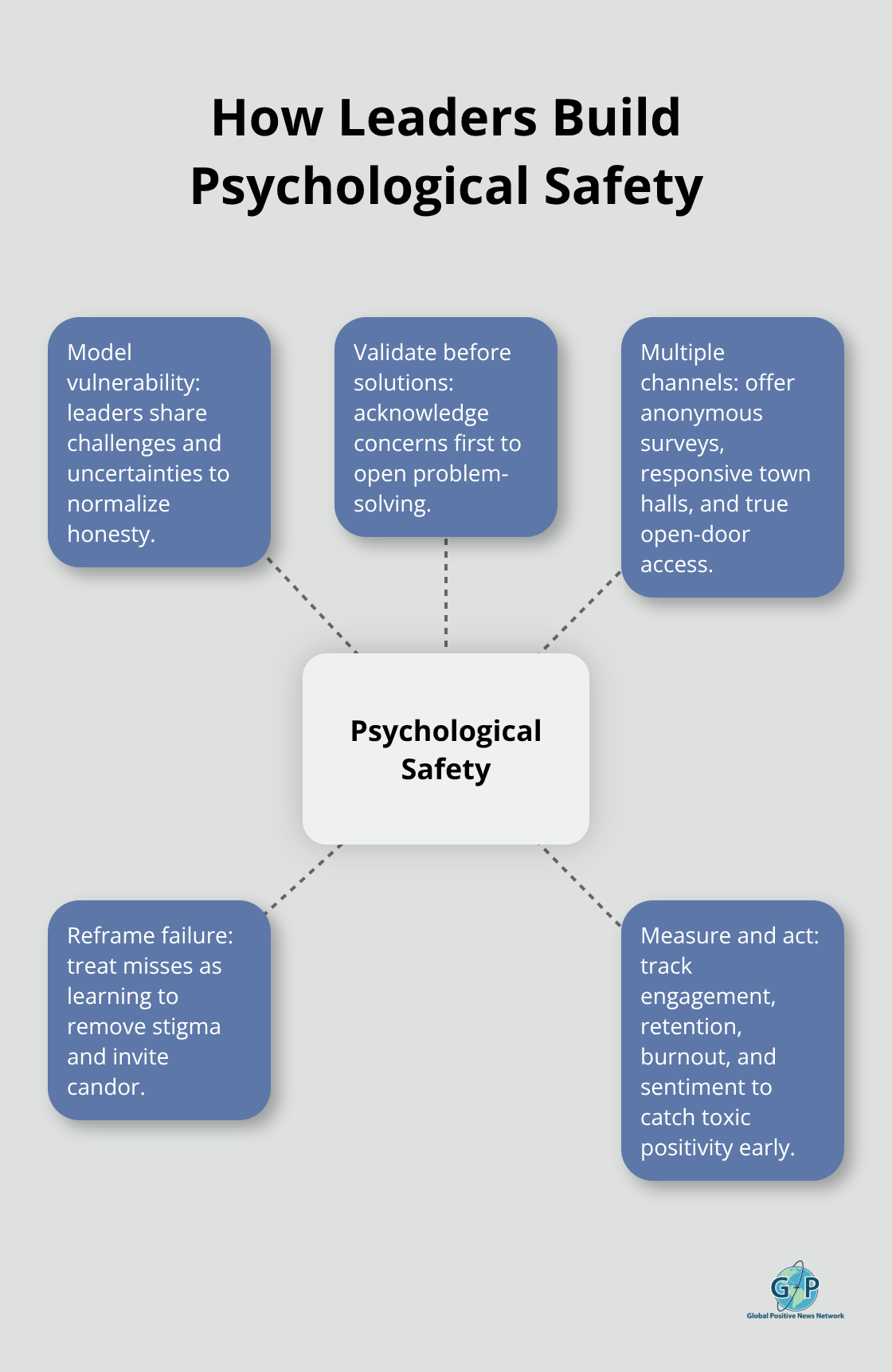
Organizations that abandon aggressive positivity rebuild from the manager level down, starting with how leaders respond when employees surface problems. The shift requires explicit permission to voice concerns without social penalty. Managers start this work by modeling vulnerability themselves-sharing their own challenges and uncertainties in team meetings rather than projecting invincibility. This signals that the organization values honesty over image.
When Marsh McLennan deployed digital well-being tools across 20,000 employees, gains in psychological safety preceded productivity improvements. Employees needed to know that admitting struggle wouldn’t damage their standing. The company found that teams with higher psychological safety also reported higher engagement, which directly correlated with client retention and revenue growth.
Validation Comes Before Solutions
The second move is training managers to validate concerns before offering solutions. When an employee says they’re overwhelmed, the instinct in aggressive positivity cultures is to respond with encouragement. Instead, effective managers say: “I understand why you’re overwhelmed. Let me help you figure this out.” That single shift from dismissal to validation opens space for real problem-solving.
Documentation matters here too. Organizations that track engagement, retention, burnout, and employee sentiment over time spot toxic positivity patterns before they calcify into permanent culture. Quarterly pulse surveys asking employees whether they feel safe raising concerns reveal gaps that annual reviews miss.
Multiple Channels for Honest Feedback
Building trust through honest conversations means structuring them deliberately. Safe channels matter enormously. Anonymous feedback systems, town halls where leadership actually responds to difficult questions, and open-door policies sound basic, but many organizations announce these and then penalize people who use them. The test is whether someone can raise a concern about understaffing and hear a concrete plan for addressing it, not a reframing of why the current situation is actually fine.
Diverse feedback channels also matter because different people communicate differently. Some employees will never speak up in a town hall but will respond to an anonymous survey. Others need a one-on-one conversation with their manager. Organizations serious about culture change offer multiple pathways and track what they hear across all of them.
Reframe Failure as Learning
Normalizing failure and stress as part of work, not as personal weaknesses, requires leadership to stop celebrating only wins. When teams discuss what went wrong in a project and what they learned, that happens through honest communication. Leaders who frame missed deadlines as learning opportunities rather than character failures foster psychological safety. The final piece is accountability. Managers who respond to concerns with toxic cheerleading need coaching on inclusive communication, and their performance evaluations should reflect their ability to foster psychological safety on their teams. Without consequences, cultural change stalls. Organizations that sustain these shifts treat culture change as a leadership priority, not as an HR initiative that happens in isolation.
Final Thoughts
Aggressive positivity at work silences the honest conversations your organization needs to function. The data proves it: 41.4% of U.S. workers experience workplace psychological aggression, and those exposed see measurable declines in both task performance and team cohesion. When employees learn that raising legitimate concerns about understaffing or broken systems triggers dismissal instead of solutions, they stop communicating altogether. This silence kills the psychological safety that drives real problem-solving.
If you’re an individual contributor, your leverage is real. Document specific incidents, talk to your manager about inclusivity, and escalate to HR if the culture doesn’t shift. Your performance and client relationships give you standing to push for change without sacrificing job security. If you’re in leadership, the work is harder but more impactful-model vulnerability by sharing your own challenges, train your managers to validate concerns before offering solutions, and create multiple channels for honest feedback.
Realistic optimism isn’t the same as aggressive positivity (you can believe in your team’s capability while acknowledging real obstacles). Organizations that maintain this balance outperform those trapped in forced cheerfulness because they solve actual problems instead of pretending they don’t exist. Visit Global Positive News Network to explore how authentic positivity creates lasting change.
Having a hard day?
The 2 Minute Hope Reset is a short free guide with three small practices for the days that feel heavy. Two minutes each, nothing to keep up with.
Get the free guideExplore more positive news:
Enjoying stories like this?
Global Positive News Network is reader-supported. If you’d like to support the mission, you can visit the Official GPNN store.