
Women’s Day quotes matter because they reflect real achievements and lived experiences, not empty platitudes. At Global Positive News Network, we believe authentic inspirational positivity women’s day quotes can shift how you think about yourself and your potential.
The difference between a quote that sticks with you and one you forget comes down to its source and substance. This guide shows you where to find genuine quotes, how to spot the ones worth sharing, and practical ways to use them.
Where to Find Real Women’s Day Quotes
Start with Verified Quote Databases
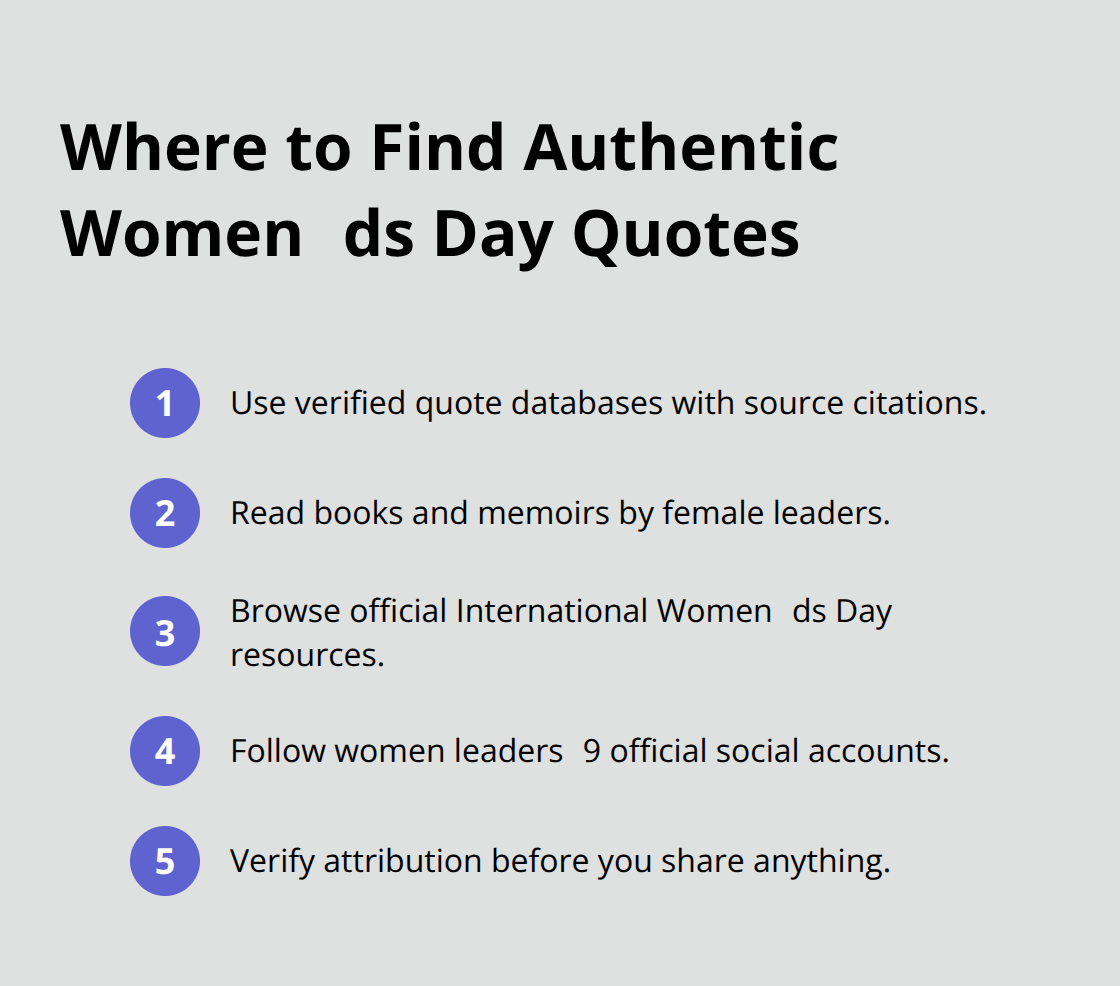
Authentic quotes come from verifiable sources, not anonymous internet lists or misattributed social media posts. Reputable quote databases like Verified quote databases cite original sources and track attribution accuracy. These platforms let you cross-reference quotes across multiple sources to confirm they’re real.
You’ll spot the difference immediately-verified databases show you where each quote originated and who actually said it.
Read Books by Female Leaders
Books written by female leaders and thought leaders offer another reliable path to authentic quotes. Ruth Bader Ginsburg’s writings, Michelle Obama’s memoir Becoming, and Malala Yousafzai’s I Am Malala contain quotes rooted in their actual experiences and documented achievements. When you read the full context of a quote in its original work, you understand what the speaker actually meant rather than relying on shortened versions that lose nuance. The original source always reveals more than a social media snippet ever could.
Tap Into Official Women’s Day Resources
International Women’s Day’s Official Women’s Day Resources curate verified quotes from influential women across journalism, law, politics, design, sports, literature, and activism. These collections matter because they connect quotes directly to the women who said them and why those statements mattered historically. You access quotes that have been fact-checked and properly attributed rather than floating around the internet without context.
Follow Women Leaders Directly on Social Media
Social media accounts of women leaders themselves are where quotes gain authenticity. Follow accounts of women like Sheryl Sandberg, Oprah Winfrey, and Gloria Steinem directly rather than finding their words through third-party sources. This approach eliminates misquotation and shows you the context around what they’re currently saying. Many established female authors and activists share quotes from their work on their official channels, giving you access to firsthand sources.
Verify Before You Share
When you see a quote that resonates, spend two minutes checking whether it appears in reputable databases or in the speaker’s published work. If you cannot find the quote attributed to the same person in multiple reliable sources, skip it. This simple verification step separates quotes that will actually inspire action from those that are just feel-good noise. Quality matters far more than quantity when building a personal collection of Women’s Day quotes-and the next step is learning how to stay positive and spot which quotes truly deserve your attention.
Which Quotes Actually Deserve Your Attention
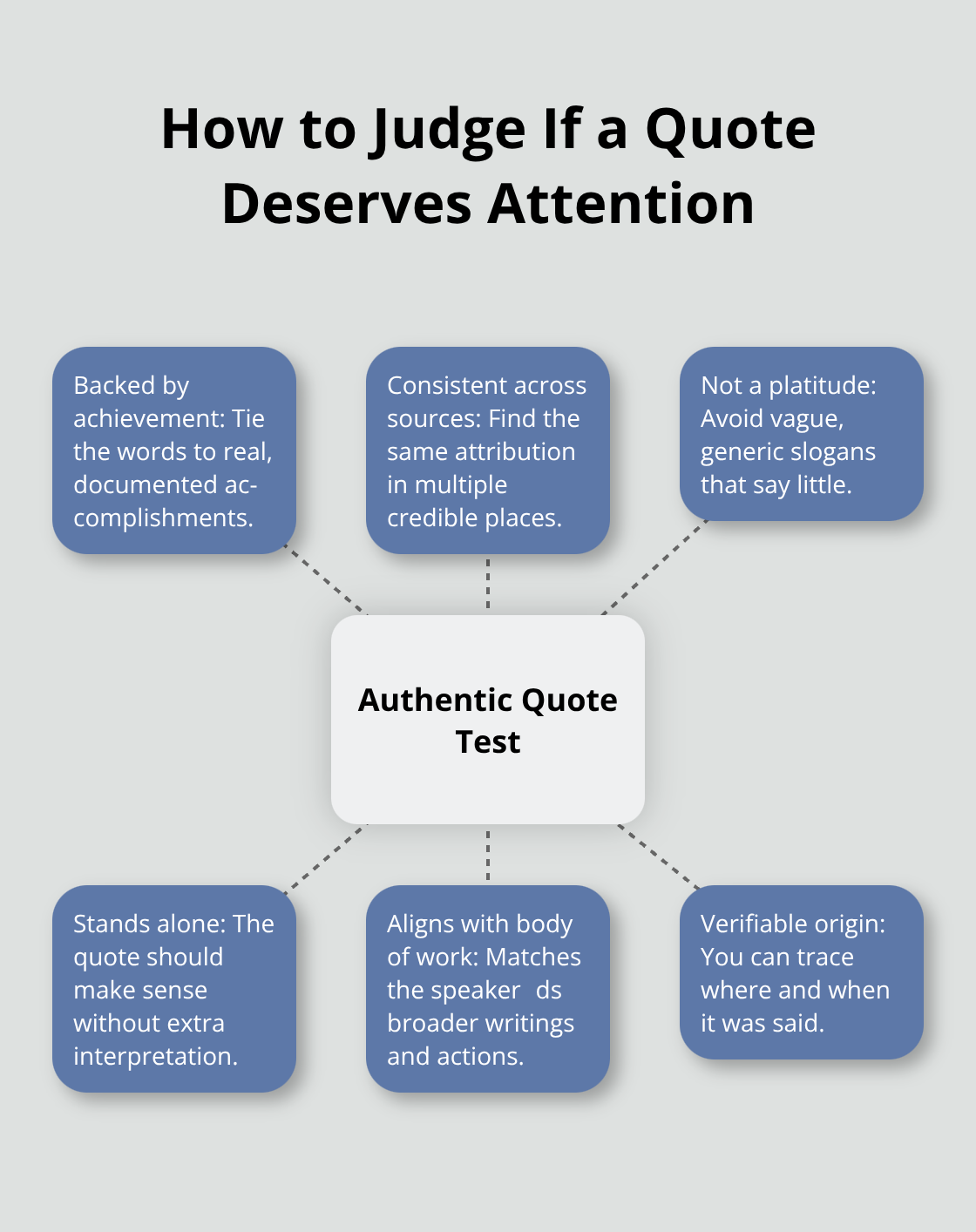
The strongest Women’s Day quotes connect directly to measurable accomplishments, not vague inspiration. When you read a quote from Ruth Bader Ginsburg about perseverance, you can trace it to her actual legal victories and decades of courtroom work. When Michelle Obama speaks about potential, her words carry weight because they’re rooted in her documented career path and published memoir. The difference matters enormously: a quote tied to real action stays with you because it reflects something the speaker actually did, not something that sounds nice.
Look for Quotes Backed by Real Achievement
Search for quotes from women who have published books, led organizations, won awards, or created visible change in their fields. Verify that the quote appears in their actual work-not just in listicles or social media compilations. If a quote seems powerful but you cannot find it attributed to the same person across multiple credible sources, it’s probably been misattributed or fabricated. The quotes worth your time come from women who have already proven their point through action.
Reject Vague Platitudes That Sound Good But Mean Nothing
Overused phrases like “Be yourself” or “Follow your dreams” appear on thousands of social media posts and coffee mugs, which should signal they lack substance. These statements offer no specific direction and apply so broadly they become meaningless. Contrast that with Malala Yousafzai’s actual statement about education changing the world-backed by her documented advocacy work and the Nobel Prize she won. Similarly, Sheryl Sandberg’s research-backed observations about workplace dynamics carry more weight than generic empowerment slogans because they’re grounded in the McKinsey & Company data she references.
When you evaluate a quote, ask yourself whether the speaker would still say this exact thing if asked to explain it in detail. If the quote crumbles under scrutiny or requires you to fill in missing context, skip it. The quotes that stick are the ones that stand alone without needing interpretation or generalization.
Test Quotes Against the Speaker’s Full Body of Work
Context transforms a quote from a random sentence into something meaningful. When you read Ruth Bader Ginsburg’s full writings about persistence, you see how her philosophy developed through specific cases and personal struggles. When you encounter a quote from a woman you don’t recognize, spend five minutes learning what she actually accomplished. Did she write books? Lead organizations? Create something concrete?
If you cannot find evidence of real achievement, the quote probably isn’t worth sharing. Authenticity matters-quotes rooted in documented accomplishment inspire differently than quotes floating free from context. The women whose words deserve amplification are those who have already shown what their philosophy produces in the real world. Once you’ve identified quotes that pass these tests, the next step involves deciding how to put them to work in your own life and community.
Making Women’s Day Quotes Work in Real Life
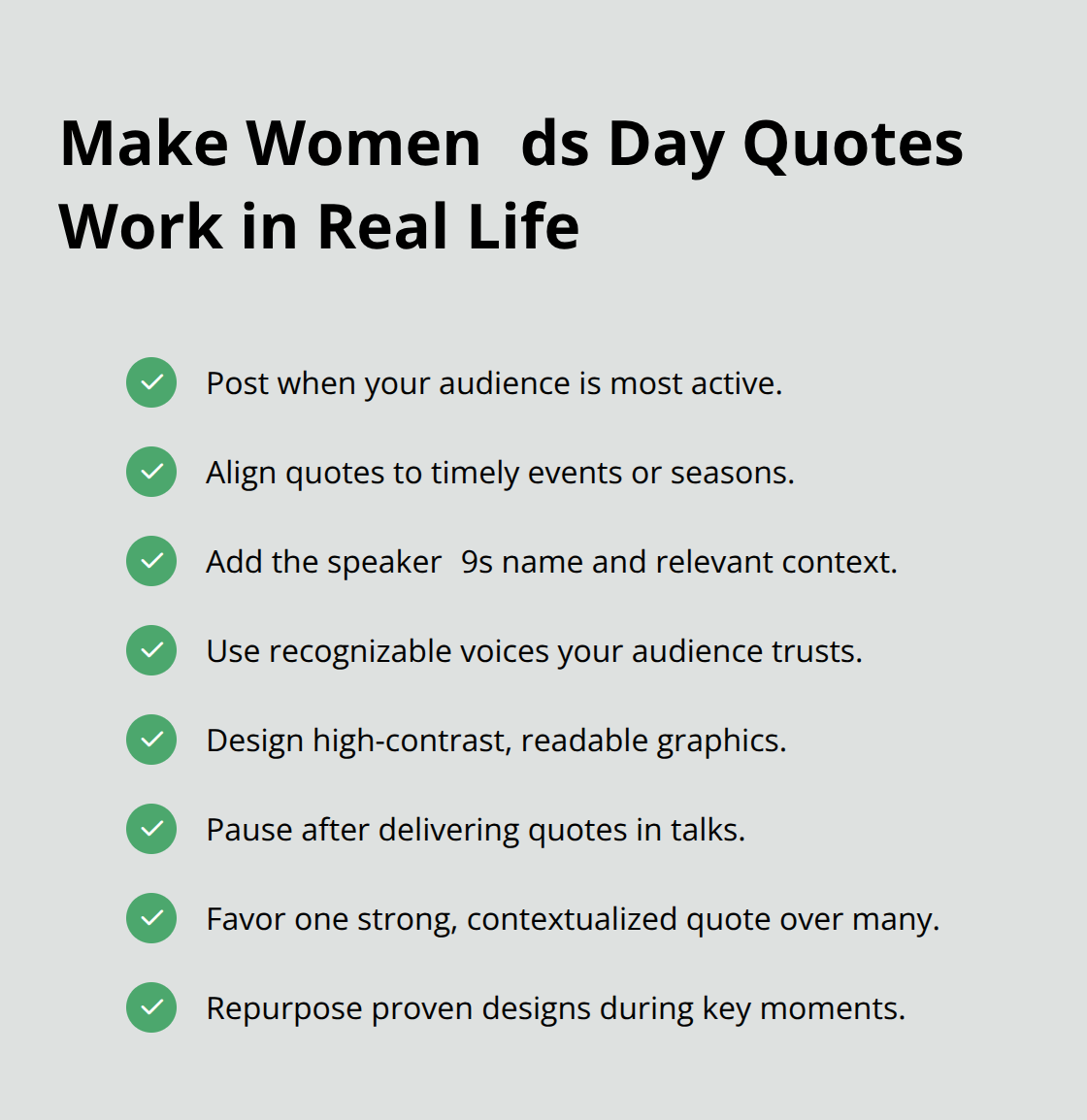
Authentic quotes only matter when you actually use them. Sharing a powerful statement from Ruth Bader Ginsburg or Michelle Obama on your social media feed reaches people who need to hear it, but the impact depends on timing and context. Post quotes on days when your audience is most active-research shows that the overall best times to post on social media are generally Tuesdays through Thursdays between 10 a.m. and 5 p.m., varying by platform. Choose quotes that connect to current events or seasonal moments rather than posting randomly. When Malala Yousafzai’s education advocacy quotes appear during back-to-school season or around International Education Day in November, they resonate far more than the same quote posted in July. Include the speaker’s name and a brief detail about why her words matter-for example, noting that Sheryl Sandberg’s workplace observations come from her research with McKinsey & Company.
This context transforms a standalone statement into something readers feel compelled to share forward.
Amplify Quotes on Social Media
Women leaders themselves understand this strategy and post quotes from their published work on their official accounts with specific context about when and why they said it. Instagram posts with quotes receive strong engagement according to platform trend analysis. Use quotes from women your audience recognizes, as familiarity increases shares. A graphic featuring Michelle Obama’s statement about limitless potential performs differently than the same quote attributed to an unknown speaker.
Deliver Quotes with Authority in Presentations
When you incorporate quotes into presentations or speeches, treat them as evidence, not decoration. Introduce the quote by explaining what the speaker accomplished, then read the full statement without rushing. Pause after delivering it so the audience absorbs the meaning. In a workplace presentation about leadership, you might say: Sheryl Sandberg led Facebook’s advertising business and conducted extensive research on gender in the workplace. Then deliver her statement about leadership being the expectation that you can use your voice for good. This approach makes the quote land harder because listeners understand its foundation. Avoid stringing multiple quotes together in succession-one powerful quote supported by context beats five quotes delivered rapidly. If you speak at a Women’s Day event or company gathering, select quotes that directly address your topic rather than using generic inspirational statements.
Create Graphics That Stop the Scroll
Create graphics with quotes using high-contrast colors and readable fonts-avoid light gray text on white backgrounds that looks professional but becomes invisible on phone screens. Post these graphics consistently during Women’s History Month in March and around International Women’s Day on March 8, but also share them throughout the year when they connect to relevant moments (seasonal campaigns, workplace milestones, or community events). Save high-performing designs and repurpose them annually-the same graphic works year after year because the quote’s power doesn’t diminish. Choose quotes that directly address your audience’s interests rather than selecting statements at random. Daily positivity quotes can be incorporated into your visual content to transform how your audience engages with your message.
Final Thoughts
Authentic inspirational positivity women’s day quotes transform how you approach motivation and personal growth. The work you’ve done throughout this guide-verifying sources, rejecting platitudes, and understanding the real achievements behind each statement-creates a foundation for quotes that actually matter. You now know where to look, what to evaluate, and how to deploy these words in ways that create genuine impact rather than temporary feel-good moments.
Authentic quotes change how you think about yourself because they’re rooted in someone’s actual accomplishment, not manufactured inspiration. When you read Ruth Bader Ginsburg’s words about persistence, you absorb wisdom earned through decades of legal battles. When Michelle Obama speaks about potential, her statement carries weight because it reflects her documented path, and this connection between words and real-world results separates quotes worth your attention from the endless stream of generic statements flooding social media.
The impact extends beyond personal motivation-when you share verified quotes from women leaders with your community, you offer people access to perspectives grounded in achievement. Your social media posts, presentations, and graphics become vehicles for spreading ideas that have already proven their value. At Global Positive News Network, we believe that authentic stories and verified wisdom help you maintain an optimistic outlook grounded in reality.
Having a hard day?
The 2 Minute Hope Reset is a short free guide with three small practices for the days that feel heavy. Two minutes each, nothing to keep up with.
Get the free guideExplore more positive news:
Enjoying stories like this?
Global Positive News Network is reader-supported. If you’d like to support the mission, you can visit the Official GPNN store.