

Most people know journaling helps, but they don’t know where to start. Positivity journal prompts remove the guesswork by giving you specific questions that guide your reflection toward growth.
At Global Positive News Network, we’ve seen how the right prompts transform journaling from a blank-page struggle into a powerful daily practice. This guide shows you exactly which prompts work, how to use them, and how to build a habit that sticks.
What Positivity Journal Prompts Actually Do
Positivity journal prompts are targeted questions that steer your writing toward specific areas of growth, reflection, and emotional processing. They work because they eliminate the blank-page paralysis that stops most people from journaling at all. Instead of staring at an empty page, you have a concrete starting point. Research shows that expressive writing activates your prefrontal cortex while dampening your amygdala, the brain region tied to anxiety and stress. This neurological shift happens faster with structured prompts than with free-form writing because prompts direct your attention toward meaningful reflection rather than circular rumination. A 2022 meta-analysis by Sohal and colleagues found that journaling reduces anxiety symptoms by 20 to 45 percent across multiple randomized trials, with stronger effects in women and bigger gains when you practice consistently beyond 30 days. Prompts work because they channel your thoughts toward patterns that matter.
The Brain Benefits of Structured Reflection
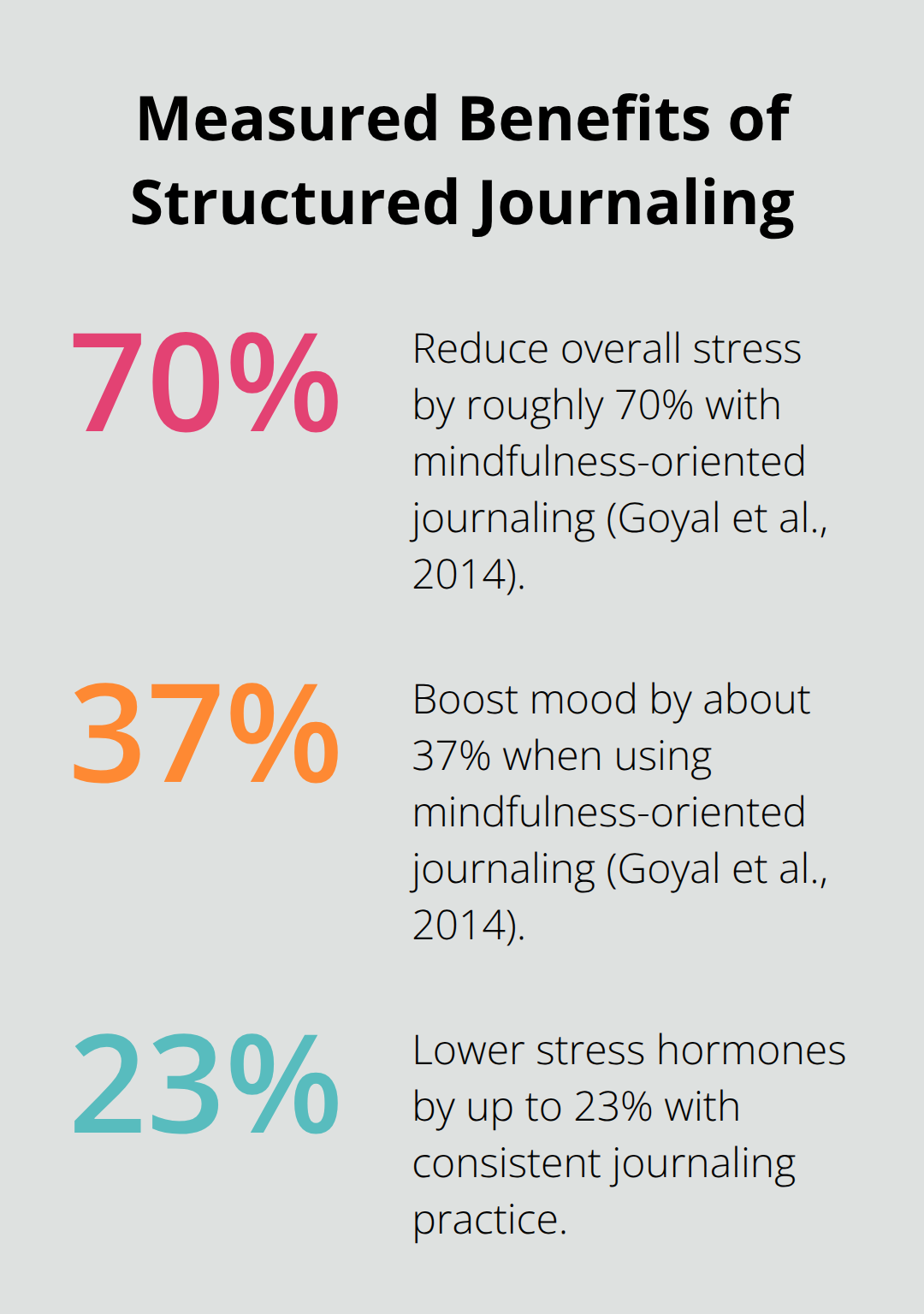
Your brain responds to prompts by consolidating memories, strengthening neural pathways for emotional regulation, and building what researchers call meta-cognitive awareness. When you write about gratitude specifically, you’re not just feeling grateful-you’re rewiring your brain to notice positive patterns. Studies show that gratitude journaling increases life satisfaction and reduces depressive symptoms, while also improving sleep quality. Mindfulness-oriented journaling can reduce overall stress by roughly 70 percent and boost mood by about 37 percent, according to a 2014 review by Goyal and colleagues. Prompts about what you’re grateful for, what you accomplished, or how you’ve grown force your brain to search for evidence of those things, literally rewiring your attention toward the positive.
This isn’t wishful thinking-it’s neuroplasticity in action.
Why Generic Journaling Fails but Prompts Succeed
People who try free-form journaling often quit because they don’t know if they’re making progress. Prompts solve this problem through clear structure and measurable focus. A study from Pennebaker & Chung in 2007 found that optimal journaling parameters for mental health benefits involve 3 to 4 sessions per week for 15 to 20 minutes per session, with consistent practice over 4 to 6 weeks to consolidate neurological changes. When you use prompts tailored to your actual life-not generic templates-you gain clarity on who you are, what you want, and the concrete steps to reach your goals.
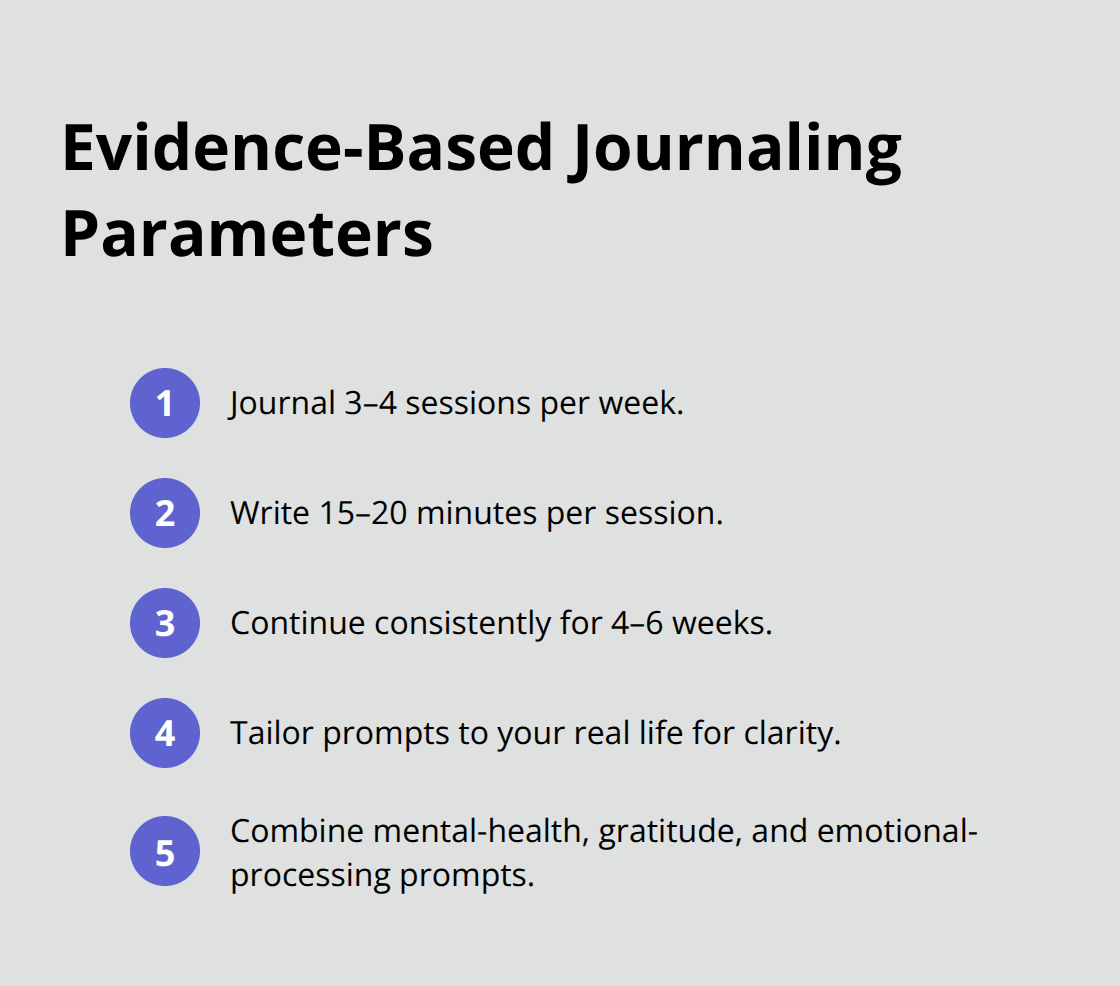
Action-oriented prompts that ask you to name one specific thing you can do today move you beyond reflection into behavior change. The evidence shows that combining mental-health-focused prompts with gratitude and emotional processing creates the strongest results, especially when you stick with the same 10 to 12 prompts that genuinely resonate with you, minimizing decision fatigue and keeping journaling a daily habit. The right prompts transform how you think about yourself and what you’re capable of-which is exactly what the next section explores.
Prompts That Actually Move You Forward
Specificity Transforms Your Practice
The difference between prompts that work and prompts that collect dust comes down to specificity. Generic prompts like “What are you grateful for today?” fail because they’re too broad. You need prompts tied directly to your life, your goals, and your actual struggles. Research from Krentzman and colleagues in 2022 found that positive psychology journaling supports addiction recovery by helping users recognize positives and set meaningful short-term goals, which means prompts work best when they’re concrete enough to generate real behavioral change. Start with prompts about what made you feel capable today rather than vague positivity.
Ask yourself what one person said or did that mattered, not just what you’re grateful for in general. When you write about specific moments, your brain creates stronger neural associations than when you describe abstract feelings. Action-oriented prompts outperform reflective ones because they push you toward behavior. Instead of writing about what you want to accomplish this year, ask what you can do in the next two hours that moves you closer to that goal.
Why Depth Matters More Than Lists
This distinction matters because expressive writing about stressful events benefits your physical health, reducing sick days and improving immune function, but only when the writing includes processing and forward movement, not just venting. Gratitude journaling is linked with positive emotions including contentment and happiness, but the mechanism only works when you write about why something matters, not just listing items. Instead of writing three things you’re grateful for, write one thing and spend three sentences explaining why it affected you. This depth creates the neurological rewiring that generic gratitude lists miss.
Self-compassion prompts work differently than gratitude ones. Rather than asking what you’re proud of, ask what you struggled with today and what you’d tell a friend in that situation. This approach, rooted in Neff and Vonk’s 2009 work on self-compassion, builds acceptance of difficult emotions while maintaining resilience. Write about what triggered frustration, then describe three specific things you could do differently next time. The combination of acknowledging difficulty plus naming concrete next steps creates lasting change.
Goal-Setting Prompts That Produce Results
Goal-setting prompts should focus on what you accomplished today, not what you plan to accomplish tomorrow. Your brain responds better to evidence of progress than to future promises. Write about one small win, then describe how that win connects to a larger goal you hold. This creates narrative coherence, which trauma researcher Provencher found in 2002 accelerates recovery when people process difficult experiences. The same principle applies to personal growth.
If you’re working on confidence, don’t ask yourself to visualize success; ask what you did today that scared you slightly and how you handled it. Specificity transforms journaling from general reflection into targeted growth. Optimal practice means selecting 10 to 12 prompts that resonate with your actual life and cycling through them consistently over 4 to 6 weeks, which is the timeframe Pennebaker and Chung identified for neurological consolidation of journaling benefits.
The Winning Combination
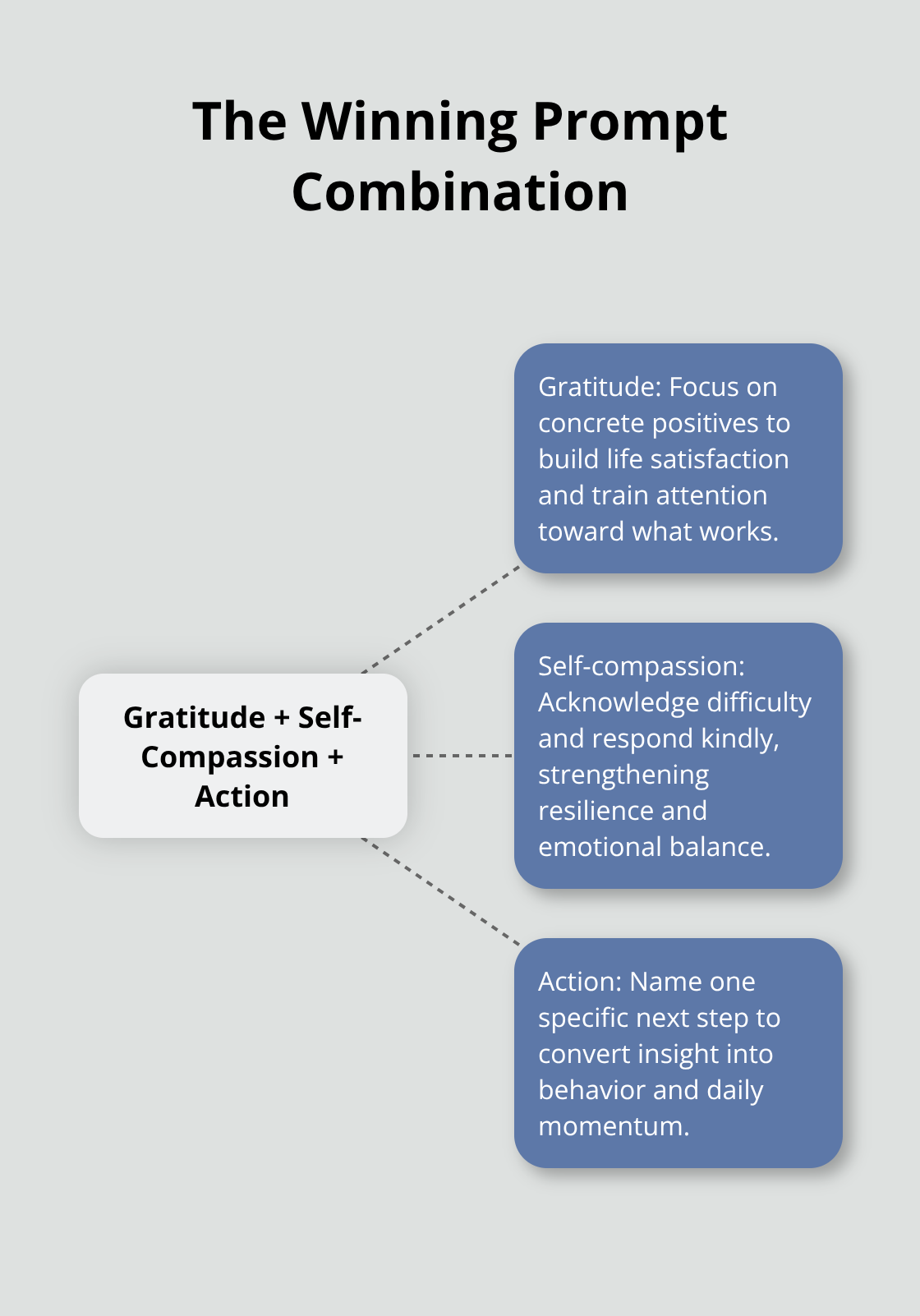
The most successful practitioners combine one gratitude prompt, one self-compassion prompt, and one action prompt in a single session, rotating through variations of each over weeks. This mix addresses emotional regulation, self-awareness, and behavioral change simultaneously, which aligns with how mental health professionals now integrate structured journaling into treatment for depression, anxiety, and burnout. When you rotate through these three types consistently, you build a practice that works across multiple dimensions of your life rather than focusing narrowly on one area.
The next section shows you how to turn these powerful prompts into a sustainable habit that actually sticks.
Making Your Journaling Practice Stick
The difference between people who journal for three weeks and those who journal for three years comes down to one thing: they stop fighting their own habits and start working with them. Journaling fails not because prompts don’t work, but because people treat it like exercise they force themselves to do. Instead, anchor journaling to something you already do every single day. If you drink coffee every morning, write for ten minutes while your coffee cools. If you take a walk after work, spend five minutes journaling when you return.
The Right Frequency and Duration
Research from Pennebaker and Chung shows that 3 to 4 sessions per week for 15 to 20 minutes produces measurable mental health benefits, but this doesn’t mean you need a rigid schedule that feels like punishment. Try 10 minutes, three times a week. The timing matters less than the consistency. Your brain needs about 4 to 6 weeks of regular practice to consolidate the neurological changes journaling creates, which means the first month is always harder than month two. Expect this. Don’t quit thinking you’re doing something wrong.
Design Your Space for Success
The environment shapes whether you actually show up. You need a physical space where journaling feels easy, not a spot surrounded by distractions. Close your laptop. Put your phone in another room. Use the same notebook and pen every time, because your brain responds to environmental cues. When your brain associates that specific chair and that specific notebook with journaling, you’ll sit down and write automatically. This is not motivation; this is how habits actually form.
Track What Actually Changes
Track progress not by counting days but by noticing what changes. After four weeks of consistent journaling with the prompt combination of gratitude, self-compassion, and action, you’ll notice you handle frustration differently. You’ll catch yourself thinking more clearly about problems. You’ll spot patterns in your behavior that you never saw before. These are the real markers of progress, not streak counters. If you miss a session, don’t restart your count or feel defeated. People who journal successfully miss sessions and simply start again the next day. The research shows that the total number of sessions matters more than unbroken streaks, so missing two days doesn’t undo your progress.
Adjust Your Practice When It Stops Working
Adjust your practice when something stops working. If morning journaling feels forced after six weeks, shift to evening. If ten minutes feels too short, expand to fifteen. If your prompts start feeling stale, swap in new ones from your rotating set of 10 to 12 that resonate with your life. The goal is a practice that fits your actual life, not a template that requires you to change yourself. After 30 days of consistent practice, most people report reduced anxiety and clearer thinking. After 60 days, the benefits compound into noticeable shifts in how you respond to stress and setbacks. This is why consistency matters more than perfection (and why flexibility matters more than rigid rules).
Final Thoughts
Positivity journal prompts work because they transform a blank page into a guided path toward real change. Structured reflection activates your brain differently than free-form writing, and specific prompts rewire your attention toward growth. The science confirms this: consistent journaling reduces anxiety by 20 to 45 percent, lowers stress hormones by up to 23 percent, and creates neurological shifts within 4 to 6 weeks of regular practice.
Start your practice by choosing one simple anchor point in your day and committing to 10 to 15 minutes three times weekly. Select 10 to 12 prompts that genuinely resonate with your actual life, then rotate through gratitude, self-compassion, and action-oriented prompts to address emotional regulation, self-awareness, and behavioral change simultaneously. Track progress by noticing what shifts in how you handle frustration and stress, not by counting unbroken streaks.
Pick one prompt that speaks to you, set a specific time tomorrow, and write for ten minutes. The transformation happens through repetition, not through finding the perfect prompt or the perfect moment. At Global Positive News Network, we believe positivity journal prompts are one of the most accessible tools for building resilience and clarity.
Having a hard day?
The 2 Minute Hope Reset is a short free guide with three small practices for the days that feel heavy. Two minutes each, nothing to keep up with.
Get the free guideExplore more positive news:
Enjoying stories like this?
Global Positive News Network is reader-supported. If you’d like to support the mission, you can visit the Official GPNN store.