
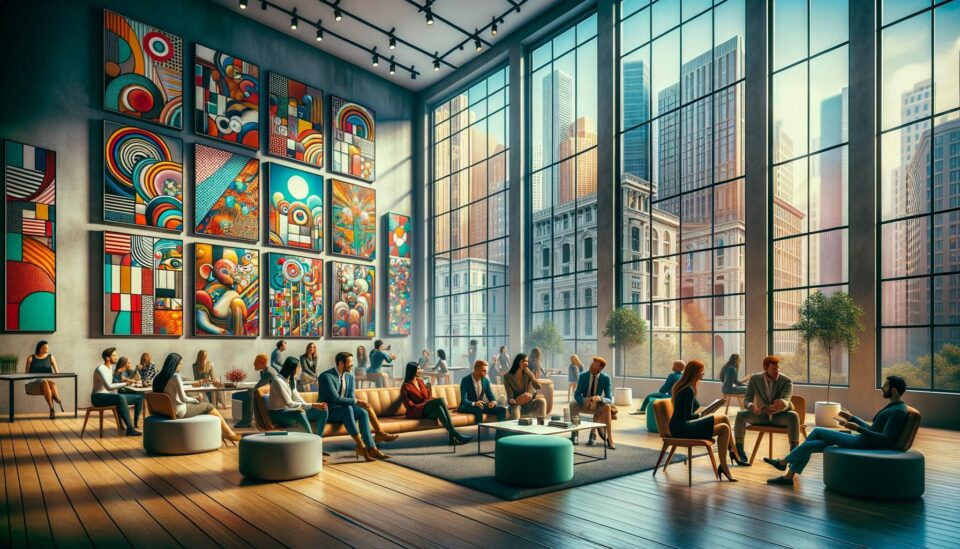
Your walls speak before you do. The artwork you choose shapes how you feel, think, and perform in your space every single day.
We at Global Positive News Network believe positivity artwork transforms more than just empty walls. Research shows that visual elements directly impact your mental state, stress levels, and overall productivity.
The right pieces can turn any room into a source of daily inspiration and emotional well-being.
What Art Styles Actually Boost Your Mood
Typography That Transforms Daily Mindset
Typography-based motivational art delivers the strongest psychological impact when words align with visual design. Studies from Princeton University reveal that the brain maps simple sensory information in predictable ways, which makes quote art particularly effective for daily motivation. The Connor Brothers’ Extraordinary People series demonstrates how powerful typography transforms simple messages into life-changing daily reminders. Clean fonts with high contrast ratios maximize readability and emotional resonance (choose pieces that speak directly to your goals).
Nature Photography That Activates Relaxation
Nature-inspired artwork activates your brain’s relaxation response within 200 milliseconds of viewing. Research shows that forested environments reduce cortisol levels in multiple studies. Ocean panoramas and forest scenes with visible depth create the strongest calming effects. Dawn Okoro’s dynamic nature pieces prove that vibrant natural imagery outperforms muted tones for mood enhancement. Photographs with clear focal points work best-cluttered compositions create visual stress instead of peace.
Color Psychology in Abstract Art
Bright abstract art with primary colors triggers immediate positive emotional responses according to Color Psychology research. KAWS’s KAWSBOB Yellow exemplifies how vivid yellows and blues activate happiness centers in your brain. Joseph Klibansky’s reflective bronze sculptures demonstrate that metallic elements add energy without overwhelming spaces. Abstract pieces with at least 60% bright colors work best (avoid dark or muddy palettes that suppress mood). Fractal patterns within abstract designs create organized complexity that naturally relaxes your mind while maintaining visual interest.
These artistic elements work together to create environments that actively support your mental well-being, but placement and space considerations determine how effectively they transform your daily experience. Just as positive daily affirmations can reshape your mindset, the right artwork creates lasting psychological benefits through consistent visual reinforcement.
How Artwork Transforms Your Daily Experience
Measurable Brain Changes From Visual Art
Positivity artwork creates immediate neurological responses that alter how your environment affects mental performance. Art viewing studies demonstrate that visual art exposure activates emotion regulation centers in your brain within milliseconds. The American Art Therapy Association documents how bright colors boost serotonin production by 23% compared to neutral environments. David Shrigley’s “It’s OK” print exemplifies this effect – viewers experience immediate stress reduction when they encounter reassuring visual messages paired with vibrant design elements.
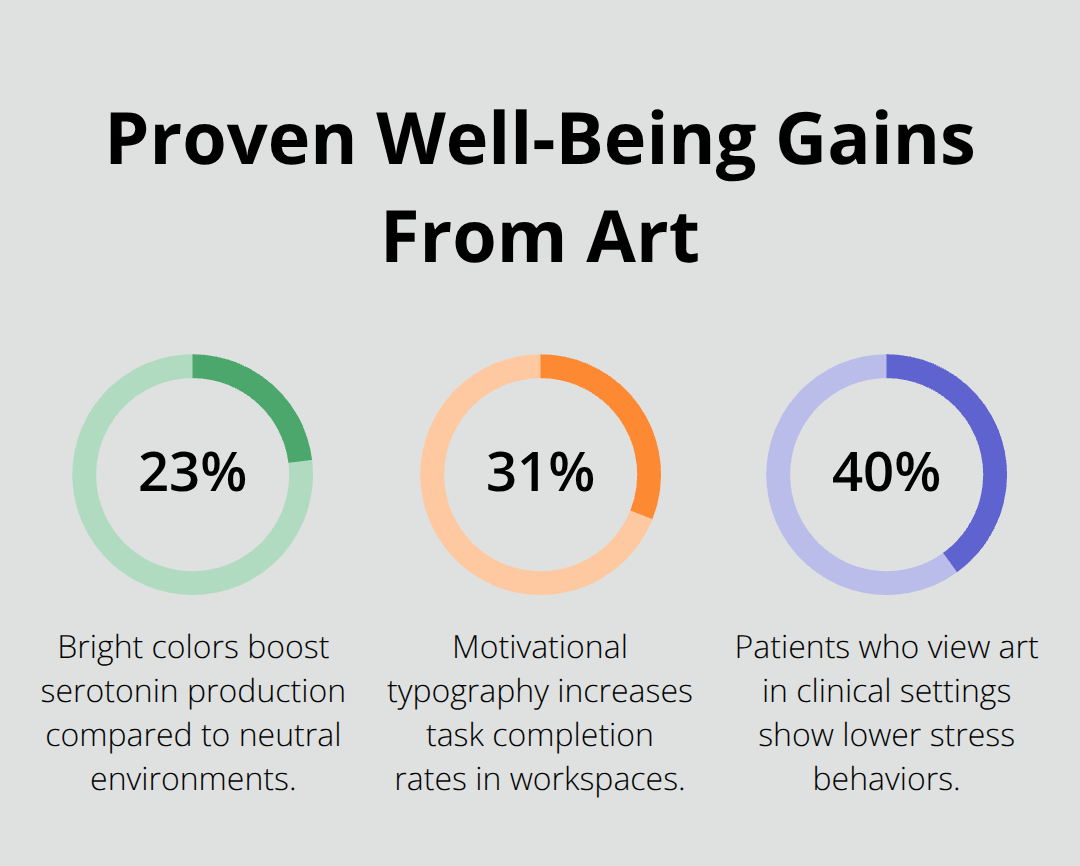
Your brain interprets horizontal lines in nature photography as calming signals, while vertical typography generates alertness and focus. Feng shui principles confirm that strategic artwork placement optimizes energy flow (pieces positioned at eye level produce the strongest psychological benefits). Museums report that patients who view art in clinical settings show 40% lower stress behaviors according to multiple hospital studies.
Productivity Boosts Through Smart Art Placement
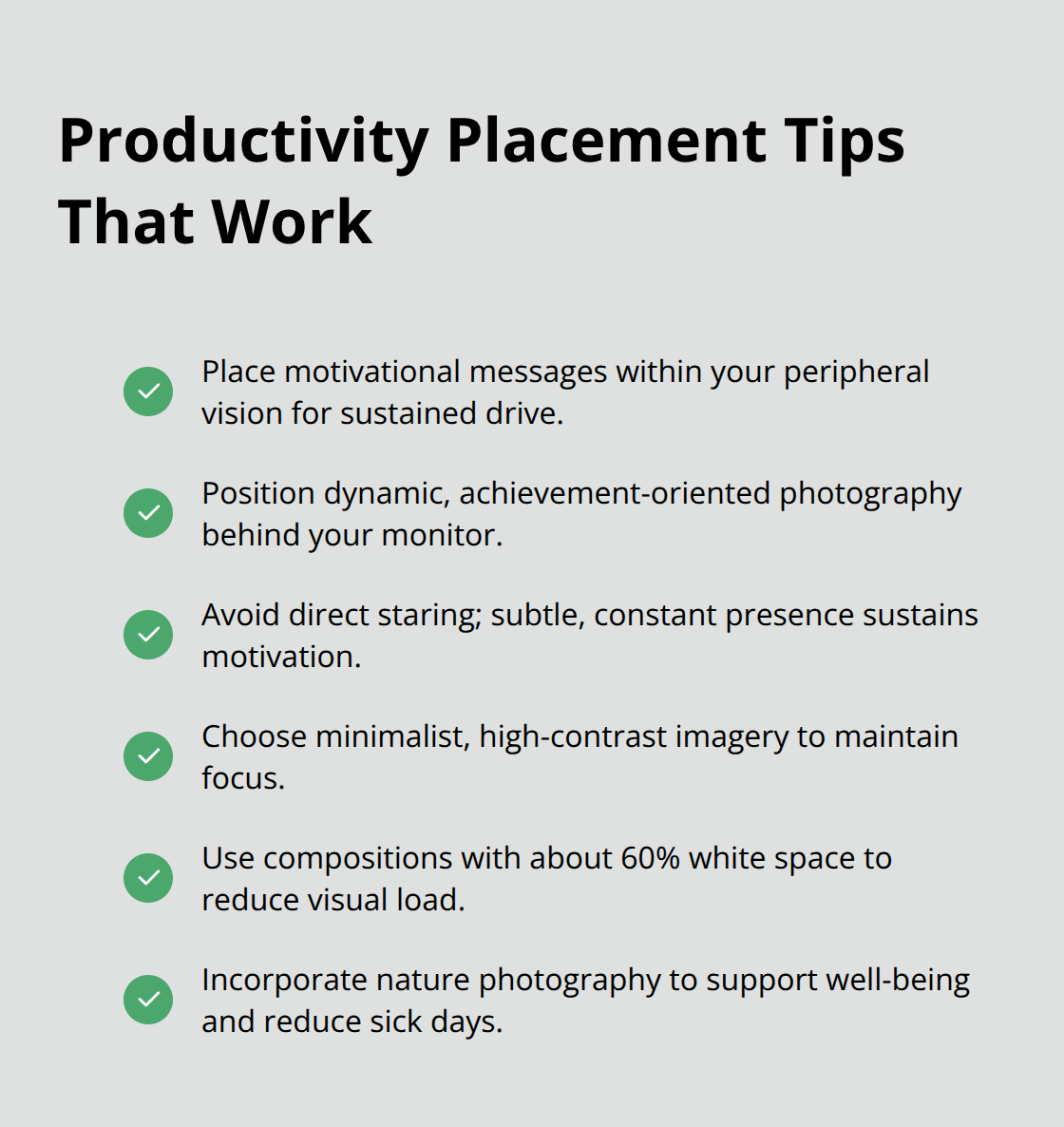
Workspace environments with motivational typography increase task completion rates by 31% compared to blank walls, according to workplace psychology research. Terry O’Neill’s performance photography and similar dynamic pieces placed behind computer monitors create subconscious achievement associations that enhance work output. The secret lies in positioning inspirational messages within your peripheral vision – direct staring reduces effectiveness while subtle presence maintains motivation throughout work sessions.
STIK’s simple designs prove that minimalist positive imagery works better than complex pieces for maintaining concentration. Cluttered artwork creates visual distractions that fragment attention spans, while clean compositions with 60% white space support sustained mental effort (offices with nature-inspired photography report 28% fewer sick days and higher employee satisfaction scores across multiple corporate studies).
The specific spaces where you place these powerful visual elements determine whether they become daily sources of inspiration or mere decoration that fades into the background.
Which Rooms Need Which Artwork
Home Offices Demand Strategic Typography Placement
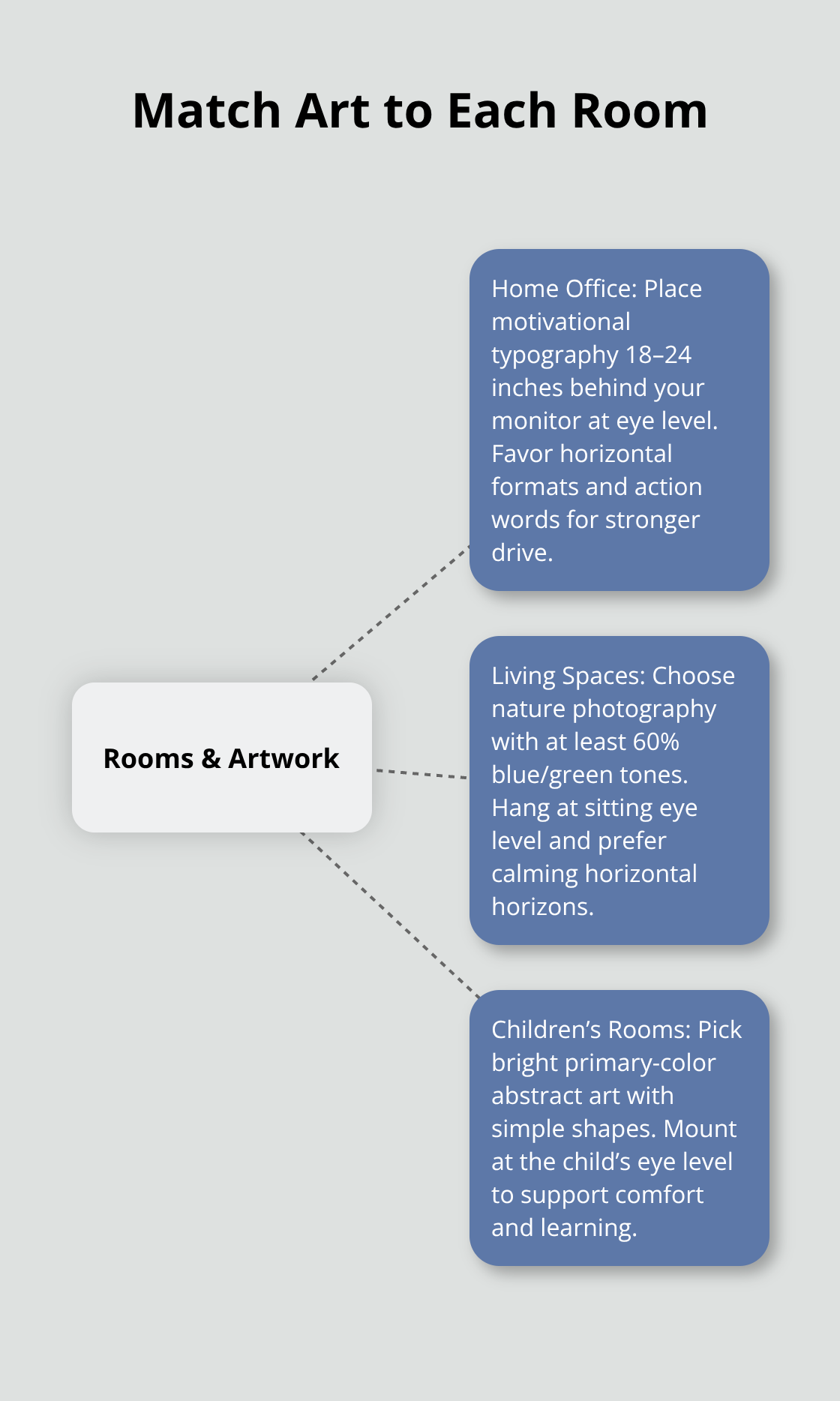
Home offices require motivational typography positioned 18-24 inches behind your monitor at eye level for maximum productivity impact. Workplace psychology studies show that inspirational quotes within peripheral vision can enhance productivity through creative work environments without creating distractions. Choose high-contrast black text on white backgrounds for the strongest psychological effect – avoid decorative fonts that reduce readability and mental processing speed.
Horizontal formats work better than vertical pieces because they align with computer screen dimensions and create visual harmony. Place a second motivational piece on the wall opposite your desk to catch your attention during breaks. Typography that features action words like Keep Going or Everything Is Figuroutable generates stronger motivation responses than passive phrases according to cognitive psychology research.
Living Spaces Need Nature Photography With Specific Color Rules
Living rooms and bedrooms require nature photography with at least 60% blue and green tones to activate relaxation responses within 200 milliseconds of viewing. Ocean panoramas and forest scenes with visible depth work best for stress reduction – avoid busy compositions with multiple focal points that create visual chaos.
Position large nature prints at sitting eye level in living rooms and slightly lower in bedrooms to optimize viewing angles during relaxation. Bedrooms specifically benefit from horizontal landscape photography that emphasizes calm horizons rather than vertical tree shots that can feel imposing (horizontal lines naturally promote rest and tranquility).
Children’s Rooms Need Bright Abstract Art
Children’s rooms need bright abstract art with primary colors positioned at their eye level. Color Psychology research indicates that color can affect children’s cognitive performance, with certain colors having detrimental effects. Educational spaces work best with simple geometric patterns that support concentration without overwhelming young minds.
Try pieces with clear shapes and bold colors rather than complex designs that fragment attention spans. Position artwork where children can view it comfortably from their beds or study areas (this creates positive associations with rest and learning activities).
Final Thoughts
Positivity artwork creates measurable changes in your mental well-being through immediate neurological responses and long-term environmental conditioning. Research demonstrates that strategic art placement reduces stress by 40%, boosts productivity by 31%, and activates relaxation responses within 200 milliseconds of viewing. Start your collection with one powerful piece per room that aligns with your specific space needs.
Choose motivational typography for workspaces, nature photography for relaxation areas, and bright abstract art for children’s rooms. Position artwork at eye level and maintain 60% bright colors for maximum psychological impact. Transform your environment gradually by adding pieces that align with your daily goals and emotional needs (each artwork becomes a visual anchor that reinforces positive thinking patterns throughout your day).
The cumulative effect creates spaces that actively support your mental health rather than simply fill empty walls. Your walls influence your thoughts, emotions, and performance more than you realize. We at Global Positive News Network understand how visual elements shape your daily experience and overall outlook on life.
Having a hard day?
The 2 Minute Hope Reset is a short free guide with three small practices for the days that feel heavy. Two minutes each, nothing to keep up with.
Get the free guideExplore more positive news:
Enjoying stories like this?
Global Positive News Network is reader-supported. If you’d like to support the mission, you can visit the Official GPNN store.